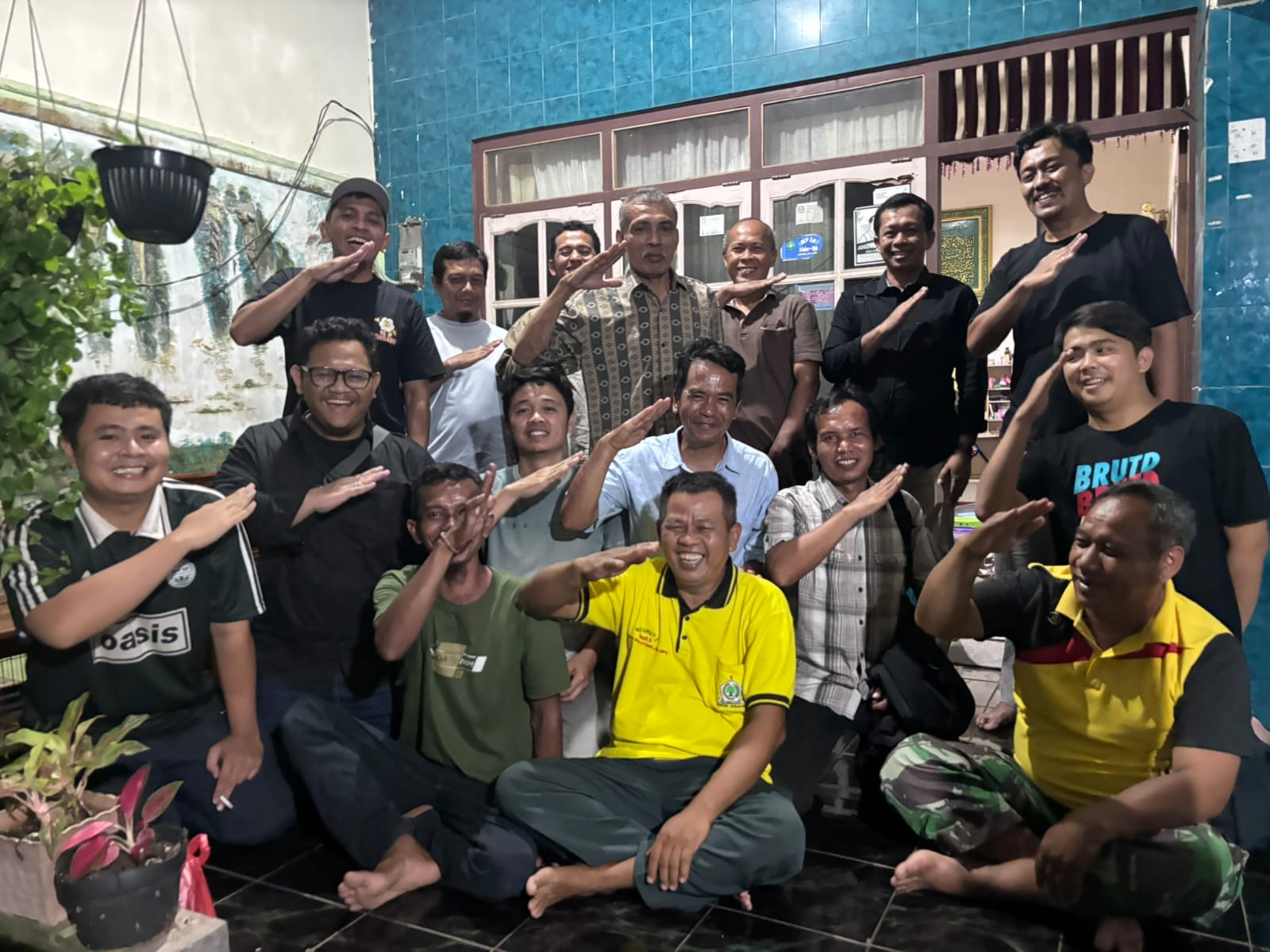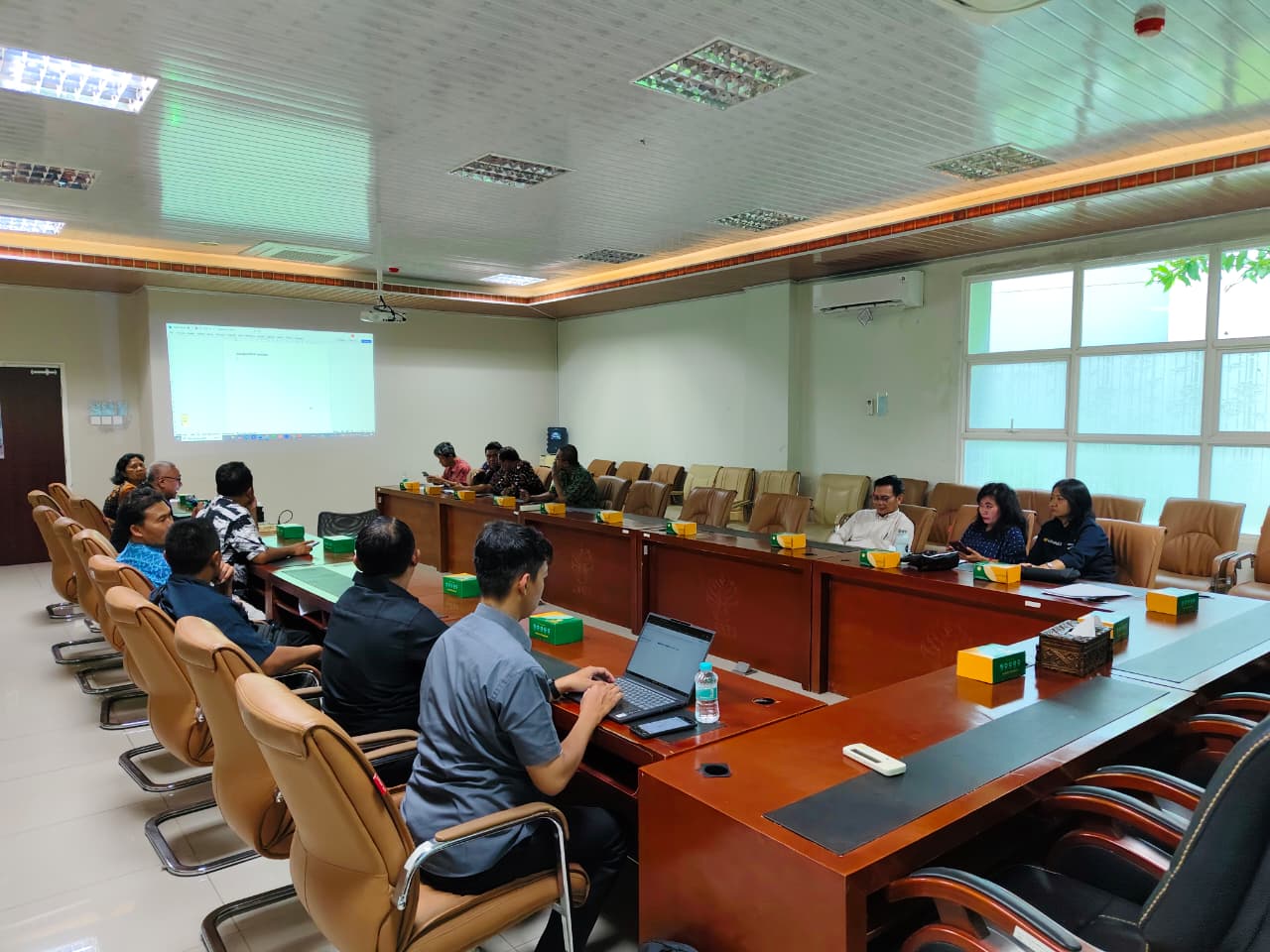


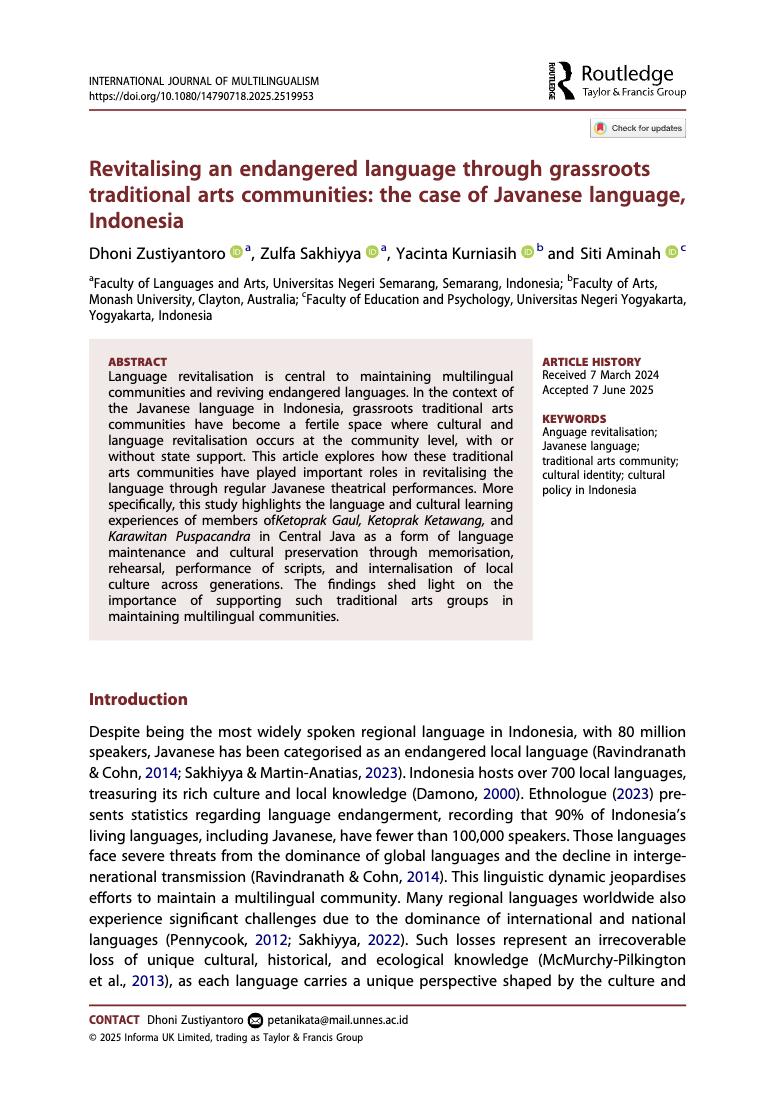
Behind the melodious sounds of gamelan and the fluid movements of shadow puppets, lies a significant opportunity to save the endangered Javanese language. A recent study, published in the International Journal of Multilingualism, demonstrates how traditional arts communities can be an effective vehicle for reviving critical awareness of the Javanese language.
The study, led by Dr. Dhoni Zustiyantoro, a lecturer at the Faculty of Languages and Arts, Universitas Negeri Semarang, highlights how local arts influence linguistic abilities and cultural values.
More than just numbers, the research findings convey a profound message: traditional arts are not merely a medium for performance, but also a platform for organic language and cultural learning. The researchers assert that student teachers with a strong critical awareness of the structure and culture of the Javanese language are better prepared to design lessons rich in local contexts.
These findings have strategic implications for the Sustainable Development Goals (SDGs). First, in line with SDG 4 – Quality Education, the research emphasizes the importance of learning rooted in local cultural richness to produce linguistically and culturally sensitive teachers.
Second, in line with SDG 11 – Sustainable Communities, revitalizing the Javanese language through traditional arts strengthens cultural identity and social cohesion within communities. Third, it is relevant to SDG 16 – Peace, Justice, and Resilient Institutions, because strengthening local languages and cultures strengthens social cohesion and affirms the recognition of cultural heritage as part of national identity.
Based on local performing arts, such as kentrung (traditional Javanese music), wayang (wayang puppetry), or karawitan (traditional Javanese music), this approach demonstrates how the Javanese language can emerge from endangerment, restored through traditional performance venues that have now been transformed into spaces for public education.
Amid global efforts to preserve cultural diversity, this research serves as a concrete inspiration that language preservation can start from the roots, through active community participation based on arts and culture. Thus, the Javanese language has new hope for its continued survival, woven into every gamelan melody and poetic expression on the archipelago’s traditional stages.