

Universitas Negeri Semarang (UNNES) held the Tawu Sendang event as part of the university’s commitment to conserving natural resources on Wednesday, December 3, 2025. The event took place at the Women’s Dormitory on Jalan Ampel Gading Raya, Kalisegoro, and was led directly by the Rector of UNNES, Prof. Dr. S. Martono, M.Si., with attendance from university leaders, regional officials, and community figures.
The event began with a joint prayer, led by Baidhowi, S.Ag., M.Ag., followed by a report on the activity by the Director of General Affairs and HR of UNNES, Mohammad Khoiruddin, S.E., M.Si. Then the Rector delivered a speech emphasizing the importance of caring for water resources as a part of the university’s conservation identity.
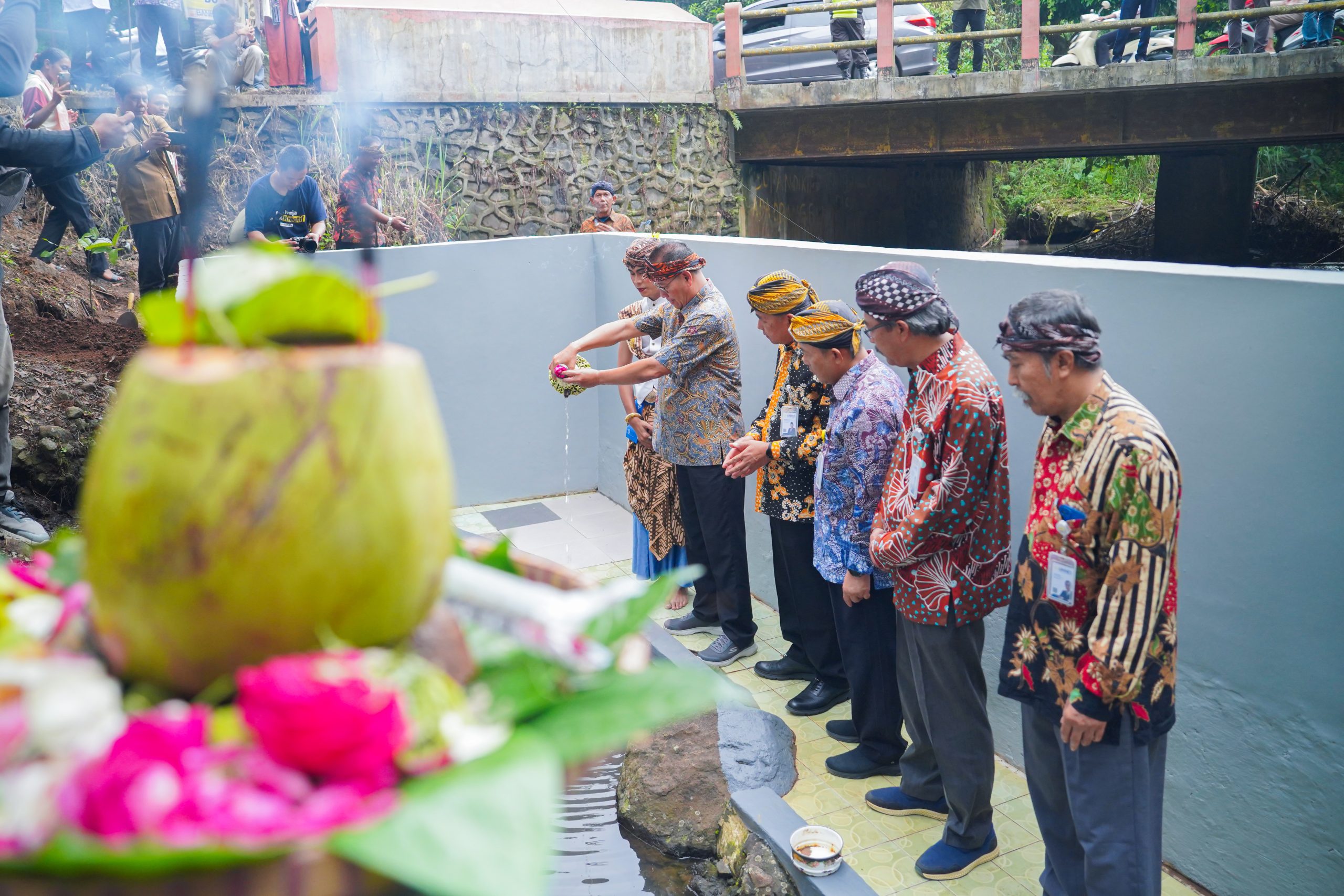
“Water is the source of life. Humans must be friends with nature, including the water we use every day. If we provide a good, clean, and proper path for water to flow, then water will give goodness back to us,” said Prof. S. Martono after the Tawu Sendang Alit procession.
Sendang Alit: A Spring with 15th-Century Roots
Sendang Alit, located on the banks of the Sekargading River, holds significant importance for the people of Sekaran. Before modern water infrastructure existed, this spring was a vital source of daily water needs—such as drinking, cooking, bathing, and watering livestock—and served as a social gathering place for the community.
Moreover, the spring carries a long historical narrative believed to date back to the 15th century. According to local oral tradition, Sendang Alit was the meeting place of Ki Sekar, an elder of Kampung Sekaran, and Sunan Kalijaga during their quest to find lost teak wood that would later support the construction of the Great Mosque of Demak. This makes Sendang Alit not only ecologically important but also part of the historical spread of Islam and the local wisdom of the Javanese people.
UNNES Strengthens Holistic Conservation Efforts
As a Conservation-Minded University, UNNES treats conservation holistically—protecting ecosystems, preserving collective memory, and strengthening educational functions. Through research and participatory community support, UNNES seeks to ensure the sustainability of spring water sources like Sendang Alit.
The event also marked the beginning of mapping potential water sources in Semarang City. The data and research results from this mapping are expected to contribute to broader water resource conservation programs at the city level.
Cultural and Conservation Activities
As a symbol of respect for water, the event featured the “Tirto Panguripan” dance, performed by students from the Faculty of Languages and Arts along with two international students. The dance expressed gratitude for water as a source of life.
In the procession to Sendang Alit, led by the Rector, participants planted trees and released 4,000 fish into the spring area—actions aimed at maintaining ecological balance. Prof. Martono also shared plans for future water management, including the construction of three small retention ponds to help regulate water flow for irrigation during dry seasons and flood control during rainy periods.
Through Tawu Sendang, UNNES reaffirmed its dedication to environmental balance and strengthening conservation awareness in the community. The program is intended not only as a symbolic event but also as a series of real, ongoing actions to preserve water resources and protect the natural heritage that forms part of Sekaran’s history—home to UNNES.