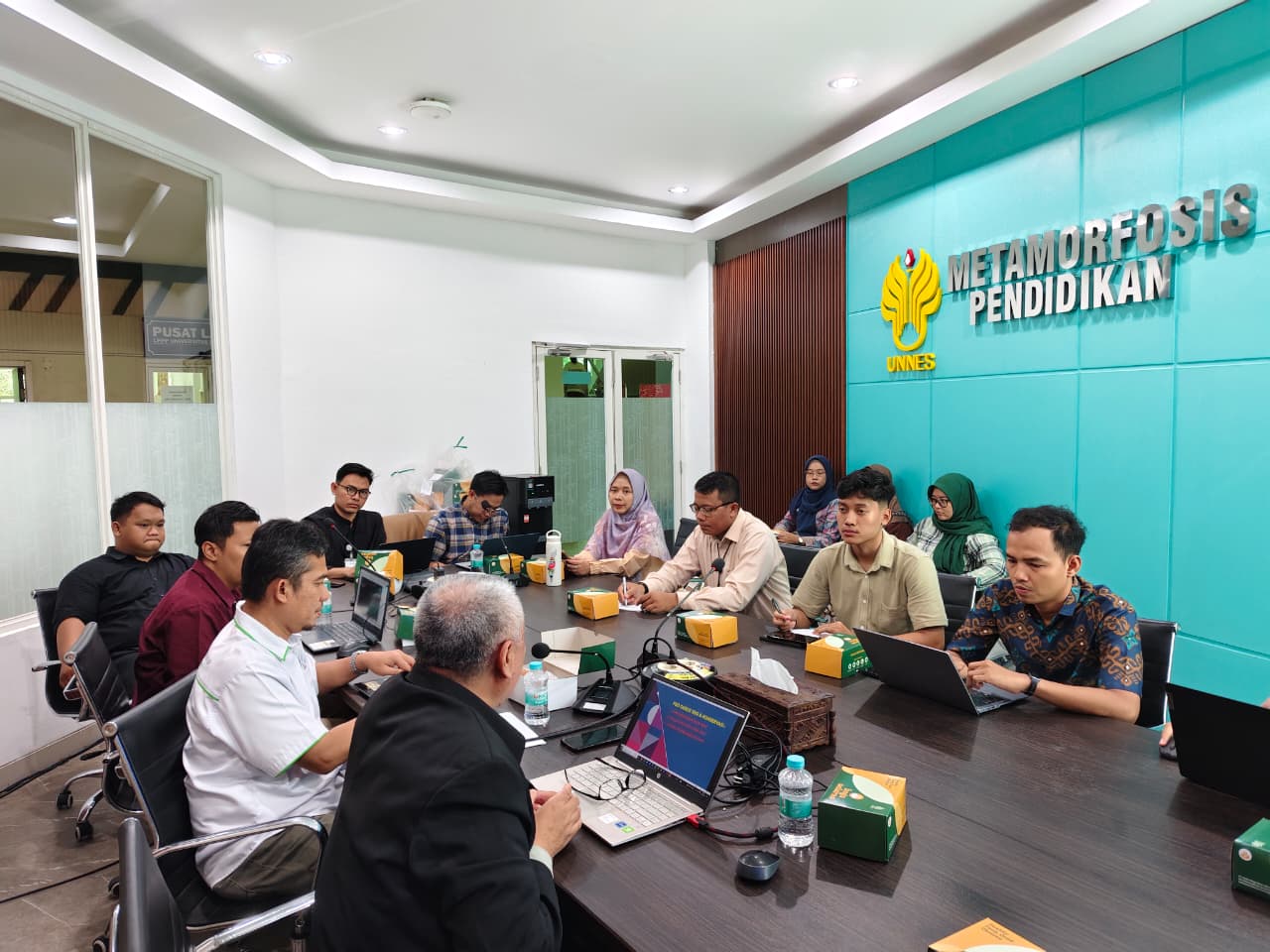


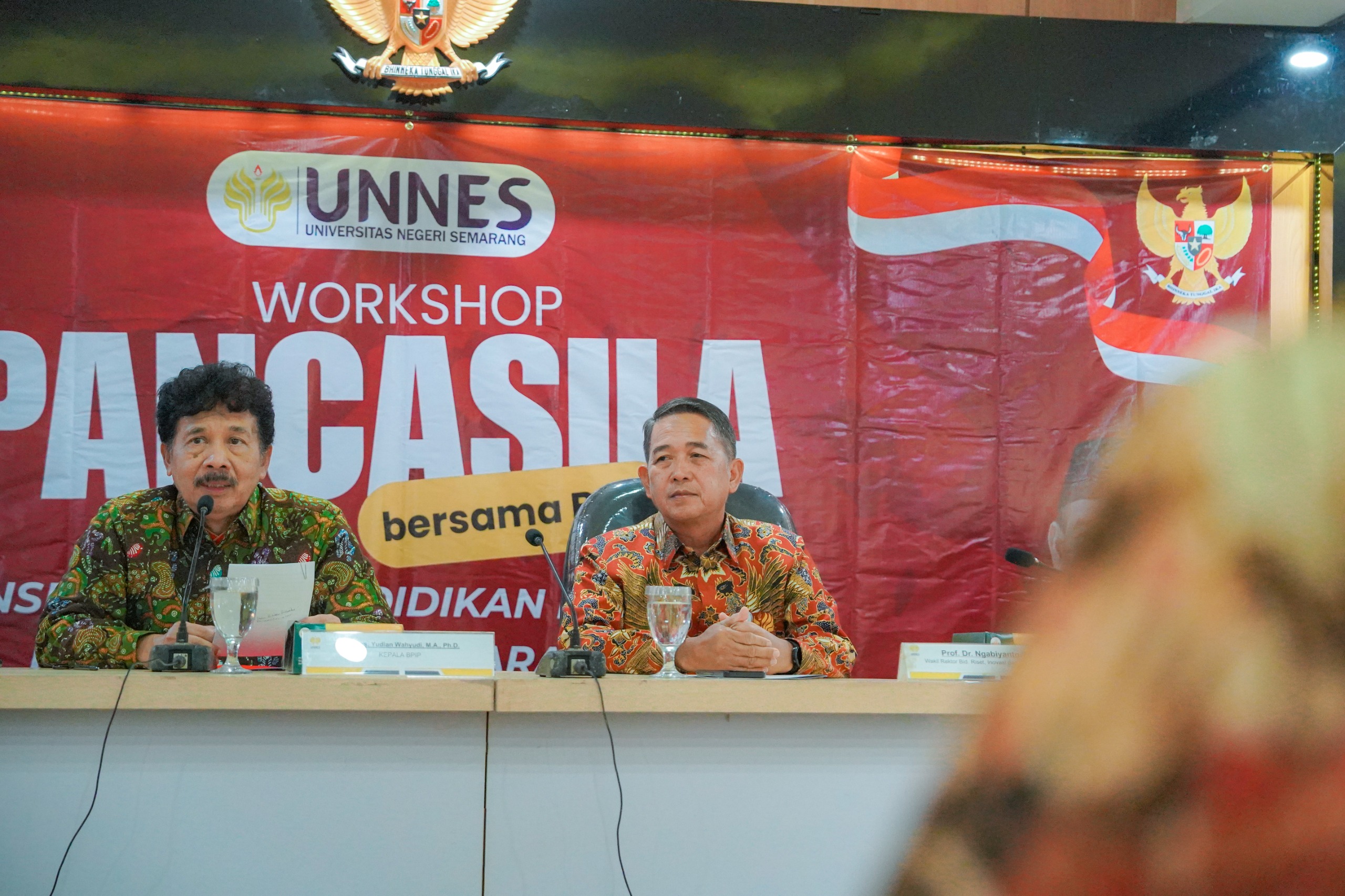
Universitas Negeri Semarang (UNNES), through its Institute for Educational and Professional Development (LPPP), held a workshop entitled “Transformation of Pancasila and Citizenship Education: Strategies for Internalizing Pancasila Values for Indonesia’s Golden Generation 2045” in Room 405 of the UNNES Rectorate, Semarang, on Friday (September 19, 2025). This activity involved the UNNES Civics Lecturer Forum, which aimed to strengthen Pancasila learning practices relevant to needs.
Previously, UNNES and the Indonesian Agency for Pancasila Ideology Development (BPIP) have long established an ongoing collaboration to ground Pancasila values. Its main programs include the development of the Pancasila Village Thematic Community Service Program (KKN), the development of strategic recommendations for the actualization of Pancasila democracy, and the presence of resource persons at various ideological development forums. This synergy positions students as the driving force at the campus and village levels, while simultaneously strengthening the academic foundation and practice of Pancasila values in society.
Head of BPIP RI, Prof. Drs. KH. Yudian Wahyudi, MA., Ph.D. He emphasized the regulatory mandate of Government Regulation No. 4 of 2022, which mandates Pancasila Education as a mandatory curriculum from elementary school to university, as well as the urgency of strengthening national character amidst technological disruption and social challenges.
“Higher education is not enough to simply equip students with technical skills and academic knowledge; it must also instill ethical resilience and a national identity rooted in the values of Pancasila. Students need to be able to understand social issues, design concrete actions, conduct ethical audits of value-reality gaps, and produce creative works that demonstrate the application of Pancasila,” he emphasized.
He also emphasized the urgency of updating civics education amidst changes in technology and digital culture.
“We are now in a digital era, so Civics Education must evolve. From materials, teaching methods, and role models, it needs to be present not only in the classroom, but also in the digital spaces used daily in society. By instilling the Pancasila values of honesty, mutual cooperation, and respect for differences, we will certainly shape a generation of intelligence and character,” he added.
Meanwhile, UNNES Rector Prof. Dr. S. Martono, M.Si., through Vice Rector III, Prof. Dr. Ngabiyanto, M.Si., stated that this workshop is a step towards strengthening the synergy between UNNES and the BPIP in grounding Pancasila values.
“UNNES warmly welcomes the presence of the Head of BPIP RI as a form of friendship and strengthening cooperation. This workshop is a joint step towards providing Pancasila Education that is relevant to the needs of the times. We have implemented this commitment through the Thematic Community Service Program (KKN) of Pancasila Village, and we will continue to strengthen it on campus and in the community,” he concluded.
This workshop covers two main agendas: Strengthening Pancasila Ideology for Lecturers Teaching Pancasila Education and Citizenship Education, which emphasizes updating the substance and pedagogy through contextual case studies, media ethics, and easy-to-implement project-based learning. Second, Discussion and Sharing of the Policy of the Pancasila Ideology Development Agency (BPIP) of the Republic of Indonesia regarding Pancasila Education, which explains the policy direction, material standards, examples of good practices in higher education, as well as the integration of Pancasila values in the curriculum and attitude assessments.