

Related to SDGs
Universitas Negeri Semarang (UNNES) continues to strengthen its efforts in introducing Indonesia’s local culture to the international community through the International Community Development (ICD) 2026 program, which was held in Ngesrepbalong Village, Kendal Regency. The program served as a platform for cross-cultural interaction between local residents and participants from various countries to learn about Indonesian local wisdom.
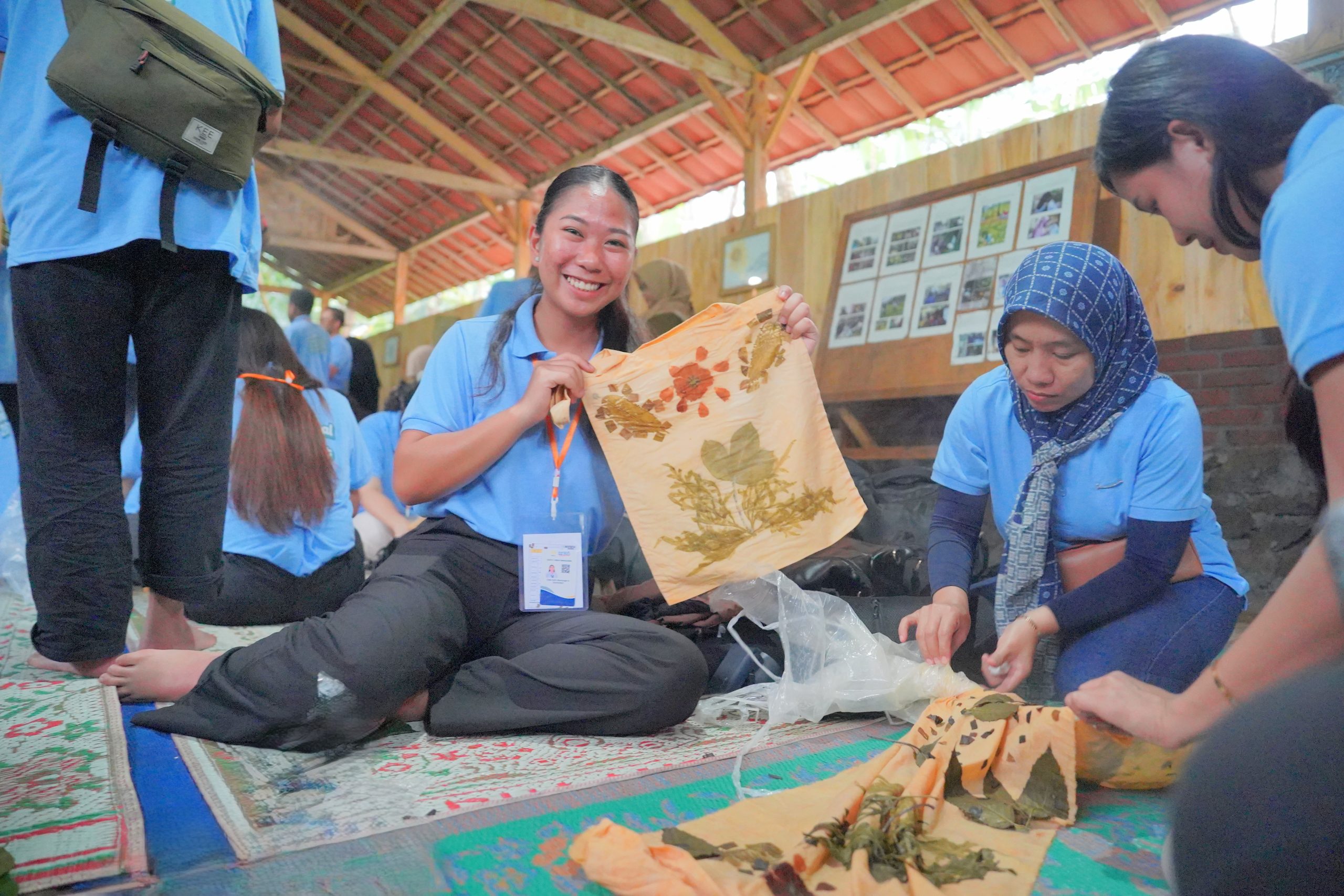
One of the main agendas of ICD 2026 was an ecoprint batik workshop conducted on February 6, 2026. International participants showed great enthusiasm in learning this environmentally friendly batik technique, which utilizes leaves and other natural materials found in the surrounding environment as sources of motifs and natural dyes. Ecoprint served not only as a medium for cultural education but also as a practical example of sustainability.
Through this workshop, participants learned not only the technical process of creating ecoprint textiles but also the cultural values embedded in traditional handicrafts. Direct interaction with village residents provided an authentic experience of how art, environment, and local identity are closely interconnected. This approach is in line with UNNES’s commitment to cultural preservation and sustainability.
The ICD 2026 program was designed using a live-in concept, allowing participants to stay with local communities and take part in various social and educational activities. This immersive approach strengthened cross-cultural learning while simultaneously empowering the village community through meaningful collaboration, reflecting UNNES’s vision of conservation-oriented community development.
Moreover, the ICD 2026 program contributes to global development agendas, particularly SDG 4 (Quality Education), SDG 11 (Sustainable Cities and Communities), and SDG 17 (Partnerships for the Goals) by integrating education, culture, and international cooperation into a single program. In addition, through environmentally friendly ecoprint training, village community empowerment, and cross-national collaboration, the program also supports SDG 12 (Responsible Consumption and Production) and SDG 8 (Decent Work and Economic Growth) for local communities.
Through ICD 2026, UNNES emphasizes that the program is not merely a cultural exchange initiative, but also a concrete effort to strengthen global networks based on sustainability principles and community empowerment. The integration of cultural preservation with sustainable development demonstrates UNNES’s strong commitment to fostering global citizenship grounded in local environmental wisdom.