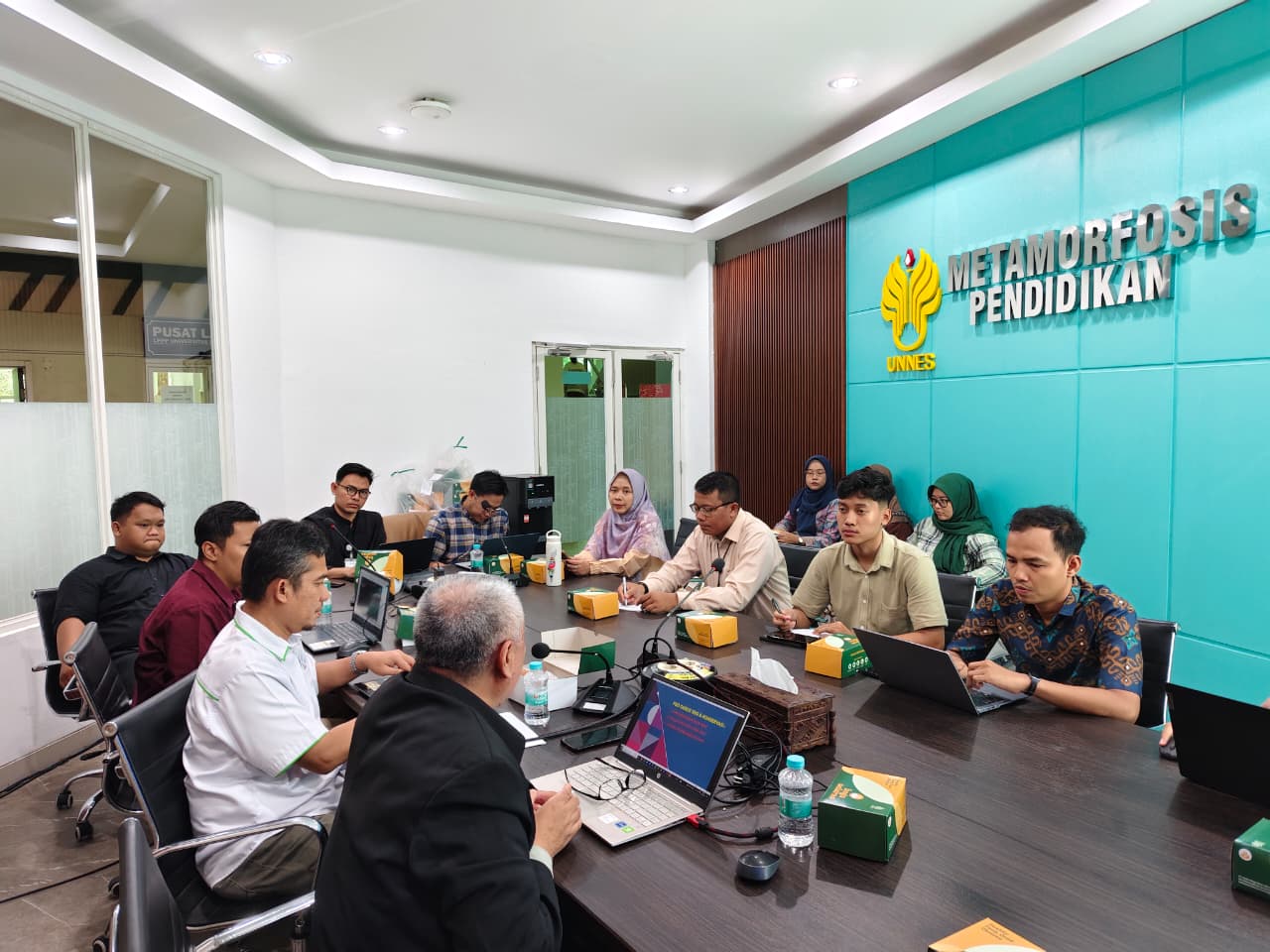


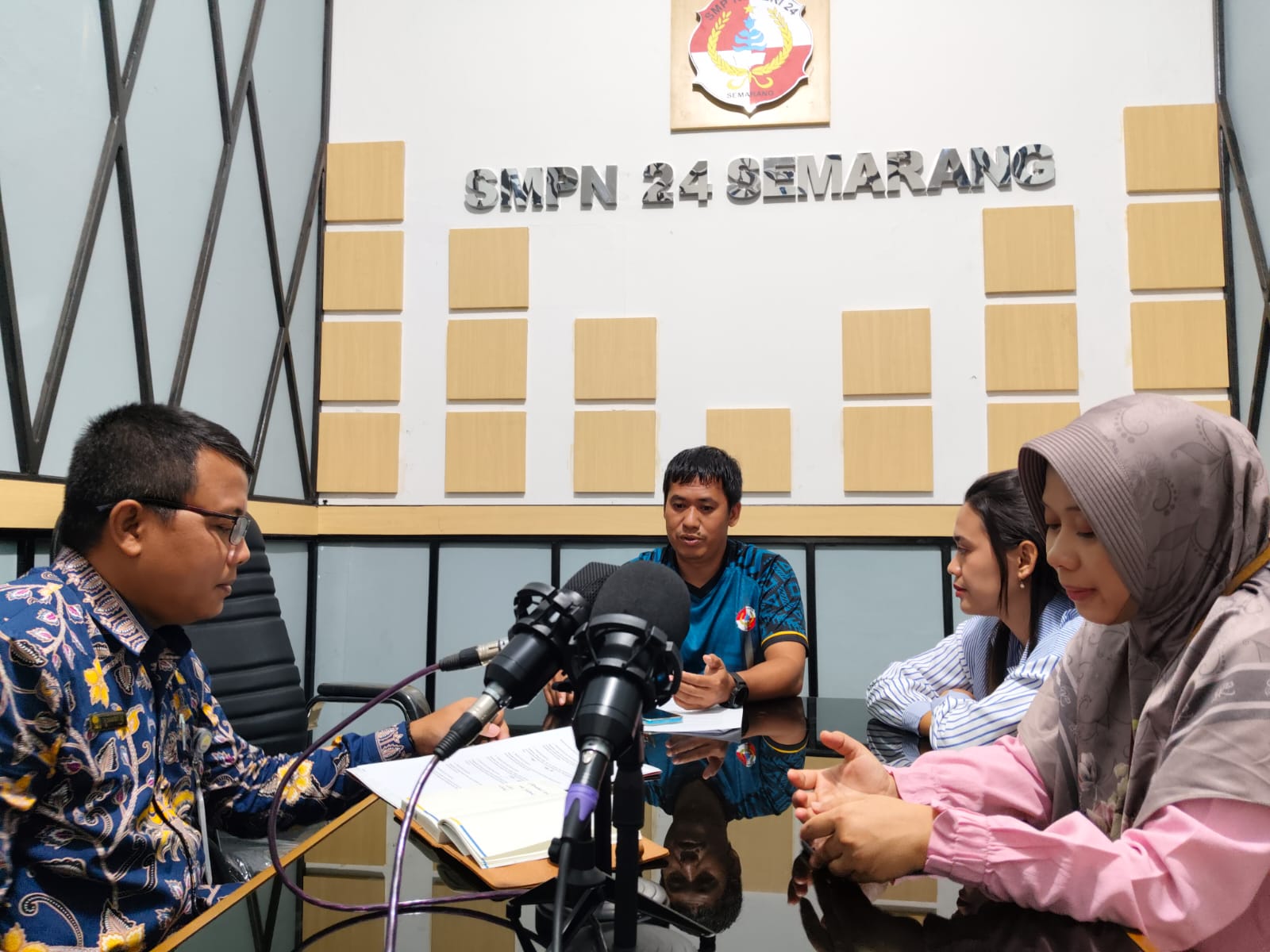
The Conservation Group of the Faculty of Social and Political Sciences (FISIP) of Universitas Negeri Semarang (UNNES) held a discussion on Rainwater Harvesting (RWH) at the podcast studio of SMPN 24 Semarang on Thursday (September 4, 2025). This activity sparked plans to implement rainwater harvesting on a school scale. Furthermore, this initiative aligns with SDG 6: Clean Water and Adequate Sanitation, as well as the agendas of Impactful Community Service and Impactful Education.
The Head of the FISIP UNNES Conservation Group, Rudi Salam, explained that Rainwater Harvesting (RWH) in schools is an easy-to-implement strategy.
“Rainwater harvesting utilizes water as an alternative source through collection and filtration. The goal is to reduce dependence on groundwater, reduce operational costs, and set a conservation example for the school community,” he explained.
He further explained that the technical process begins with water being collected from the roof through gutters. The water is then channeled to a reservoir through pipes with a first flush and filter. The water is then used for non-consumptive purposes such as flushing toilets and watering plants.
Nining Wahyuningsih, a member of the UNNES Faculty of Social and Political Sciences Conservation Group, emphasized the direct impact on the learning ecosystem.
“At school, RWH provides water conservation, alternative water sources, cost efficiency, and environmental education. The practice can be integrated into daily activities, from utilizing water used for ablutions, flushing toilets, watering gardens, and cleaning the yard,” she said.
Representing the Vice Principal for Facilities and Infrastructure, Slamet Budiyono, S.Ag., expressed his full support. “The school is ready to adopt the RWH concept and begin a phased implementation based on needs and capacity,” he said.
He explained the detailed technical design. The roof acts as a water catchment. Gutters and pipes direct the flow. A first flush system removes initial impurities. Filters use wire mesh, sand, and Dacron. Water enters the reservoir. It is distributed through taps to points of use. When full, the runoff is channeled to an infiltration well.