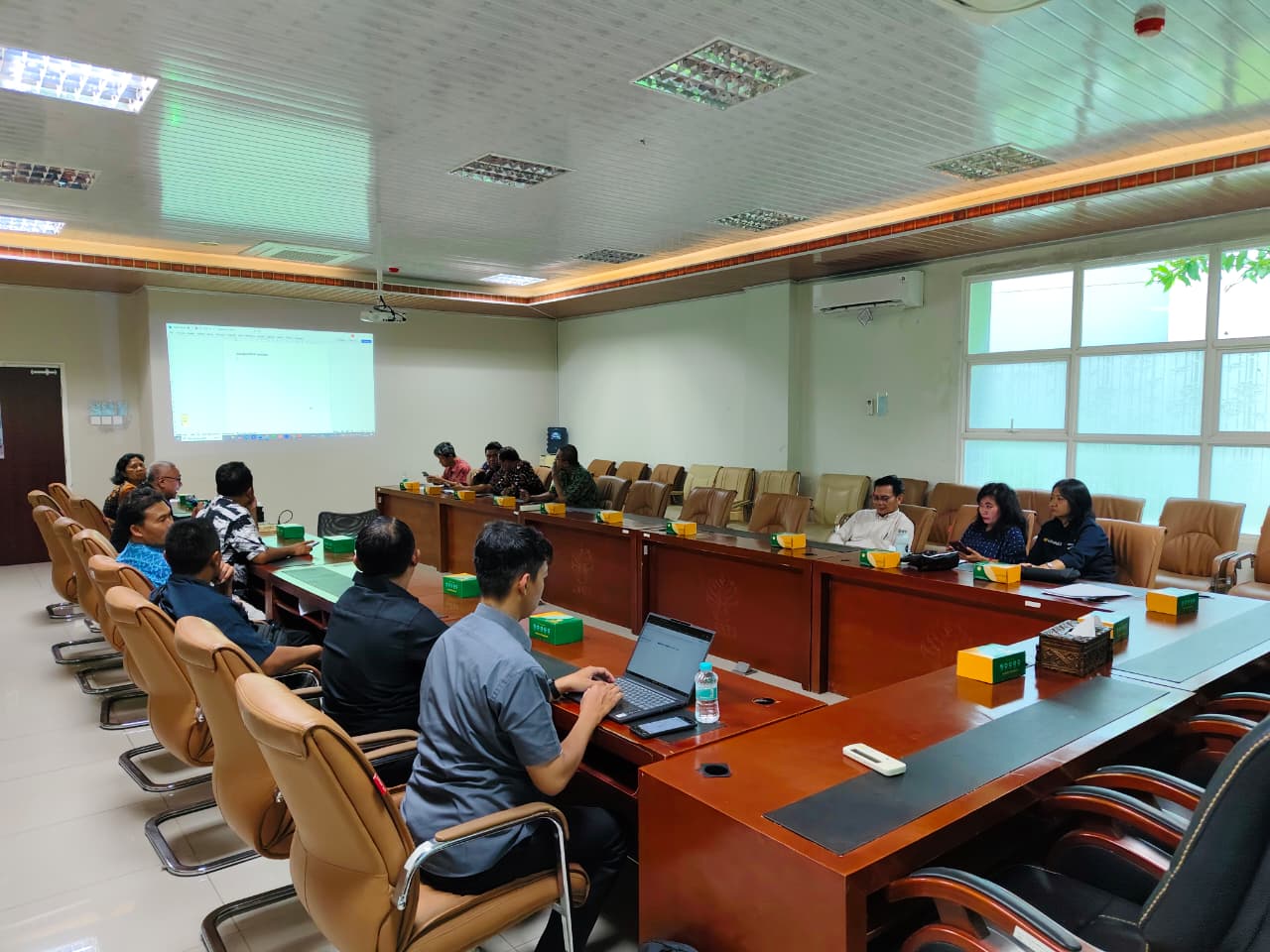
Commemorating International Mother Language Day, Selasa Legen Forum Presents the Theme “Mother Language, How Are You?”

Universitas Negeri Semarang > Konservasi UNNES > News > Commemorating International Mother Language Day, Selasa Legen Forum Presents the Theme “Mother Language, How Are You?”

Mother tongue is a cultural heritage that plays an important role in shaping individual and community identity. However, in the midst of the rapid flow of globalization, the use of mother tongue in various regions is facing major challenges. This phenomenon will be highlighted in the 114th Tuesday Legen Discussion which will be held by Universitas Negeri Semarang (UNNES) on Monday (2/17/2025) evening.

Entitled “Mother Tongue, How Are You?”, the discussion which will take place at the UNNES Cultural Village will present the Head of the Central Java Provincial Language Center, Dr. Syarifuddin; and Prof. Dr. Yusro Edy Nugroho, an academic of Javanese Literature, FBS UNNES. The event, which will be moderated by Nadia Ardiwinata, a Radio Idola announcer, aims to review the importance of collective efforts in preserving the mother tongue.

Dr. Dhoni Zustiyantoro from the UNNES Tuesday Legen Event Division emphasized that the decreasing number of regional language speakers is an increasingly worrying issue. “Mother tongue is identity. If regional languages ​​are increasingly rarely used, then we lose a part of our own culture,” he said.

According to him, urbanization, modernization, and the development of information technology are the main factors influencing the shift in the use of mother tongues. Global languages ​​such as English and national languages ​​are increasingly dominant in everyday communication. “In many urban families, children are more fluent in Indonesian or even English than in their own regional languages,” said Dhoni.

UNESCO has designated February 21 as International Mother Language Day as a reminder of the importance of linguistic diversity and efforts to preserve them. In Indonesia, which has more than 700 regional languages, the challenge of preserving mother tongues is increasingly great. Academics, government, cultural communities, and the wider community are expected to play an active role in efforts to revitalize regional languages.

In this workshop, various ideas for preserving mother tongues will also be discussed. Prof. Dr. Yusro Edy Nugroho assessed that strengthening regional language-based education and utilizing technology in learning mother tongues are the main keys. “Making regional languages ​​more relevant in the digital era can be an important strategy. Educational content based on regional languages ​​needs to be increased so that the younger generation remains interested,” he said.

Head of the Central Java Language Center, Dr. Syarifuddin, added that regional government policies also play a role in preserving mother tongues. “Mandatory regional language programs in schools, speech or writing competitions in regional languages, and the use of social media to promote mother tongues can be concrete steps,” he said.

This workshop is open to the public and is expected to receive high enthusiasm from various groups. The event, which will take place from 19.30 to 22.00 WIB, is expected to be a momentum to increase awareness of the importance of mother tongues and efforts to preserve them. (DHZ)

Related Posts

Leave a Reply

* Kode Akses Komentar:

* Tuliskan kode akses komentar diatas:

We are using cookies to give you the best experience. You can find out more about which cookies we are using or switch them off in privacy settings.
AcceptPrivacy Settings

GDPR

  • Privacy Policy

Privacy Policy

At unnes.ac.id, the privacy of our visitors is of extreme importance to us. This privacy policy document outlines the types of personal information that is received and collected by unnes.ac.id and how it is used.

Log Files

Like many other Web sites, unnes.ac.id makes use of log files. The information inside the log files includes internet protocol (IP) addresses, type of browser, Internet Service Provider (ISP), date/time stamp, referring/exit pages, and number of clicks to analyze trends, administer the site, track user’s movement around the site, and gather demographic information. IP addresses and other such information are not linked to any information that is personally identifiable.

Cookies

unnes.ac.id uses cookies to store information about visitors’ preferences, to record user-specific information on which pages the site visitor accesses or visits, and to personalize or customize our web page content based upon visitors’ browser type or other information that the visitor sends via their browser.

Third-party ad servers or ad networks use technology in their respective advertisements and links that appear on unnes.ac.id and which are sent directly to your browser. They automatically receive your IP address when this occurs. Other technologies (such as cookies, JavaScript, or Web Beacons) may also be used by our site’s third-party ad networks to measure the effectiveness of their advertising campaigns and/or to personalize the advertising content that you see on the site.

unnes.ac.id has no access to or control over these cookies that are used by third-party advertisers.

You should consult the respective privacy policies of these third-party ad servers for more detailed information on their practices as well as for instructions about how to opt-out of certain practices. unnes.ac.id’s privacy policy does not apply to, and we cannot control the activities of, such other advertisers or web sites.

If you wish to disable cookies, you may do so through your individual browser options. More detailed information about cookie management with specific web browsers can be found at the browsers’ respective websites.

Consent

By using our website, you hereby consent to our privacy policy and agree to its terms.

Update

This Privacy Policy was last updated on: 2023-02-14. Should we update, amend or make any changes to our privacy policy, those changes will be posted here.

Contact Us

If you have any questions, comments, or concerns about our Privacy Policy or our practices with regards to your personal information, please feel free to contact us through the contact form on our website or by emailing us at humas[at]mail.unnes.ac.id.

This Privacy Policy is intended as a general guide to our practices in collecting and using information. If there is any inconsistency between this Privacy Policy and the terms of the Service Agreement or any other terms that may apply to specific services you use, then those specific service terms shall apply.

Terms of Use

By using our website, you agree to abide by this Privacy Policy. If you do not agree with this Privacy Policy, please do not use our website. We reserve the right to update this Privacy Policy from time to time without prior notice. Please review our Privacy Policy periodically to check for changes. Your continued use of our website following the posting of changes to this Privacy Policy means that you accept the changes.

Thank you for reading our Privacy Policy. We are committed to protecting the privacy of our website visitors and will continue to update our Privacy Policy to ensure optimal protection.