Building a Creative and Healthy Generation, GIAT 12 UNNES Combats the Negative Impact of Gadgets with “Omah Bocah” (Children’s Home)

Universitas Negeri Semarang > Konservasi UNNES > News > Building a Creative and Healthy Generation, GIAT 12 UNNES Combats the Negative Impact of Gadgets with “Omah Bocah” (Children’s Home)

In the digital era, gadgets have become an inseparable part of children’s lives. While they provide easy access to information, excessive gadget use can have negative impacts, such as reduced social interaction, weakened concentration, and the risk of physical and mental health problems. This situation has prompted the need for alternative educational spaces that can guide children towards creative and healthy activities.

To address this challenge, Semarang State University (UNNES) students participating in the GIAT 12 Community Service Program (KKN) presented the Omah Bocah x GIAT 12 UNNES 2025 activity at the Terban Village Hall in late July 2025. This activity demonstrates the UNNES students’ commitment to weaning children off gadget dependency and fostering a creative, healthy, and independent generation.

More than just entertainment, Omah Bocah is designed as an alternative learning space outside the classroom that emphasizes social interaction, creativity, and independence in children. In his remarks, the activity leader emphasized the importance of creating a healthy and educational play environment as a solution to the increasing tendency of children to spend time on gadgets.

“Through physical activities, art, and group work, children can learn many things they can’t get from screens,” said one of the GIAT 12 committee members.

The event opened with the singing of the Indonesian national anthem (Indonesia Raya) and the reading of the Pancasila text, followed by morning exercise. Students then presented three game stations designed with an educational approach, including:

  1. Station 1: Balancing a Ping-Pong Ball
    Guided by Jonathan, the children used chopsticks to balance a ping-pong ball for two minutes. This favorite game trains concentration, patience, and fine motor coordination.
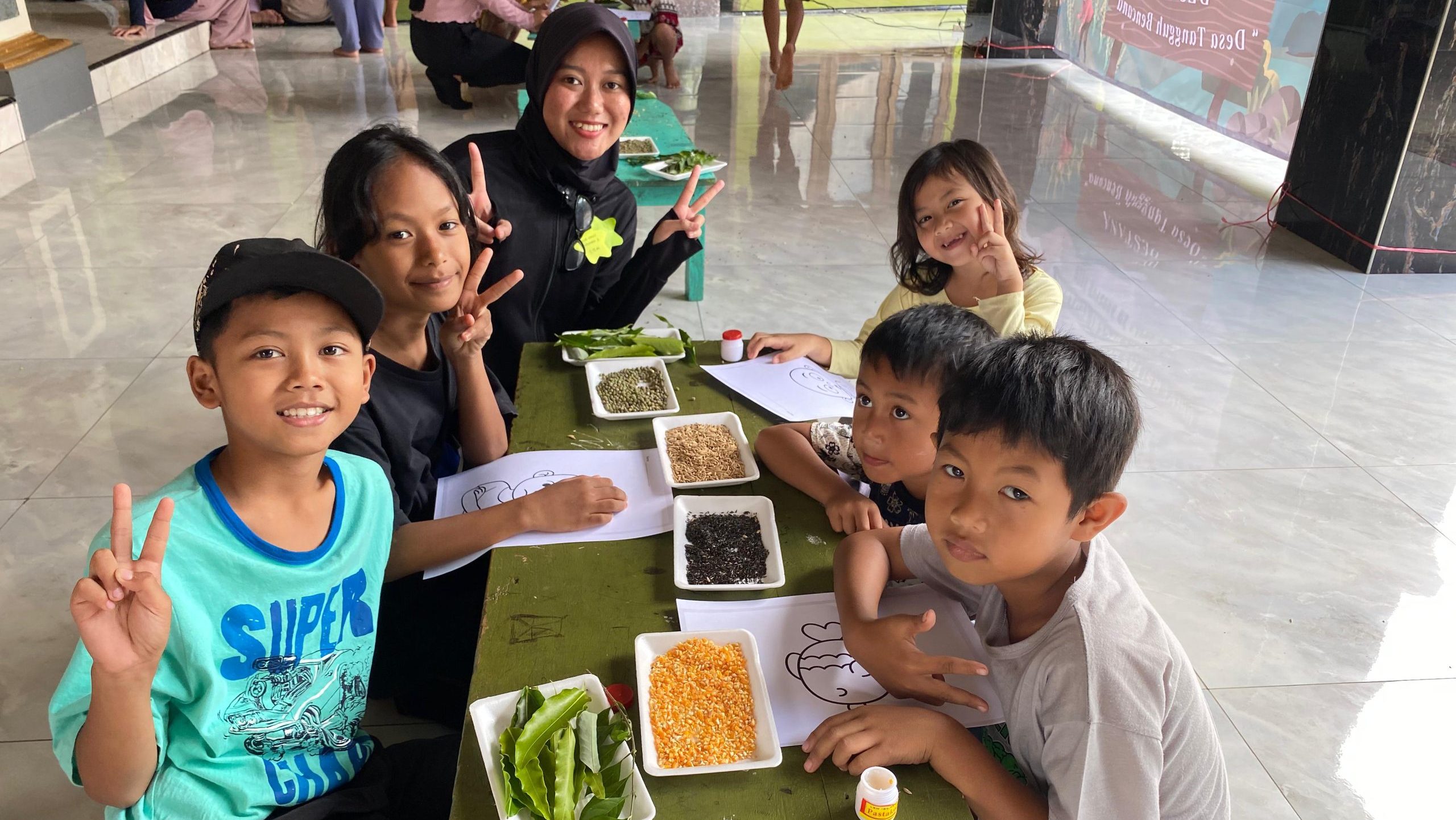
  2. Station 2: Ecoprinting Natural Works
    Under Nadia’s guidance, the children created works using dried leaves and local grains such as mung beans and black glutinous rice. This activity enriched their imaginations while fostering awareness of the biodiversity around them.
  3. Station 3: Rubber in a Glass Relay
    Salma led the game, which emphasized teamwork, strategy, and physical dexterity. In addition to fostering a spirit of healthy competition, this activity strengthened social bonds among the participants.

In closing, the children collectively created handprints on large pieces of paper using watercolors. This activity symbolized their courage to express themselves, collaboration, and memories they will cherish forever.

The participants’ enthusiasm was evident. Many children were happy to be able to learn and play together without having to hold a device all day.

“It’s so much fun, being able to play with friends and not have a phone all day,” said one participant enthusiastically.

Through this activity, UNNES students demonstrated that community-based education remains relevant as an answer to the challenges of digitalization. Omah Bocah is a concrete step towards developing a healthy, creative, and character-driven generation through hands-on experience, not just from a screen.
Related Posts

Leave a Reply

* Kode Akses Komentar:

* Tuliskan kode akses komentar diatas:

We are using cookies to give you the best experience. You can find out more about which cookies we are using or switch them off in privacy settings.
AcceptPrivacy Settings

GDPR

  • Privacy Policy

Privacy Policy

At unnes.ac.id, the privacy of our visitors is of extreme importance to us. This privacy policy document outlines the types of personal information that is received and collected by unnes.ac.id and how it is used.

Log Files

Like many other Web sites, unnes.ac.id makes use of log files. The information inside the log files includes internet protocol (IP) addresses, type of browser, Internet Service Provider (ISP), date/time stamp, referring/exit pages, and number of clicks to analyze trends, administer the site, track user’s movement around the site, and gather demographic information. IP addresses and other such information are not linked to any information that is personally identifiable.

Cookies

unnes.ac.id uses cookies to store information about visitors’ preferences, to record user-specific information on which pages the site visitor accesses or visits, and to personalize or customize our web page content based upon visitors’ browser type or other information that the visitor sends via their browser.

Third-party ad servers or ad networks use technology in their respective advertisements and links that appear on unnes.ac.id and which are sent directly to your browser. They automatically receive your IP address when this occurs. Other technologies (such as cookies, JavaScript, or Web Beacons) may also be used by our site’s third-party ad networks to measure the effectiveness of their advertising campaigns and/or to personalize the advertising content that you see on the site.

unnes.ac.id has no access to or control over these cookies that are used by third-party advertisers.

You should consult the respective privacy policies of these third-party ad servers for more detailed information on their practices as well as for instructions about how to opt-out of certain practices. unnes.ac.id’s privacy policy does not apply to, and we cannot control the activities of, such other advertisers or web sites.

If you wish to disable cookies, you may do so through your individual browser options. More detailed information about cookie management with specific web browsers can be found at the browsers’ respective websites.

Consent

By using our website, you hereby consent to our privacy policy and agree to its terms.

Update

This Privacy Policy was last updated on: 2023-02-14. Should we update, amend or make any changes to our privacy policy, those changes will be posted here.

Contact Us

If you have any questions, comments, or concerns about our Privacy Policy or our practices with regards to your personal information, please feel free to contact us through the contact form on our website or by emailing us at humas[at]mail.unnes.ac.id.

This Privacy Policy is intended as a general guide to our practices in collecting and using information. If there is any inconsistency between this Privacy Policy and the terms of the Service Agreement or any other terms that may apply to specific services you use, then those specific service terms shall apply.

Terms of Use

By using our website, you agree to abide by this Privacy Policy. If you do not agree with this Privacy Policy, please do not use our website. We reserve the right to update this Privacy Policy from time to time without prior notice. Please review our Privacy Policy periodically to check for changes. Your continued use of our website following the posting of changes to this Privacy Policy means that you accept the changes.

Thank you for reading our Privacy Policy. We are committed to protecting the privacy of our website visitors and will continue to update our Privacy Policy to ensure optimal protection.