



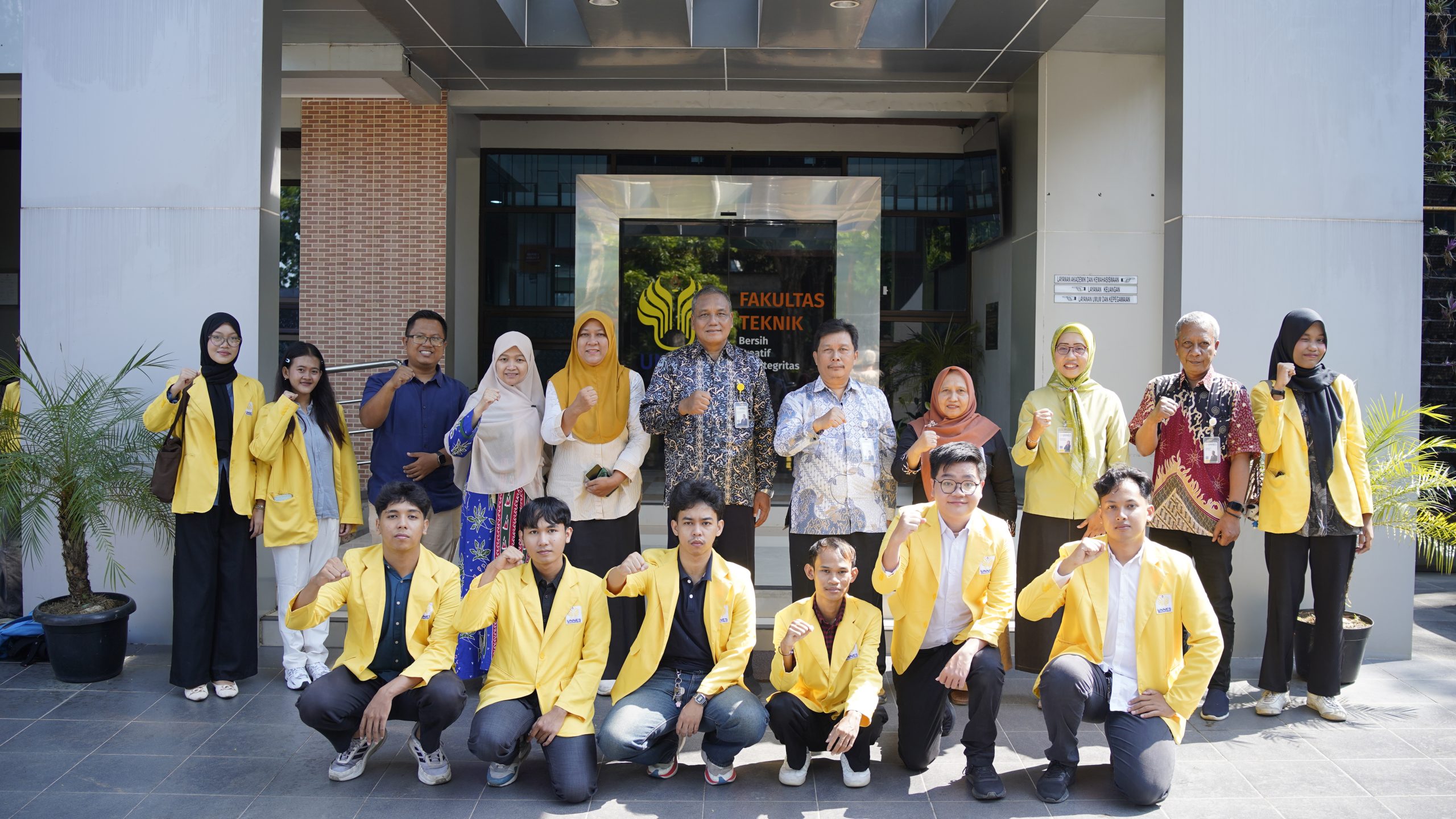
SEMARANG — The Faculty of Engineering at Universitas Negeri Semarang (FT UNNES) continues to strengthen its commitment to advancing higher education internationalization by organizing an International Outbound Student Mobility Program at Universiti Malaysia Pahang Al-Sultan Abdullah (UMPSA), Malaysia. A total of 11 FT UNNES students participated in the program to enhance their academic competencies, broaden international perspectives, and deepen mastery of sustainable technology (Green Technology).
Student participation in this international mobility initiative represents a strategic step by FT UNNES to provide cross-border learning experiences while expanding academic networks with overseas partner universities. Through the program, students gain opportunities to broaden their horizons, exchange knowledge, and explore scientific and technological advancements—particularly eco-friendly technologies that play a vital role in sustainable development.
Strengthening Green Technology competencies stands out as a key focus of the program, as modern technological progress calls for human capital that excels academically and professionally while maintaining environmental awareness. This aligns with UNNES’s vision as a Conservation-Minded World-Class University, which anchors education, research, and community engagement in conservation and sustainability values.
Beyond advancing expertise in sustainable technology, the program is expected to foster cross-cultural communication skills, adaptability, collaboration, and confidence within global academic environments. Learning and interacting in an international setting equips students to strengthen their competitiveness and prepare for an increasingly demanding global workforce.
The International Outbound Student Mobility Program at UMPSA also reflects FT UNNES’s tangible contribution toward advancing the United Nations Sustainable Development Goals (SDGs). It directly supports SDG 4 (Quality Education) by elevating the quality and reach of international learning experiences; SDG 17 (Partnerships for the Goals) by strengthening cross-border academic collaboration and partnership with UMPSA; SDG 9 (Industry, Innovation, and Infrastructure) by building knowledge and competencies in sustainable technology and innovation; and SDG 13 (Climate Action) by deepening understanding of and commitment to environmentally friendly technologies.
Through this initiative, FT UNNES hopes to enable even more students to gain global competencies and international academic exposure. The participation of 11 FT UNNES students underscores the faculty’s commitment to graduating capable, innovative, globally competitive professionals with a strong dedication to environmental sustainability in support of sustainable development.