MU–NU Tak Selalu Berseberangan, Ini Temuan Studi Mahasiswa S3 PIPS

Universitas Negeri Semarang > Faculty of Social Sciences and Political Science > Berita > MU–NU Tak Selalu Berseberangan, Ini Temuan Studi Mahasiswa S3 PIPS

Perbedaan praktik keagamaan di kalangan remaja masjid di Kota Semarang tidak serta-merta memicu konflik. Justru, kedekatan nilai antara Muhammadiyah (MU) dan Nahdlatul Ulama (NU) dinilai menjadi faktor penting dalam menjaga harmoni antar komunitas Islam.

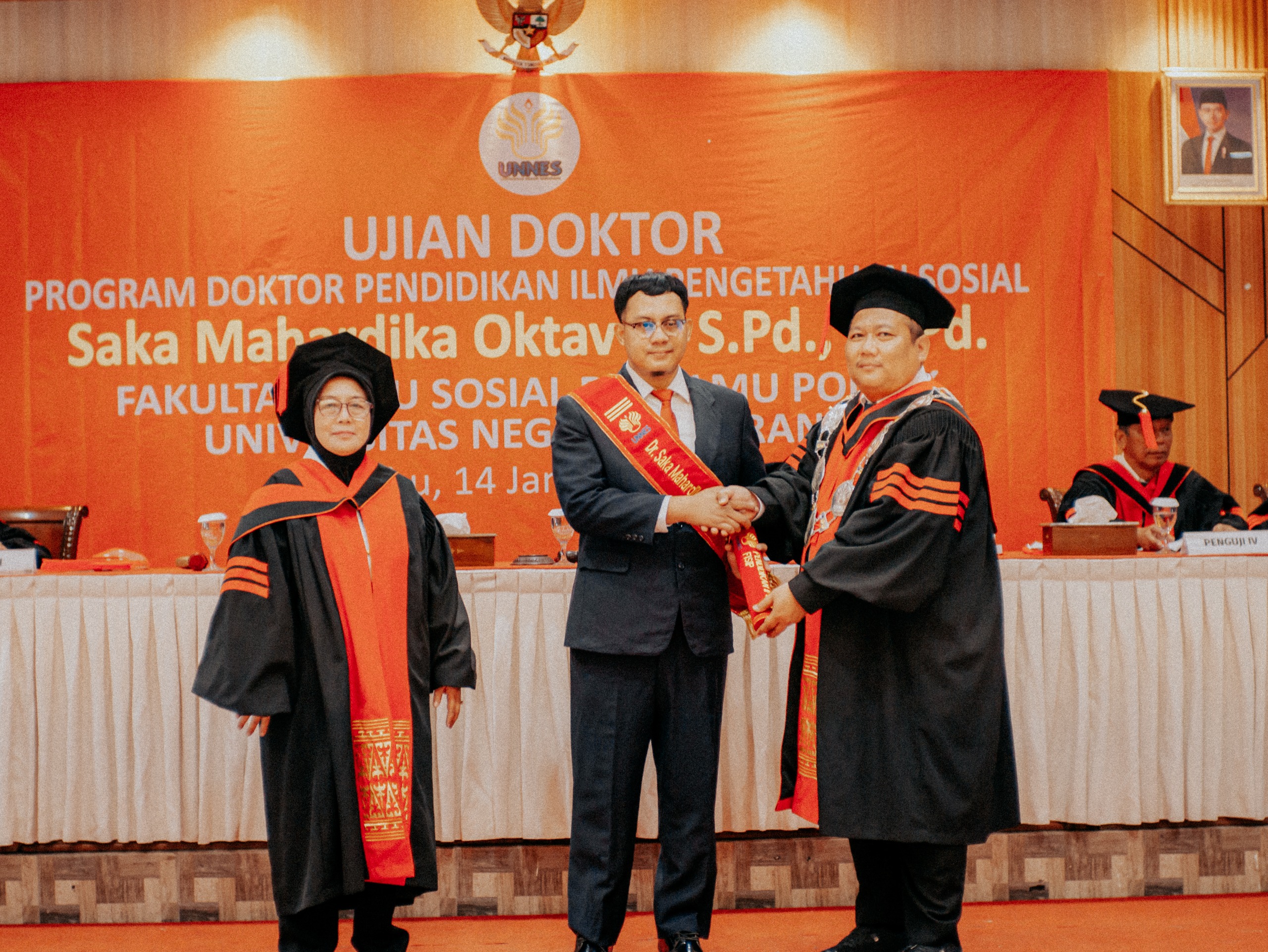
Hal itu terungkap dalam disertasi Saka Mahardika Oktav Nugraha, mahasiswa Program Doktor Pendidikan Ilmu Pengetahuan Sosial (PIPS) Pascasarjana Universitas Negeri Semarang (Unnes). Disertasi tersebut dipresentasikan dalam sidang terbuka yang digelar Rabu (14/1) di Aula C7 FISIP Unnes, Sekaran, Gunungpati, Semarang.

Penelitian Saka mengkaji kehidupan beragama empat komunitas remaja masjid, yakni Muhammadiyah, NU, Jamaah Tabligh, dan Lembaga Dakwah Islam Indonesia (LDII). Hasilnya menunjukkan bahwa meski terdapat perbedaan praktik ibadah, gaya hidup, hingga simbol keagamaan, konflik terbuka relatif jarang terjadi.“Muhammadiyah dan NU memiliki kedekatan secara sosial dan kultural. Perbedaan tidak dipahami sebagai ancaman, tetapi sebagai variasi cara beragama,” ujar Saka dalam pemaparannya.

Dalam praktik ibadah, perbedaan seperti bacaan basmalah dalam shalat, qunut, hingga jumlah rakaat tarawih menjadi penanda identitas masing-masing komunitas. Namun, menurut Saka, potensi konflik lebih sering muncul dari pemahaman agama yang dangkal di kalangan remaja awam, bukan dari kader atau elit yang memiliki literasi keagamaan kuat.
“Kedekatan Muhammadiyah dan NU terlihat dari sikap saling menghormati di ruang sosial. Perbedaan fikih tidak dibawa ke ranah saling menyalahkan,” jelasnya.

Dari sisi gaya hidup, remaja masjid menunjukkan perbedaan dalam fesyen, budaya konsumsi, dan aktivitas sosial. Namun perbedaan tersebut lebih sering menjadi simbol identitas ketimbang sumber konflik. Konflik baru muncul ketika simbol keagamaan dimaknai secara eksklusif dan kaku.

Penelitian ini juga menemukan dua model komunikasi efektif untuk meredam potensi konflik, yakni komunikasi formal melalui diskusi, seminar, dan forum lintas komunitas, serta komunikasi informal lewat interaksi keseharian, dakwah sebaya, hingga humor.
Kolaborasi lintas organisasi juga tampak dalam gerakan sosial seperti Germas Berkat di Semarang yang melibatkan kader NU, Muhammadiyah, dan LDII. “Identitas organisasi dilebur. Fokusnya pada pemberantasan penyakit masyarakat, bukan perbedaan mazhab,” kata Saka.
Ketua Dewan Penguji yang juga Dekan FISIP Unnes, Prof. Arif Purnomo, menyatakan Saka dinyatakan lulus dan berhak menyandang gelar Doktor Pendidikan. Saka tercatat sebagai doktor ke-8 lulusan FISIP Unnes dengan masa studi 4 tahun 5 bulan.
“Disertasi diberi nilai A dengan IPK 3,96 dan predikat kelulusan sangat memuaskan,” ujar Prof. Arif.

Promotor disertasi, Prof. Juhadi, M.Si., mengapresiasi kepekaan Saka terhadap nilai kemanusiaan, toleransi, dan kebinekaan. Menurutnya, perbedaan keberagamaan di kalangan remaja masjid bukan ancaman, melainkan sumber pembelajaran kontekstual bagi Pendidikan IPS. “Ini IPS yang reflektif dan relevan dengan tantangan kebangsaan. Jangan berhenti di disertasi, tapi kembangkan untuk perumusan kebijakan publik,” pesannya.

Sementara itu, Saka menyampaikan terima kasih kepada dosen, keluarga, dan kolega yang telah mendukung proses akademiknya. “Hidup harus memberi kebermanfaatan. Gelar doktor ini adalah tanggung jawab moral untuk terus menguatkan dialog dan toleransi,” pungkasnya.
Related Posts

Leave a Reply

* Kode Akses Komentar:

* Tuliskan kode akses komentar diatas:

GDPR

  • Privacy Policy

Privacy Policy

At unnes.ac.id, the privacy of our visitors is of extreme importance to us. This privacy policy document outlines the types of personal information that is received and collected by unnes.ac.id and how it is used.

Log Files

Like many other Web sites, unnes.ac.id makes use of log files. The information inside the log files includes internet protocol (IP) addresses, type of browser, Internet Service Provider (ISP), date/time stamp, referring/exit pages, and number of clicks to analyze trends, administer the site, track user’s movement around the site, and gather demographic information. IP addresses and other such information are not linked to any information that is personally identifiable.

Cookies

unnes.ac.id uses cookies to store information about visitors’ preferences, to record user-specific information on which pages the site visitor accesses or visits, and to personalize or customize our web page content based upon visitors’ browser type or other information that the visitor sends via their browser.

Third-party ad servers or ad networks use technology in their respective advertisements and links that appear on unnes.ac.id and which are sent directly to your browser. They automatically receive your IP address when this occurs. Other technologies (such as cookies, JavaScript, or Web Beacons) may also be used by our site’s third-party ad networks to measure the effectiveness of their advertising campaigns and/or to personalize the advertising content that you see on the site.

unnes.ac.id has no access to or control over these cookies that are used by third-party advertisers.

You should consult the respective privacy policies of these third-party ad servers for more detailed information on their practices as well as for instructions about how to opt-out of certain practices. unnes.ac.id’s privacy policy does not apply to, and we cannot control the activities of, such other advertisers or web sites.

If you wish to disable cookies, you may do so through your individual browser options. More detailed information about cookie management with specific web browsers can be found at the browsers’ respective websites.

Consent

By using our website, you hereby consent to our privacy policy and agree to its terms.

Update

This Privacy Policy was last updated on: 2023-02-14. Should we update, amend or make any changes to our privacy policy, those changes will be posted here.

Contact Us

If you have any questions, comments, or concerns about our Privacy Policy or our practices with regards to your personal information, please feel free to contact us through the contact form on our website or by emailing us at humas[at]mail.unnes.ac.id.

This Privacy Policy is intended as a general guide to our practices in collecting and using information. If there is any inconsistency between this Privacy Policy and the terms of the Service Agreement or any other terms that may apply to specific services you use, then those specific service terms shall apply.

Terms of Use

By using our website, you agree to abide by this Privacy Policy. If you do not agree with this Privacy Policy, please do not use our website. We reserve the right to update this Privacy Policy from time to time without prior notice. Please review our Privacy Policy periodically to check for changes. Your continued use of our website following the posting of changes to this Privacy Policy means that you accept the changes.

Thank you for reading our Privacy Policy. We are committed to protecting the privacy of our website visitors and will continue to update our Privacy Policy to ensure optimal protection.