

SEMARANG – Students from the Elementary School Teacher Education (PGSD) Study Program in the Faculty of Education and Psychology (FIPP) at Semarang State University (UNNES) held a children’s literature wall magazine exhibition using recycled materials on Monday (May 25, 2026).
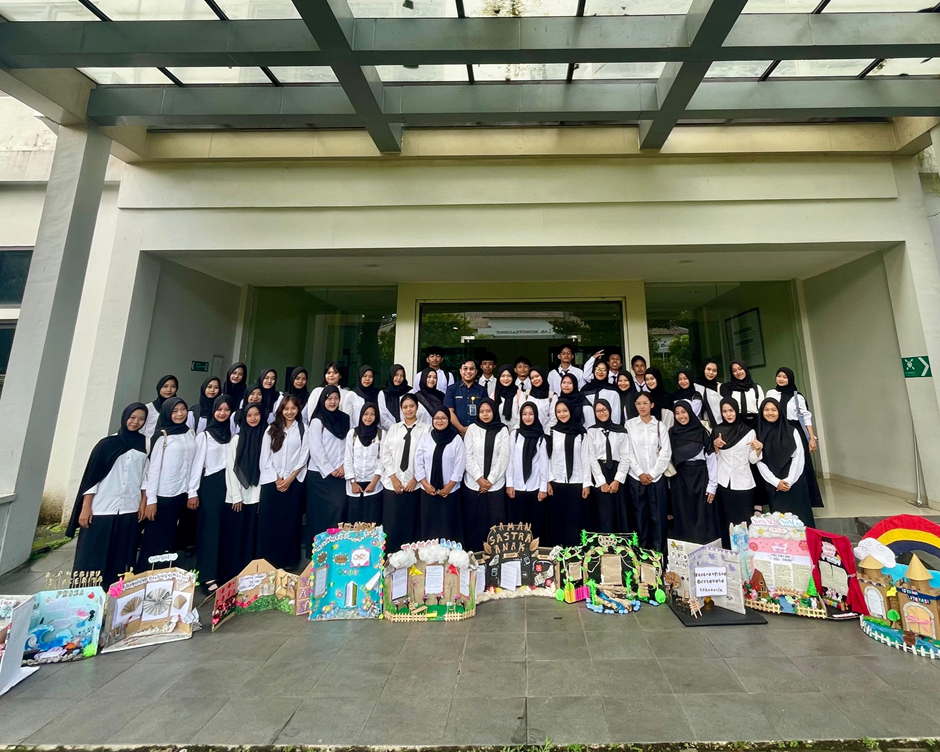
The exhibition, held on the FIPP UNNES campus, was the final project for the Indonesian Language Skills course. A total of 127 students and their lecturers were actively involved.
The exhibition aimed to hone students’ creativity in presenting literary works such as poetry, prose, and drama scripts in a more engaging way. Beyond simply displaying the wall magazine, each student group also took turns demonstrating their skills (performances) in class.
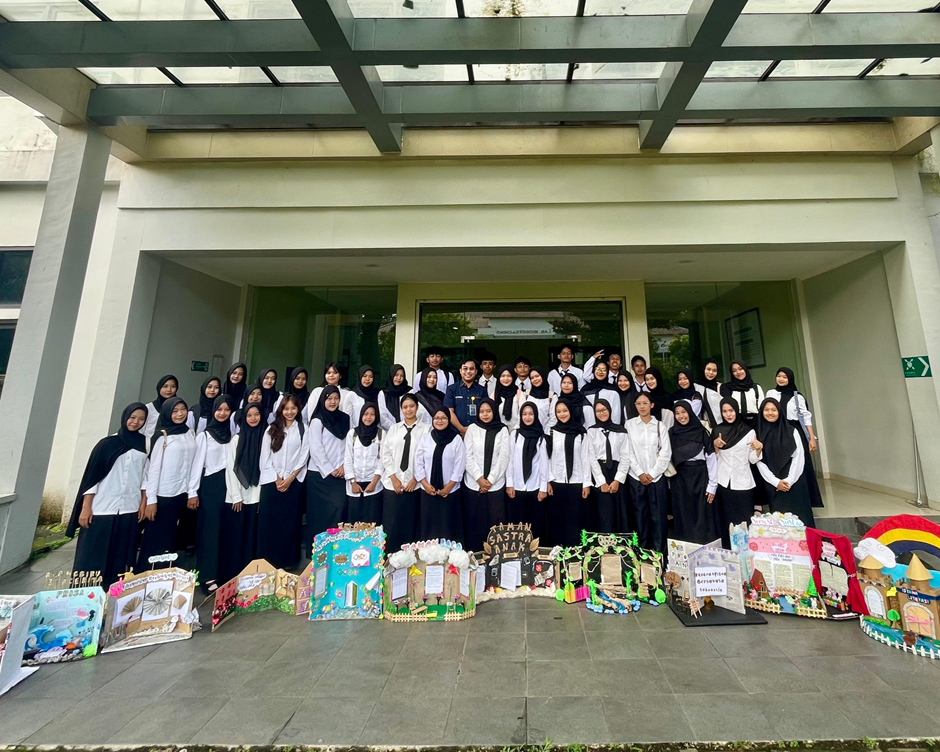
One of the students, Atha, expressed satisfaction with the results of her team’s hard work. She believes the process of creating the wall magazine has been a valuable asset for future educators.
“The process was quite exhausting, but the fatigue was immediately rewarded. We were very satisfied because we worked together. The end result was not only attractive but also very functional for elementary school students. For us as prospective teachers, this is a very suitable learning model,” said Atha.
Encouraging Creativity and Environmental Awareness
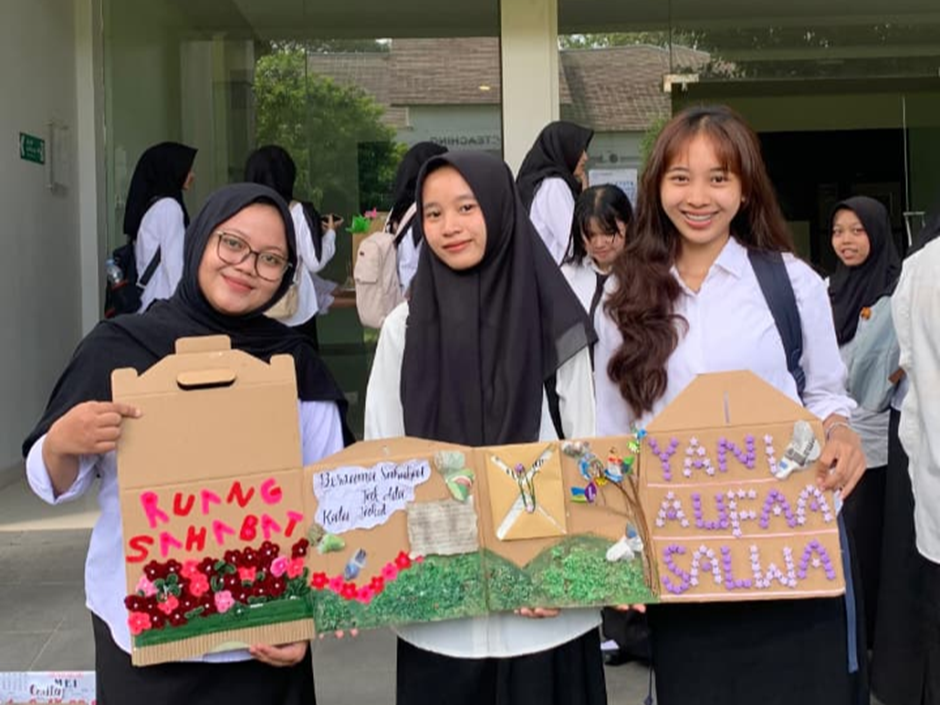
Another student, Yani Aulia Nurbaeti, also highlighted the ecological aspect. She considered this waste utilization a creative solution to the daily waste problem.
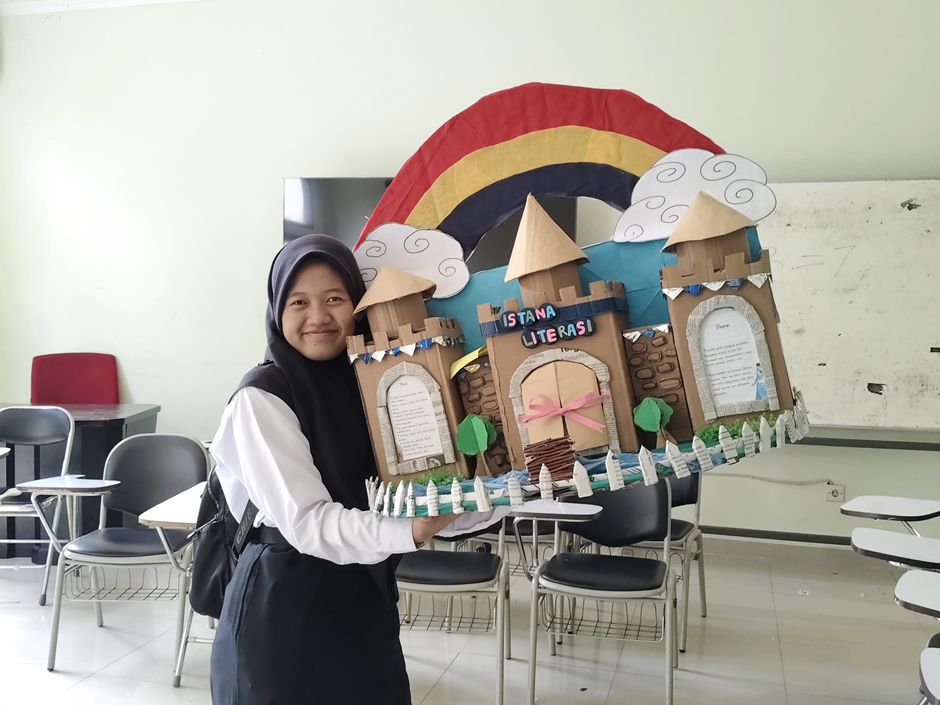
“With the assignment to create learning media from recycled used goods, this can train our creativity as prospective teachers. During the exhibition, we saw many creative ideas from students, such as using used cassettes for star-shaped ornaments and using shopping tote bags,” said Yani.
Echoing Yani, Alifiya Laudya Saputri, familiarly known as Laud, expressed that this activity successfully changed their perspective on used goods.
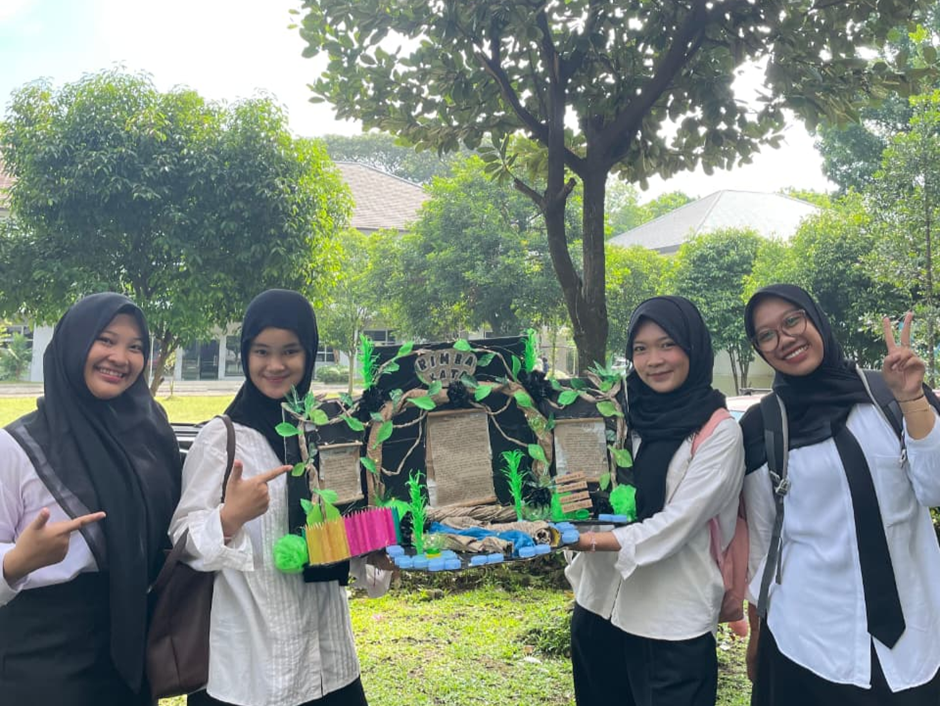
“We realized that used goods don’t always have to be thrown away because they can still be processed into interesting works. I hope activities like this continue to develop because they not only foster creativity but also teach environmental awareness,” said Laud.
The students’ concrete actions were assessed as aligned with the Sustainable Development Goals (SDGs), particularly point 4 on Quality Education and point 13 on Climate Action.
Peer-Based Assessment
The event concluded with a unique assessment system. After all groups had completed their presentations and presented their performances, the lecturer distributed sticky notes to all students.
Each student was asked to write their name on the front, then secretly write the number of the group with the best performance on the back (voting). The notes were then collected for a collective tally.
The exhibition concluded with a group photo session of students, lecturers, and all the students on the wall magazine in the front yard of the new PGSD FIPP UNNES building. An atmosphere of togetherness and pride radiated from all participants for the smooth running of the event.