UNNES Dorong Penguatan Pembelajaran Numerasi Inklusif melalui Program EQuITy

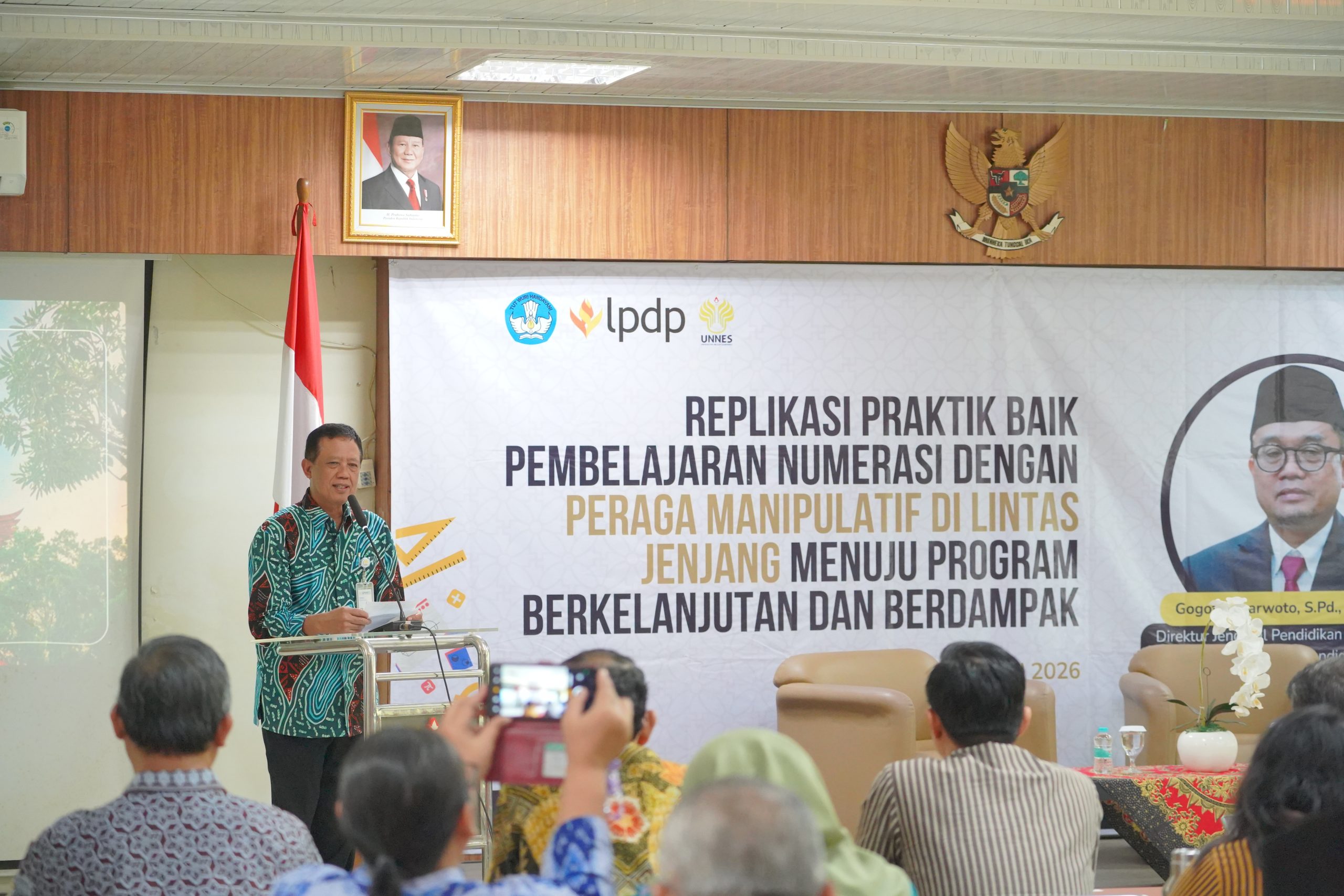
Universitas Negeri Semarang (UNNES) menyelenggarakan Focus Group Discussion (FGD) dan Diseminasi Pengabdian kepada Masyarakat Program EQuITy sebagai upaya memperkuat pembelajaran numerasi inklusif lintas jenjang pendidikan di Ruang Borobudur, Lembaga Penelitian dan Pengabdian Masyarakat (LPPM) UNNES, Kota Semarang, Selasa (3/2/2026).

Kegiatan yang diinisiasi oleh Pusat Unggulan Iptek (PUI) UNNES ini diikuti oleh pemangku kepentingan pendidikan, mulai dari pengelola PAUD, kepala sekolah, guru SD, SMP, hingga satuan pendidikan luar biasa (SLB), serta perwakilan pemerintah daerah dan lembaga penjaminan mutu pendidikan.

Rektor UNNES Prof. Dr. S Martono, M.Si melalui Sekretaris Universitas Prof. Dr. Sugianto, M.Si., menegaskan bahwa pembelajaran numerasi merupakan kompetensi dasar yang harus dikuatkan sejak dini dan diterapkan secara inklusif.

“Numerasi bukan sekadar kemampuan berhitung, melainkan keterampilan berpikir logis, analitis, dan kritis. Melalui pembelajaran berbasis alat peraga manipulatif, peserta didik memperoleh pengalaman belajar yang konkret, menyenangkan, dan bermakna,” tegasnya.

Asisten Deputi Pendidikan Keagamaan, Deputi Bidang Peningkatan Kualitas Pendidikan dan Moderasi Beragama, Kemenko PMK RI, Dr. H. Khamim, M.Pd., menekankan bahwa penguatan numerasi harus menjadi prioritas di seluruh jenjang pendidikan dan tidak terbatas pada mata pelajaran matematika semata.

“Numerasi adalah cara berpikir matematis dalam konteks nyata. Ia dibangun melalui proses yang konsisten dan berkelanjutan, berangkat dari pengalaman konkret dan bermakna, serta didukung oleh kebijakan yang memberi ruang bagi praktik baik untuk berkembang,” tuturnya.

Menurutnya, praktik-praktik baik pembelajaran numerasi yang tumbuh dari kelas perlu direplikasi secara luas dengan pendampingan yang tepat agar berdampak berkelanjutan. Pemanfaatan alat peraga manipulatif dinilai sebagai strategi sederhana namun berdampak besar dalam menjembatani pemahaman peserta didik dari konsep konkret ke abstrak.

Sementara itu, Kepala Balai Besar Penjaminan Mutu Pendidikan (BBPMP) Provinsi Jawa Tengah, Dr. Nugraheni Triastuti, S.E., M.Si siap membuka kemitraan strategis dengan UNNES untuk mengawal implementasi dan replikasi pembelajaran numerasi inovatif di sekolah-sekolah.

“Selama ini pembelajaran masih banyak berbasis mata pelajaran. Padahal numerasi menuntut kemampuan menggunakan logika, simbol, dan analisis dalam konteks kehidupan sehari-hari. Praktik baik ini perlu disebarluaskan ke satuan pendidikan lintas jenjang,” ungkapnya.

Sementara itu, Kepala Bidang Pendidikan Khusus Dinas Pendidikan Provinsi Jawa Tengah, Sunarto , S.Pd., M.Pd., menekankan pentingnya diseminasi praktik baik ini bagi penguatan pembelajaran numerasi di satuan pendidikan luar biasa (SLB).

“Anak-anak disabilitas membutuhkan pendekatan pembelajaran numerasi yang adaptif dan kontekstual. Praktik baik yang dipaparkan hari ini dapat direplikasi dan dikembangkan di 188 satuan pendidikan luar biasa di Jawa Tengah,” bebernya.
Related Posts

Leave a Reply

* Kode Akses Komentar:

* Tuliskan kode akses komentar diatas:

GDPR

  • Privacy Policy

Privacy Policy

Who we are

Our website address is: https://unnes.ac.id.

Comments

When visitors leave comments on the site we collect the data shown in the comments form, and also the visitor’s IP address and browser user agent string to help spam detection.

An anonymized string created from your email address (also called a hash) may be provided to the Gravatar service to see if you are using it. The Gravatar service privacy policy is available here: https://automattic.com/privacy/. After approval of your comment, your profile picture is visible to the public in the context of your comment.

Media

If you upload images to the website, you should avoid uploading images with embedded location data (EXIF GPS) included. Visitors to the website can download and extract any location data from images on the website.

Cookies

If you leave a comment on our site you may opt-in to saving your name, email address and website in cookies. These are for your convenience so that you do not have to fill in your details again when you leave another comment. These cookies will last for one year.

If you visit our login page, we will set a temporary cookie to determine if your browser accepts cookies. This cookie contains no personal data and is discarded when you close your browser.

When you log in, we will also set up several cookies to save your login information and your screen display choices. Login cookies last for two days, and screen options cookies last for a year. If you select “Remember Me”, your login will persist for two weeks. If you log out of your account, the login cookies will be removed.

If you edit or publish an article, an additional cookie will be saved in your browser. This cookie includes no personal data and simply indicates the post ID of the article you just edited. It expires after 1 day.

Embedded content from other websites

Articles on this site may include embedded content (e.g. videos, images, articles, etc.). Embedded content from other websites behaves in the exact same way as if the visitor has visited the other website.

These websites may collect data about you, use cookies, embed additional third-party tracking, and monitor your interaction with that embedded content, including tracking your interaction with the embedded content if you have an account and are logged in to that website.

Who we share your data with

If you request a password reset, your IP address will be included in the reset email.

How long we retain your data

If you leave a comment, the comment and its metadata are retained indefinitely. This is so we can recognize and approve any follow-up comments automatically instead of holding them in a moderation queue.

For users that register on our website (if any), we also store the personal information they provide in their user profile. All users can see, edit, or delete their personal information at any time (except they cannot change their username). Website administrators can also see and edit that information.

What rights you have over your data

If you have an account on this site, or have left comments, you can request to receive an exported file of the personal data we hold about you, including any data you have provided to us. You can also request that we erase any personal data we hold about you. This does not include any data we are obliged to keep for administrative, legal, or security purposes.

Where your data is sent

Visitor comments may be checked through an automated spam detection service.