Seminar Internasional, FISIP UNNES Bahas Tata Kelola Banjir Kawasan Urban dengan NTNU Taiwan

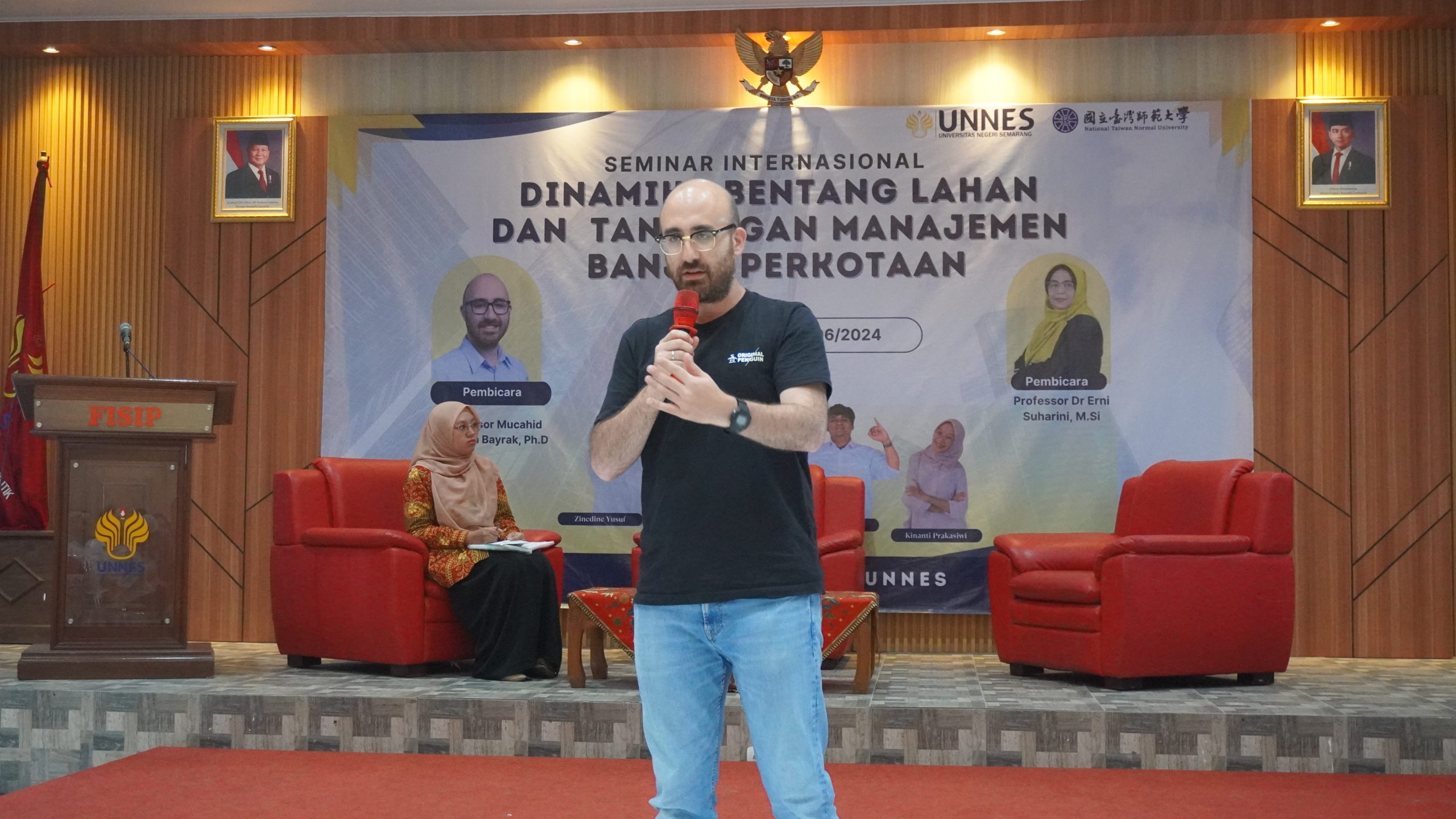
Program Studi Geografi Fakultas Ilmu Sosial Universitas Negeri Semarang (FISIP UNNES) bekerja sama dengan National Taiwan Normal University sukses menyelenggarakan Seminar Internasional bertajuk “Dinamika Bentang Lahan dan Tantangan Manajemen Banjir Perkotaan” pada Jumat, 13 Juni 2025, pukul 13.00 WIB, bertempat di Aula Gedung C7 Lantai 3 FISIP UNNES. Seminar ini menjadi wujud nyata dari kolaborasi akademik internasional dalam menjawab isu-isu lingkungan perkotaan yang kian kompleks, khususnya terkait tata kelola banjir di kawasan urban.

Seminar ini dibuka secara resmi oleh Dr.scient.med. Fadly Husain, M.Si., selaku Wakil Dekan I Bidang Akademik dan Kemahasiswaan FISIP UNNES. Acara menghadirkan dua narasumber ahli, yakni Prof. Mucahid Mustafa Bayrak, Ph.D. dari National Taiwan Normal University dan Prof. Dr. Erni Suharini, M.Si., yang keduanya memberikan pemaparan mendalam terkait perubahan bentang lahan, krisis iklim, dan strategi mitigasi bencana banjir di wilayah perkotaan.

Selain sesi utama, seminar juga menampilkan presentasi mahasiswa yang menyampaikan hasil riset lapangan sehari sebelumnya di Desa Tambakrejo, Semarang, sebagai bentuk pembelajaran berbasis pengalaman langsung di lapangan. Kegiatan ini diharapkan mampu memperkuat pemahaman lintas perspektif serta mendorong solusi kolaboratif dalam menghadapi tantangan geografi perkotaan di era perubahan iklim global.

Prof. Mucahid Mustafa Bayrak, Ph.D. dalam paparannya membahas tantangan keberlanjutan global dengan menyoroti bagaimana Taiwan dapat menjadi contoh bagi dunia dalam menerjemahkan riset keberlanjutan menjadi aksi nyata. Dimulai dari pengertian dasar sustainable development yang menekankan pemenuhan kebutuhan saat ini tanpa mengorbankan masa depan, presentasi ini mengkritisi pendekatan pembangunan yang hanya berfokus pada pertumbuhan ekonomi semata.

Tantangan utama yang diangkat adalah trade-off antara aspek sosial, lingkungan, dan ekonomi yang seringkali tidak seimbang. Selain itu, dibahas pula perlunya perubahan struktural mendalam pada sistem kapitalisme modern yang dianggap menjadi akar dari krisis ekologis dan sosial global.

Taiwan menjadi studi kasus penting karena keberhasilannya mengakui hak-hak masyarakat adat, komitmen terhadap energi terbarukan, serta dukungan terhadap gerakan akar rumput. Taiwan dianggap unik di Asia Timur karena menyediakan ruang demokratis dan kebebasan akademik yang luas untuk mengkaji praktik pembangunan berkelanjutan berbasis lokal. Pendekatan masyarakat adat terhadap lingkungan, yang bersifat holistik dan memadukan nilai-nilai spiritual, budaya, dan sosial, diangkat sebagai alternatif terhadap model pembangunan Barat yang kini tengah mengalami krisis. Presentasi ini mengajak kita untuk tidak hanya “mengelola” lingkungan, tetapi juga mengubah cara pandang dan sistem sosial secara mendasar demi masa depan yang lebih adil dan berkelanjutan.

Kegiatan ini memiliki relevansi kuat terhadap pencapaian Tujuan Pembangunan Berkelanjutan (SDGs), khususnya SDG 11 (Kota dan Permukiman yang Berkelanjutan) dan SDG 13 (Penanganan Perubahan Iklim). Dengan membahas isu-isu seperti manajemen banjir, transformasi bentang lahan, dan peran komunitas dalam adaptasi iklim, seminar ini turut mendorong dialog lintas negara dan disiplin ilmu untuk merumuskan solusi berkelanjutan bagi kota-kota masa depan.

Kolaborasi akademik seperti ini mencerminkan komitmen UNNES dalam menghadirkan kontribusi nyata terhadap tantangan global melalui pendidikan, riset, dan kemitraan internasional.
Related Posts

Leave a Reply

* Kode Akses Komentar:

* Tuliskan kode akses komentar diatas:

GDPR

  • Privacy Policy

Privacy Policy

Who we are

Our website address is: https://unnes.ac.id.

Comments

When visitors leave comments on the site we collect the data shown in the comments form, and also the visitor’s IP address and browser user agent string to help spam detection.

An anonymized string created from your email address (also called a hash) may be provided to the Gravatar service to see if you are using it. The Gravatar service privacy policy is available here: https://automattic.com/privacy/. After approval of your comment, your profile picture is visible to the public in the context of your comment.

Media

If you upload images to the website, you should avoid uploading images with embedded location data (EXIF GPS) included. Visitors to the website can download and extract any location data from images on the website.

Cookies

If you leave a comment on our site you may opt-in to saving your name, email address and website in cookies. These are for your convenience so that you do not have to fill in your details again when you leave another comment. These cookies will last for one year.

If you visit our login page, we will set a temporary cookie to determine if your browser accepts cookies. This cookie contains no personal data and is discarded when you close your browser.

When you log in, we will also set up several cookies to save your login information and your screen display choices. Login cookies last for two days, and screen options cookies last for a year. If you select “Remember Me”, your login will persist for two weeks. If you log out of your account, the login cookies will be removed.

If you edit or publish an article, an additional cookie will be saved in your browser. This cookie includes no personal data and simply indicates the post ID of the article you just edited. It expires after 1 day.

Embedded content from other websites

Articles on this site may include embedded content (e.g. videos, images, articles, etc.). Embedded content from other websites behaves in the exact same way as if the visitor has visited the other website.

These websites may collect data about you, use cookies, embed additional third-party tracking, and monitor your interaction with that embedded content, including tracking your interaction with the embedded content if you have an account and are logged in to that website.

Who we share your data with

If you request a password reset, your IP address will be included in the reset email.

How long we retain your data

If you leave a comment, the comment and its metadata are retained indefinitely. This is so we can recognize and approve any follow-up comments automatically instead of holding them in a moderation queue.

For users that register on our website (if any), we also store the personal information they provide in their user profile. All users can see, edit, or delete their personal information at any time (except they cannot change their username). Website administrators can also see and edit that information.

What rights you have over your data

If you have an account on this site, or have left comments, you can request to receive an exported file of the personal data we hold about you, including any data you have provided to us. You can also request that we erase any personal data we hold about you. This does not include any data we are obliged to keep for administrative, legal, or security purposes.

Where your data is sent

Visitor comments may be checked through an automated spam detection service.