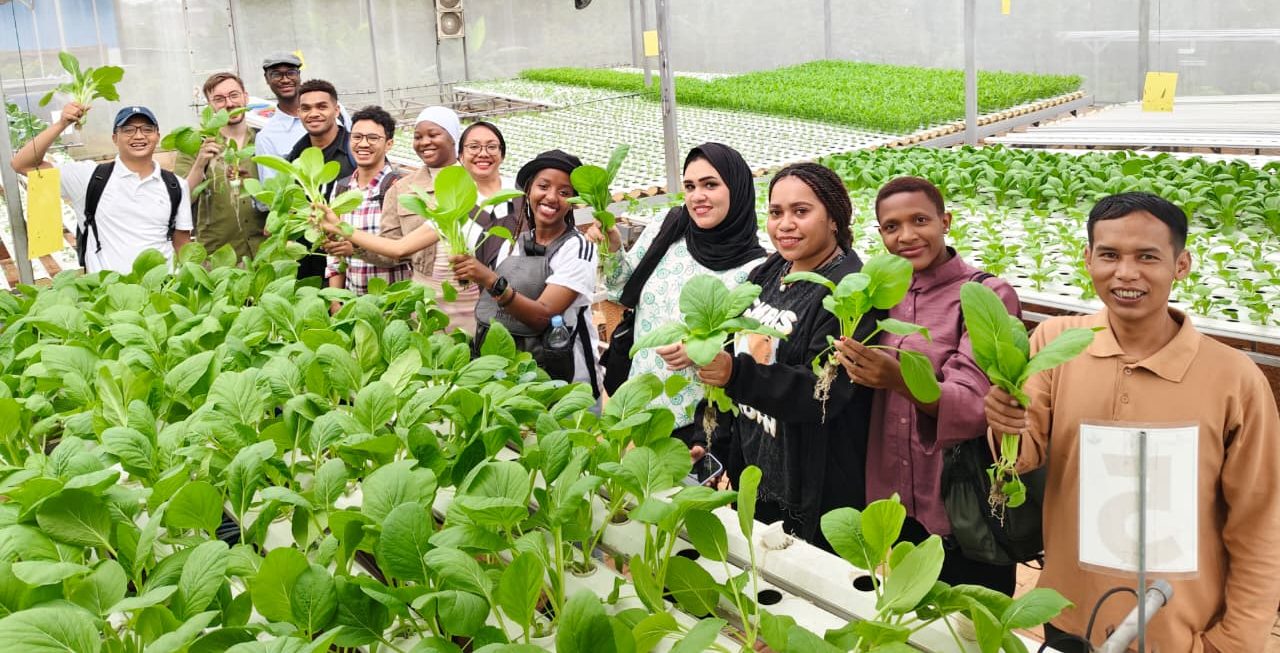
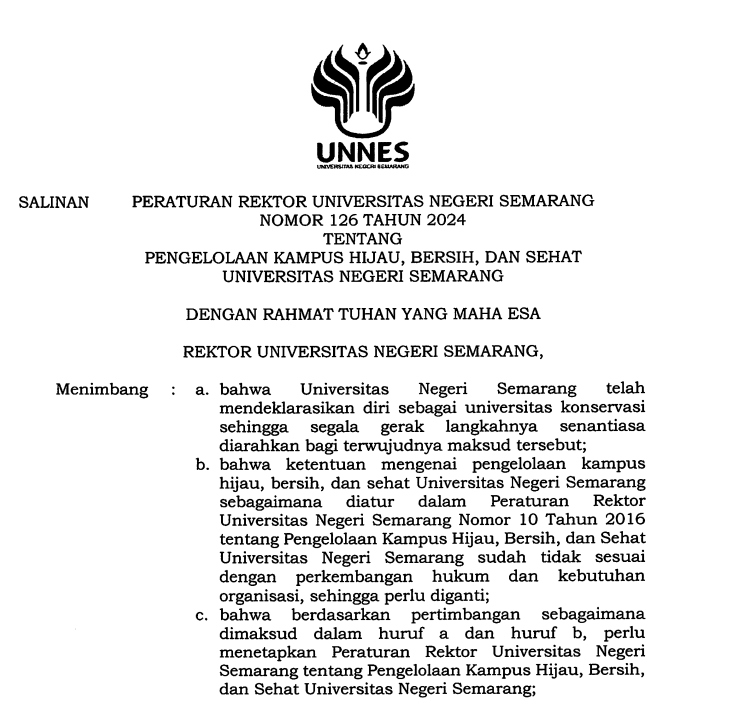
Universitas Negeri Semarang (UNNES) continues to reinforce its commitment to environmental conservation through Rector’s Regulation No. 126 of 2024 on Green, Clean, and Healthy Campus Management. This regulation provides an institutional framework for sustainable campus management, including the maintenance of green spaces that support environmental education and community well-being.
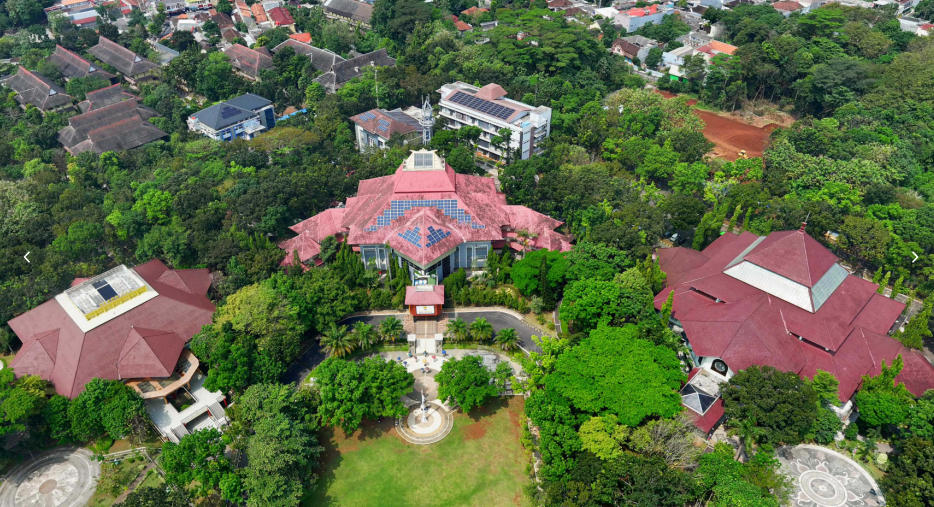
As part of its conservation efforts, UNNES provides free public access to campus mini forests and green open spaces for recreation, jogging, sports, relaxation, and environmental education. These areas allow students, university employees, and visitors to enjoy natural surroundings while promoting healthier lifestyles and greater environmental awareness.

UNNES’s mini forests are distributed across several campus locations, including in front of the Faculty of Languages and Arts (FBS), south of the Student Activity Center (PKM), in front of the Rectorate Building, around the Faculty of Engineering (FT), near the Faculty of Mathematics and Natural Sciences (FMIPA), and near the Faculty of Sport Science (FIK) football field. These green spaces contribute to a more comfortable campus environment and provide accessible outdoor areas for the university community and visitors.
The mini forest near the FIK football field is a popular area for physical activity, relaxation, and outdoor recreation. Its location within the university’s sports facilities complements UNNES’s commitment to promoting physical activity, healthy living, and environmental conservation.
Through Rector’s Regulation No. 126 of 2024, UNNES strengthens its institutional commitment to maintaining a green, clean, and healthy campus. The preservation of mini forests and other green open spaces supports biodiversity conservation while providing opportunities for environmental learning and outdoor activities.
Public access to these green spaces is free of charge, subject to campus regulations and applicable access arrangements. By maintaining these natural areas, UNNES promotes an inclusive and environmentally responsible campus that integrates education, conservation, recreation, and community engagement. These initiatives reaffirm UNNES’s identity as a Conservation University and demonstrate its commitment to sustainable campus management while extending the benefits of green spaces to the wider community.