

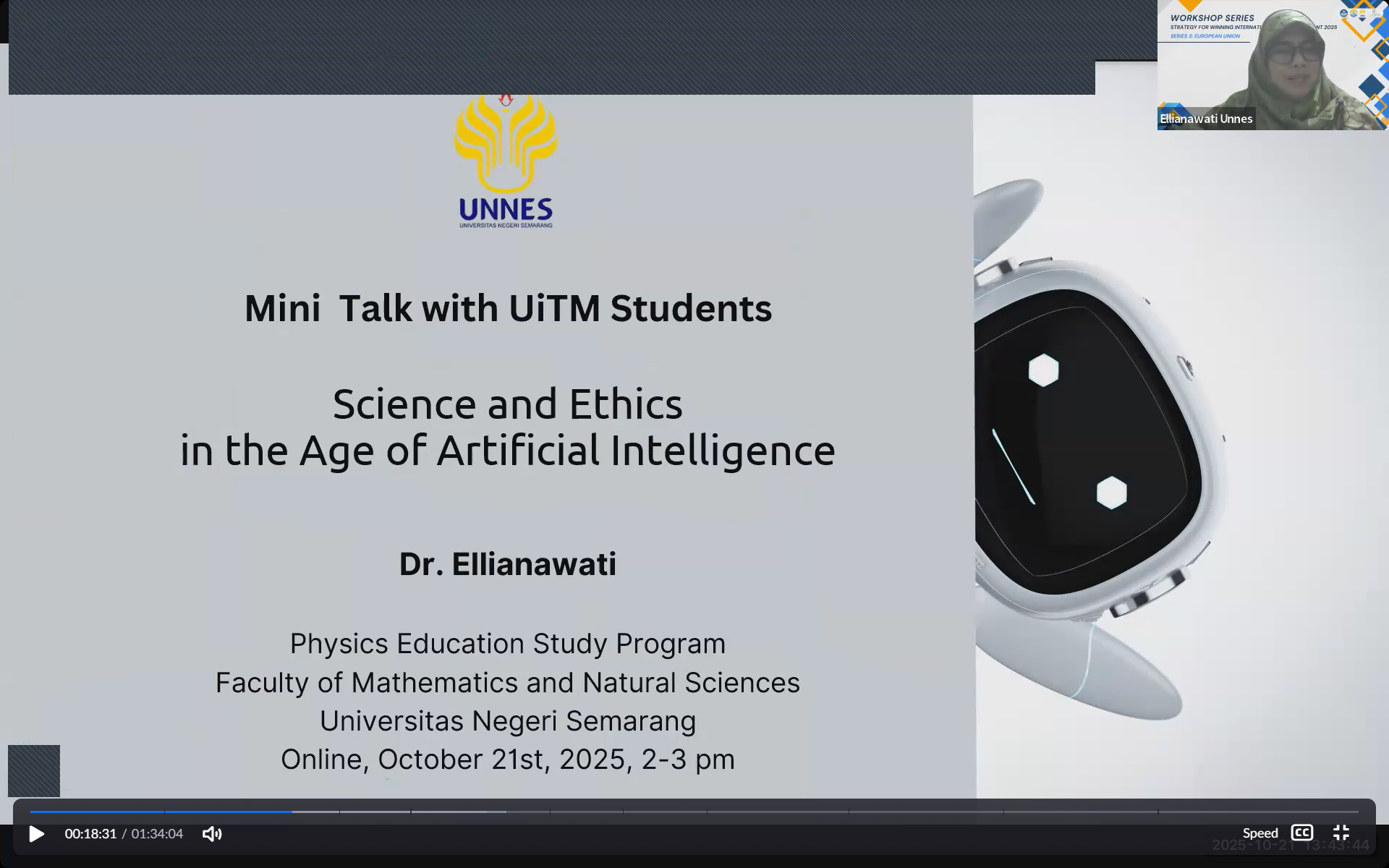
Mini Talk UNNES–UiTM Bahas Etika dan Tantangan Kecerdasan Buatan dalam Pendidikan

Universitas Negeri Semarang/Faculty of Mathematics and Natural Sciences/Berita/Mini Talk UNNES–UiTM Bahas Etika dan Tantangan Kecerdasan Buatan dalam Pendidikan

Semarang, 21 Oktober 2025 — Universitas Negeri Semarang (UNNES) kembali memperkuat kiprah akademik internasionalnya melalui kegiatan Mini Talk bersama mahasiswa Universiti Teknologi MARA (UiTM), Malaysia. Kegiatan yang dilaksanakan secara daring melalui platform Zoom ini menghadirkan pembicara Dr. Ellianawati, dosen Pendidikan Fisika Fakultas Matematika dan Ilmu Pengetahuan Alam (FMIPA) UNNES, dengan topik “Artificial Intelligence (AI) in Education: Benefits, Challenges, and Ethical Considerations.”

Kegiatan ini merupakan bagian dari rangkaian kerja sama riset kolaborasi internasional skema Matching Grant Luar Negeri yang melibatkan enam universitas dari enam negara, di mana UiTM Malaysia menjadi salah satunya. Riset kolaborasi ini diketuai oleh Dr. Ellianawati dan memperoleh pendanaan dari DPA Lembaga Penelitian dan Pengabdian kepada Masyarakat (LPPM) UNNES Tahun 2025. Program ini bertujuan memperkuat sinergi penelitian lintas negara dalam bidang pendidikan sains, teknologi, serta pengembangan literasi etika digital di era kecerdasan buatan.
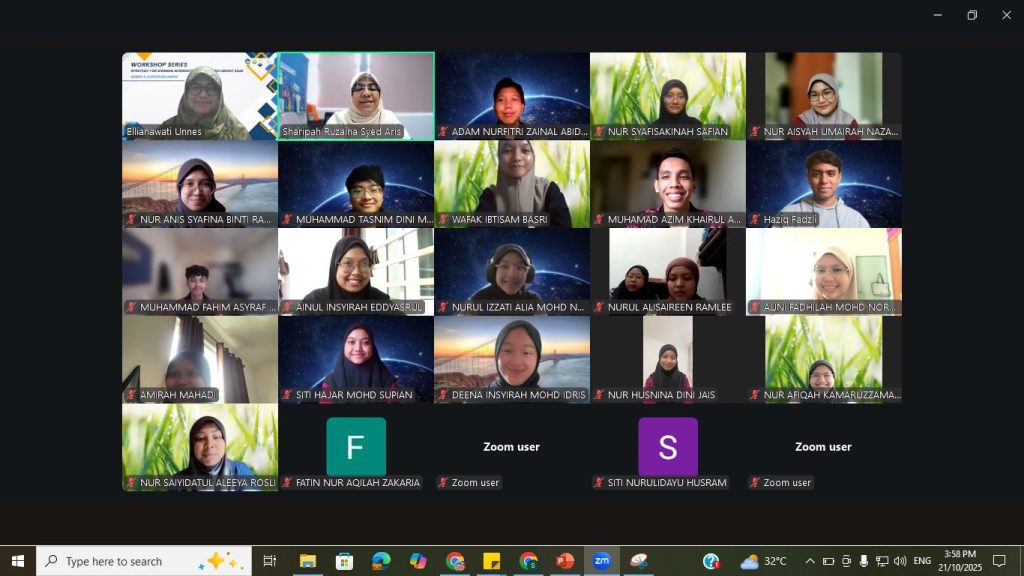
Peserta Mini Talk merupakan mahasiswa program studi Pendidikan Matematika UiTM yang sedang menempuh mata kuliah STEM (Science, Technology, Engineering, and Mathematics) dan STS (Science, Technology, and Society) di bawah bimbingan Prof. Dr. Sharipah Ruzaina Syed Aris. Kegiatan ini menjadi wahana akademik interaktif lintas negara yang menghubungkan isu-isu ilmiah dengan nilai kemanusiaan dan tanggung jawab etika ilmuwan masa depan.

Dalam presentasinya bertajuk “Science and Ethics in the Age of Artificial Intelligence”, Dr. Ellianawati memaparkan perkembangan AI sejak era 1950-an hingga kini. Ia menjelaskan bahwa munculnya algorithmic bias terjadi karena sistem AI belajar dari data manusia yang sering kali memuat bias sosial. Salah satu contoh yang disorot adalah penelitian Joy Buolamwini dari MIT Media Lab yang menemukan bahwa perangkat pengenalan wajah dari perusahaan besar seperti IBM dan Microsoft lebih sering gagal mengenali wajah perempuan dan berkulit gelap. Penelitiannya berjudul “Gender Shades” menjadi tonggak penting dalam kesadaran global tentang keadilan algoritmik.

Topik lain yang menarik perhatian peserta adalah privasi data dan konsep “data shadow” — yaitu jejak digital tak terlihat yang ditinggalkan pengguna teknologi dalam setiap aktivitas daring. Dr. Ellianawati menegaskan bahwa “Your data shadow is like your digital fingerprint — invisible, permanent, and powerful. If you don’t protect it, someone else will use it to shape your world.” Pesan tersebut menjadi pengingat kuat bagi mahasiswa untuk lebih bijak dalam menjaga keamanan informasi pribadi di dunia maya.

Diskusi juga menyinggung etika dalam rekayasa genetika, termasuk kasus ilmuwan Tiongkok Dr. He Jiankui yang mengedit gen bayi manusia menggunakan teknologi CRISPR tanpa persetujuan etis yang sah. Kasus ini disebut sebagai contoh ekstrem bagaimana sains tanpa etika dapat mengancam esensi kemanusiaan.

Sesi diakhiri dengan kuis interaktif dan diskusi reflektif mengenai etika AI dan tanggung jawab ilmiah, yang diikuti secara antusias oleh mahasiswa UiTM. Melalui kegiatan Mini Talk ini, UNNES dan UiTM tidak hanya memperkuat jejaring riset internasional, tetapi juga menumbuhkan kesadaran kritis, tanggung jawab etika, dan literasi digital di kalangan mahasiswa lintas negara. Inisiatif ini sejalan dengan visi UNNES sebagai Universitas Berwawasan Konservasi dan Bereputasi Internasional, yang berkomitmen menjadikan ilmu pengetahuan sebagai sarana mencerdaskan kehidupan sekaligus menjaga nilai-nilai kemanusiaan.
Related Posts

Leave a Reply

* Kode Akses Komentar:

* Tuliskan kode akses komentar diatas:

GDPR

  • Privacy Policy

Privacy Policy

At unnes.ac.id, the privacy of our visitors is of extreme importance to us. This privacy policy document outlines the types of personal information that is received and collected by unnes.ac.id and how it is used.

Log Files

Like many other Web sites, unnes.ac.id makes use of log files. The information inside the log files includes internet protocol (IP) addresses, type of browser, Internet Service Provider (ISP), date/time stamp, referring/exit pages, and number of clicks to analyze trends, administer the site, track user’s movement around the site, and gather demographic information. IP addresses and other such information are not linked to any information that is personally identifiable.

Cookies

unnes.ac.id uses cookies to store information about visitors’ preferences, to record user-specific information on which pages the site visitor accesses or visits, and to personalize or customize our web page content based upon visitors’ browser type or other information that the visitor sends via their browser.

Third-party ad servers or ad networks use technology in their respective advertisements and links that appear on unnes.ac.id and which are sent directly to your browser. They automatically receive your IP address when this occurs. Other technologies (such as cookies, JavaScript, or Web Beacons) may also be used by our site’s third-party ad networks to measure the effectiveness of their advertising campaigns and/or to personalize the advertising content that you see on the site.

unnes.ac.id has no access to or control over these cookies that are used by third-party advertisers.

You should consult the respective privacy policies of these third-party ad servers for more detailed information on their practices as well as for instructions about how to opt-out of certain practices. unnes.ac.id’s privacy policy does not apply to, and we cannot control the activities of, such other advertisers or web sites.

If you wish to disable cookies, you may do so through your individual browser options. More detailed information about cookie management with specific web browsers can be found at the browsers’ respective websites.

Consent

By using our website, you hereby consent to our privacy policy and agree to its terms.

Update

This Privacy Policy was last updated on: 2023-02-14. Should we update, amend or make any changes to our privacy policy, those changes will be posted here.

Contact Us

If you have any questions, comments, or concerns about our Privacy Policy or our practices with regards to your personal information, please feel free to contact us through the contact form on our website or by emailing us at humas[at]mail.unnes.ac.id.

This Privacy Policy is intended as a general guide to our practices in collecting and using information. If there is any inconsistency between this Privacy Policy and the terms of the Service Agreement or any other terms that may apply to specific services you use, then those specific service terms shall apply.

Terms of Use

By using our website, you agree to abide by this Privacy Policy. If you do not agree with this Privacy Policy, please do not use our website. We reserve the right to update this Privacy Policy from time to time without prior notice. Please review our Privacy Policy periodically to check for changes. Your continued use of our website following the posting of changes to this Privacy Policy means that you accept the changes.

Thank you for reading our Privacy Policy. We are committed to protecting the privacy of our website visitors and will continue to update our Privacy Policy to ensure optimal protection.