

Unnes-BMKG Edukasi Warga Desa Rawan Bencana Longsor

Universitas Negeri Semarang/Faculty of Mathematics and Natural Sciences/Berita/Unnes-BMKG Edukasi Warga Desa Rawan Bencana Longsor

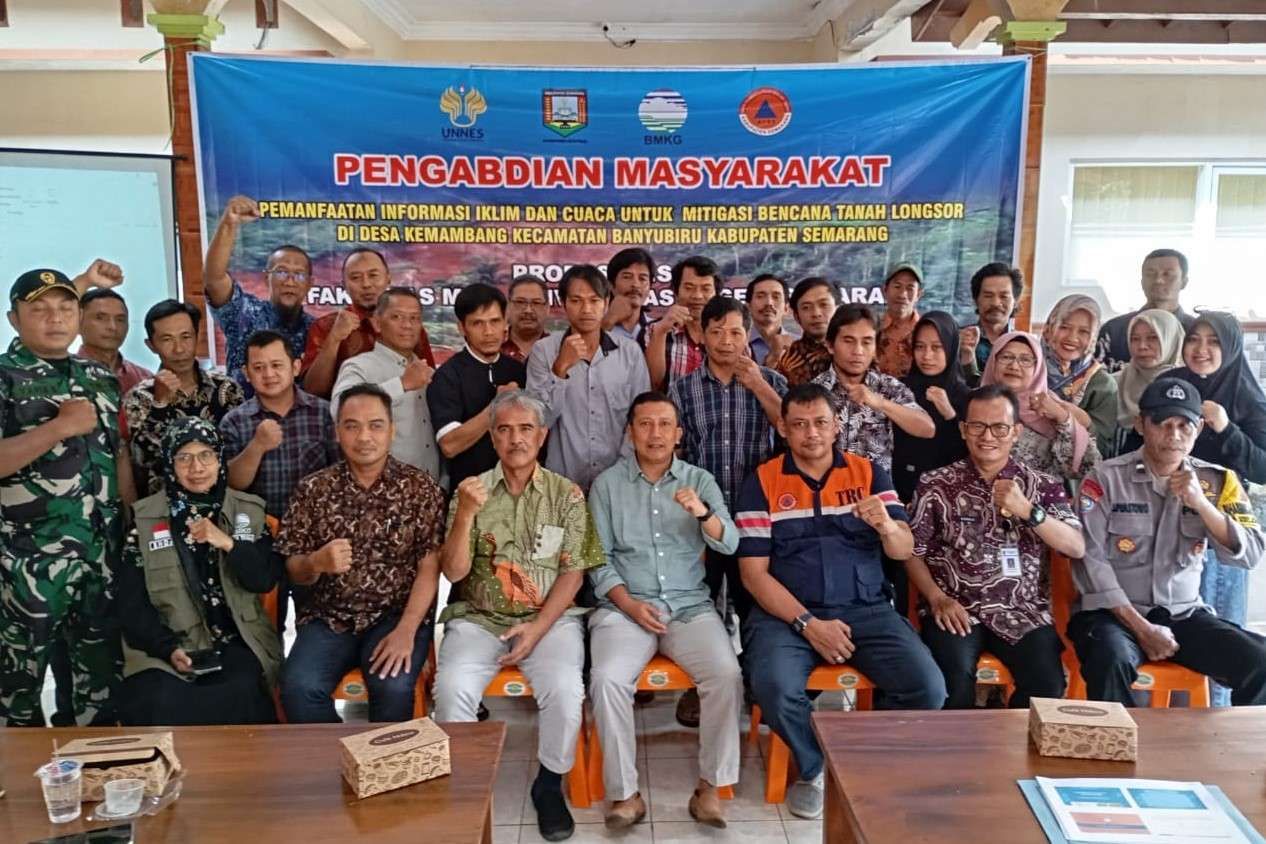
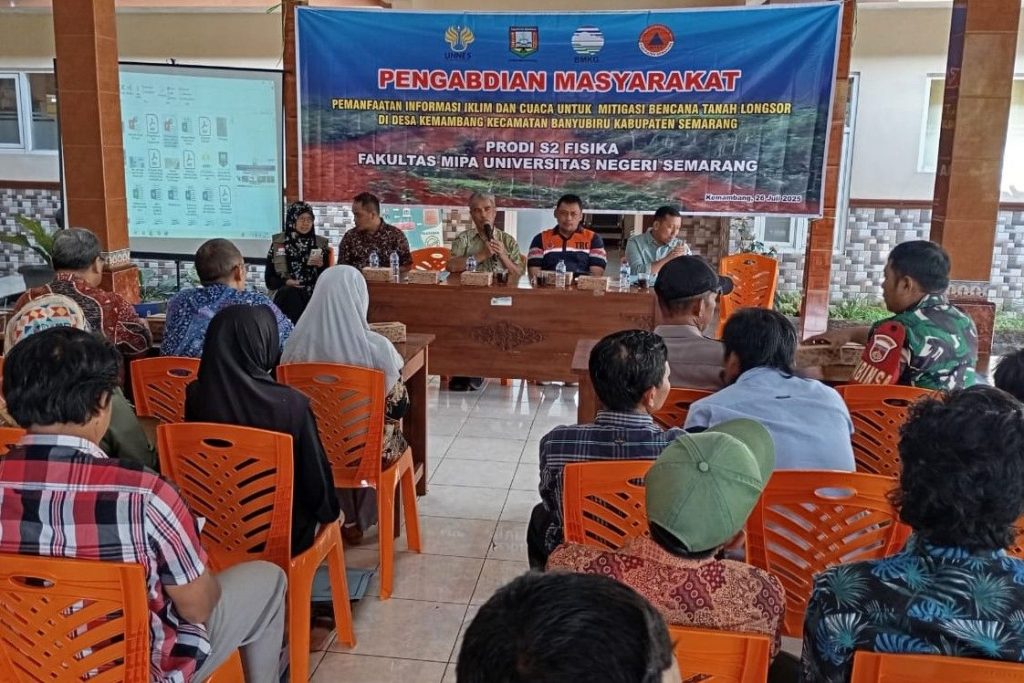
Tim pengabdian kepada masyarakat dari Fakultas Matematika Ilmu Pengetahuan Alam (MIPA) Universitas Negeri Semarang (Unnes) mengedukasi warga Desa Kemambang, Kecamatan Banyubiru, Kabupaten Semarang, Sabtu (26/7/2025). Bersama Badan Meteorologi Klimatologi dan Geofisika Jateng, Unnes memberikan pemahaman informasi cuaca dan iklim, termasuk mitigasi bencana di desa rawan longsor tersebut. 

Ketua Tim Pengabdian Kepada Masyarakat dari Unnes, Prof. Dr. Supriyadi mengatakan, masyarakat dibekali ilmu pengetahuan terkait iklim dan cuaca supaya mereka lebih memahami. Selain itu tangguh saat menghadapi potensi bencana, serta bentuk mitigasi penanganan bencananya. 

“Melalui sosialisasi ini, kami mengajak petugas dari BMKG Jateng yang akan bicara masalah iklim dan cuaca di Desa Kemambang yang merupakan daerah rawan bencana longsor. Harapannya, masyarakat yang bekerja beragam profesi di bidangnya bisa mengetahui penyebab adanya iklim dan cuaca, serta dampak yang ditimbulkan saat musim kering dan hujan,” katanya disela-sela sosialisasi di aula Balai Desa Kemambang. 
Guru Besar Geofisika Terapan ini menuturkan, tim pengabdian juga menandatangani kerja sama dengan Pemerintah Desa Kemambang sebagai mitra binaan Unnes. “Kerja sama itu bisa di bidang pendidikan seperti peningkatan kapasitas guru, serta sektor lingkungan pada pengelolaan sampah organik,” jelas Kepala Prodi S2 Fisika, MIPA Unnes tersebut. 

Anggota tim pengabdian ini yaitu Dr Agus Yulianto MSi, Dr. Khumaedi M.Si, Dr. Sunarno M.Si, Dr. Siti Wahyuni M.Si, Fianti M.Sc Ph.D, Suraji S.Pd M.Pd, serta Rodhotul Muttaqim S.Si. Kegiatan pengabdian yang juga melibatkan mahasiswa S2 MIPA Unnes ini menghadirkan Kepala Pelaksana BPBD Kabupaten Semarang Alexander Gunawan Tribiantoro sebagai narasumber. 

Dua narasumber lainnya dari Bagian Data dan Informasi BMKG Jateng, Sri Endah Ardhiningrum Abdullah dan Abdul Latif. Dalam paparannya, Alexander mengatakan, Kemambang ini tergolong daerah rawan bencana longsor, namun sudah menjadi desa tangguh bencana. 

“Selain Banyubiru, ada beberapa kecamatan lain yang juga masuk kategori rawan longsor karena memiliki dataran tinggi yaitu Bandungan, Jambu, Sumowono, Getasan, dan Pringapus,” ujarnya. Saat curah hujan tinggi, potensi longsor ada di desa seperti Kumambang ini, antisipasinya dengan memasang trucuk bambu, dan lahan gundul di titik tertentu ditutup terpal.

Narasumber lain, Sri Endah menjelaskan adanya fenomena anomali yang harus dipahami masyarakat, seperti terjadinya hujan jam-jaman, maupun hujan deras tapi singkat. Pada jeda musim, terkadang saat penghujan malah tidak turun hujan, sebaliknya saat kemarau, terkadang justru terjadi hujan. 

“Dampak anomali cuaca itu bisa mengakibatkan terjadinya kekurangan air atau kekeringan, bahkan bisa juga menimbukan terjadinya bencana hidrometeorologi seperti banjir,” ujarnya. Di sisi lain, Abdul Latif menegaskan, informasi iklim cuaca sangat penting bagi kehidupan manusia karena bisa memengaruhi aktivitas sehari-hari. 

Menurut dia, enam unsur yang mempengaruhi cuaca dan iklim yaitu radiasi matahari, tekanan udara, cuaca hujan, suhu, dan kelembaban udaranya. “Cuaca mempengaruhi aktivias sehari-hari, misalnya petani karena cuaca panas tentu akan ke ladangnya lebih pagi dan sopir truk kalau jalanan banjir tidak bisa aktivitas,” tandasnya. 

Sementara itu, Kepala Desa Kemambang, Heru Susanto mengapresiasi sosialisasi tim Unnes dan BMKG yang tentu bermanfaat bagi warganya. Desa Kemambang tercatat data BPBD sebagai daerah rawan longsor, hal itu berada di tiga dukuh yaitu Sodong, Plalar, dan Bakalan. 

“Dulu memang pernah ada bencana longsor, tapi tiga tahun terakhir ini zero bencana longsornya,” ungkapnya. Kegiatan tim pengabdian patut diapresiasi, tapi pihaknya berharap agar program lain bisa diberikan untuk kemajuan warga desanya.


Related Posts

Leave a Reply

* Kode Akses Komentar:

* Tuliskan kode akses komentar diatas:

GDPR

  • Privacy Policy

Privacy Policy

At unnes.ac.id, the privacy of our visitors is of extreme importance to us. This privacy policy document outlines the types of personal information that is received and collected by unnes.ac.id and how it is used.

Log Files

Like many other Web sites, unnes.ac.id makes use of log files. The information inside the log files includes internet protocol (IP) addresses, type of browser, Internet Service Provider (ISP), date/time stamp, referring/exit pages, and number of clicks to analyze trends, administer the site, track user’s movement around the site, and gather demographic information. IP addresses and other such information are not linked to any information that is personally identifiable.

Cookies

unnes.ac.id uses cookies to store information about visitors’ preferences, to record user-specific information on which pages the site visitor accesses or visits, and to personalize or customize our web page content based upon visitors’ browser type or other information that the visitor sends via their browser.

Third-party ad servers or ad networks use technology in their respective advertisements and links that appear on unnes.ac.id and which are sent directly to your browser. They automatically receive your IP address when this occurs. Other technologies (such as cookies, JavaScript, or Web Beacons) may also be used by our site’s third-party ad networks to measure the effectiveness of their advertising campaigns and/or to personalize the advertising content that you see on the site.

unnes.ac.id has no access to or control over these cookies that are used by third-party advertisers.

You should consult the respective privacy policies of these third-party ad servers for more detailed information on their practices as well as for instructions about how to opt-out of certain practices. unnes.ac.id’s privacy policy does not apply to, and we cannot control the activities of, such other advertisers or web sites.

If you wish to disable cookies, you may do so through your individual browser options. More detailed information about cookie management with specific web browsers can be found at the browsers’ respective websites.

Consent

By using our website, you hereby consent to our privacy policy and agree to its terms.

Update

This Privacy Policy was last updated on: 2023-02-14. Should we update, amend or make any changes to our privacy policy, those changes will be posted here.

Contact Us

If you have any questions, comments, or concerns about our Privacy Policy or our practices with regards to your personal information, please feel free to contact us through the contact form on our website or by emailing us at humas[at]mail.unnes.ac.id.

This Privacy Policy is intended as a general guide to our practices in collecting and using information. If there is any inconsistency between this Privacy Policy and the terms of the Service Agreement or any other terms that may apply to specific services you use, then those specific service terms shall apply.

Terms of Use

By using our website, you agree to abide by this Privacy Policy. If you do not agree with this Privacy Policy, please do not use our website. We reserve the right to update this Privacy Policy from time to time without prior notice. Please review our Privacy Policy periodically to check for changes. Your continued use of our website following the posting of changes to this Privacy Policy means that you accept the changes.

Thank you for reading our Privacy Policy. We are committed to protecting the privacy of our website visitors and will continue to update our Privacy Policy to ensure optimal protection.