Komitmen Pendidikan Berkelanjutan, FISIP UNNES Tegaskan Melalui Lecture Series

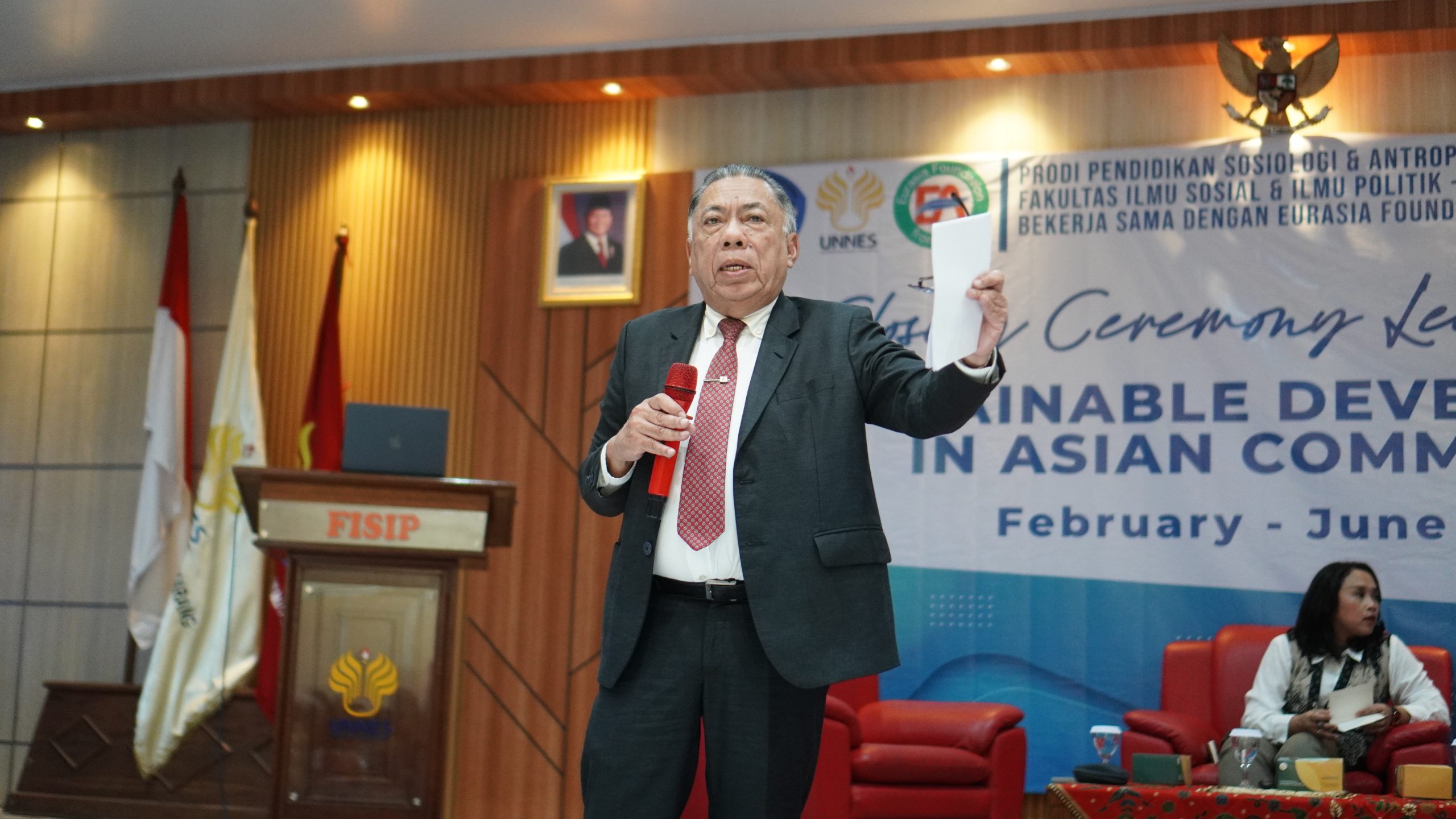
Fakultas Ilmu Sosial Universitas Negeri Semarang (FISIP UNNES) menyelenggarakan Closing Ceremony Lecture Series bertema “Sustainable Development in Asian Community” pada Selasa, 17 Juni 2025. Kegiatan ini menjadi puncak dari sembilan kali pertemuan lecture series hasil kolaborasi Program Studi Pendidikan Sosiologi dan Antropologi FISIP UNNES dengan Eurasia Foundation (from Asia), Jepang.

Lecture series bertujuan memperluas wawasan mahasiswa terhadap isu-isu pembangunan berkelanjutan dalam konteks masyarakat Asia. Acara pembukaan dipandu oleh Dr.scient.med. Fadly Husain, M.Si., Wakil Dekan I FISIP UNNES, dan menghadirkan dua narasumber utama, yakni Prof. Oekan S. Abdoellah, Ph.D., Guru Besar Human Ecology dari Universitas Padjadjaran dan Dr. Hartati Sulistyo Rini, M.A., dosen Pendidikan Sosiologi dan Antropologi FISIP UNNES.

Prof. Oekan S. Abdoellah, Pd.D. mengupas tentang kondisi pembangunan berkelanjutan di Indonesia yang kini berada di persimpangan jalan antara mengejar pertumbuhan ekonomi atau memperjuangkan keadilan ekologis dan sosial. Pembangunan yang berfokus pada eksploitasi sumber daya alam telah menyebabkan deforestasi, kerusakan lingkungan, krisis iklim, dan ketimpangan sosial, di mana masyarakat lokal kerap menjadi korban dari proyek-proyek yang mengatasnamakan pembangunan.

Untuk menjawab tantangan tersebut, Prof. Oekan menekankan pentingnya transformasi politik-ekologis melalui pendekatan resiliensi sosial-ekologis yang memandang manusia dan alam sebagai sistem yang saling terhubung dan tak terpisahkan. Komitmen politik yang kuat, pengakuan terhadap pengetahuan lokal, serta pelibatan aktif masyarakat dalam proses pembangunan menjadi kunci dalam mewujudkan pembangunan berkelanjutan yang inklusif, adil, dan transformatif di Indonesia.

Dr. Hartati Sulistyo Rini, M.A. menyoroti peran strategis anak muda, khususnya Generasi Z, dalam mewujudkan pembangunan berkelanjutan yang tidak hanya berorientasi pada pertumbuhan ekonomi, tetapi juga mencakup dimensi sosial, budaya, politik, dan lingkungan. Anak muda dipandang sebagai agen perubahan yang memiliki kapasitas digital tinggi, kepedulian terhadap isu-isu global seperti perubahan iklim dan kesehatan mental, serta semangat inklusif dan multikultural. Namun, mereka juga menghadapi tantangan seperti kecenderungan pragmatis, distraksi digital, dan apatisme politik.

Dengan pendekatan agensi yang kuat, anak muda diyakini mampu mendorong transformasi sosial melalui partisipasi aktif, kreativitas, dan inovasi, sehingga menjadi motor penggerak dalam membentuk masa depan yang lebih adil dan berkelanjutan.

Acara ini diikuti oleh seluruh mahasiswa semester IV Program Studi Pendidikan Sosiologi dan Antropologi yang selama rangkaian lecture series telah berdiskusi aktif mengenai berbagai topik pembangunan berkelanjutan dalam konteks lokal dan global.

Dekan FISIP UNNES, Prof. Dr. Arif Purnomo, S.Pd., S.S., M.Pd., secara resmi menutup kegiatan. Dalam sambutannya, ia menyampaikan apresiasi kepada seluruh narasumber dan peserta. Ia menegaskan bahwa pendidikan berkelanjutan merupakan fondasi penting dalam mencetak generasi yang sadar akan tantangan global dan siap menjadi agen perubahan sosial.

Kegiatan ini menjadi bukti nyata kontribusi FISIP UNNES dalam memperkuat kapasitas akademik mahasiswa, membangun jejaring internasional, mengintegrasikan nilai-nilai keberlanjutan dalam pendidikan tinggi, serta kontribusi aktif UNNES dalam mendukung capaian Sustainable Development Goals (SDGs), khususnya Tujuan 4 (Pendidikan Berkualitas) dan Tujuan 17 (Kemitraan untuk Mencapai Tujuan), melalui penguatan kapasitas akademik dan jejaring kolaboratif internasional.
Related Posts

Leave a Reply

* Kode Akses Komentar:

* Tuliskan kode akses komentar diatas:

GDPR

  • Privacy Policy

Privacy Policy

Who we are

Our website address is: https://unnes.ac.id.

Comments

When visitors leave comments on the site we collect the data shown in the comments form, and also the visitor’s IP address and browser user agent string to help spam detection.

An anonymized string created from your email address (also called a hash) may be provided to the Gravatar service to see if you are using it. The Gravatar service privacy policy is available here: https://automattic.com/privacy/. After approval of your comment, your profile picture is visible to the public in the context of your comment.

Media

If you upload images to the website, you should avoid uploading images with embedded location data (EXIF GPS) included. Visitors to the website can download and extract any location data from images on the website.

Cookies

If you leave a comment on our site you may opt-in to saving your name, email address and website in cookies. These are for your convenience so that you do not have to fill in your details again when you leave another comment. These cookies will last for one year.

If you visit our login page, we will set a temporary cookie to determine if your browser accepts cookies. This cookie contains no personal data and is discarded when you close your browser.

When you log in, we will also set up several cookies to save your login information and your screen display choices. Login cookies last for two days, and screen options cookies last for a year. If you select “Remember Me”, your login will persist for two weeks. If you log out of your account, the login cookies will be removed.

If you edit or publish an article, an additional cookie will be saved in your browser. This cookie includes no personal data and simply indicates the post ID of the article you just edited. It expires after 1 day.

Embedded content from other websites

Articles on this site may include embedded content (e.g. videos, images, articles, etc.). Embedded content from other websites behaves in the exact same way as if the visitor has visited the other website.

These websites may collect data about you, use cookies, embed additional third-party tracking, and monitor your interaction with that embedded content, including tracking your interaction with the embedded content if you have an account and are logged in to that website.

Who we share your data with

If you request a password reset, your IP address will be included in the reset email.

How long we retain your data

If you leave a comment, the comment and its metadata are retained indefinitely. This is so we can recognize and approve any follow-up comments automatically instead of holding them in a moderation queue.

For users that register on our website (if any), we also store the personal information they provide in their user profile. All users can see, edit, or delete their personal information at any time (except they cannot change their username). Website administrators can also see and edit that information.

What rights you have over your data

If you have an account on this site, or have left comments, you can request to receive an exported file of the personal data we hold about you, including any data you have provided to us. You can also request that we erase any personal data we hold about you. This does not include any data we are obliged to keep for administrative, legal, or security purposes.

Where your data is sent

Visitor comments may be checked through an automated spam detection service.