

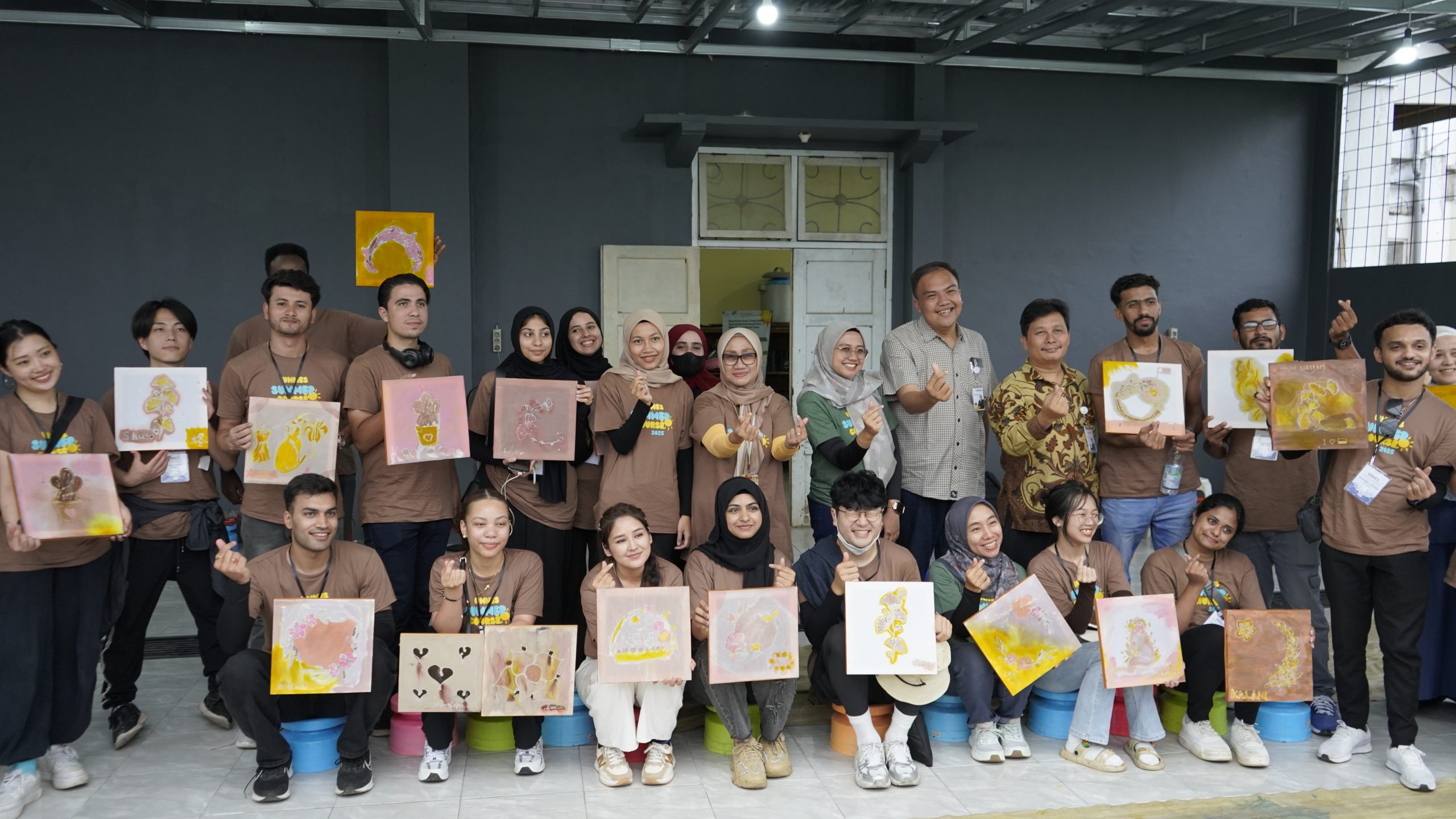
Semarang State University (UNNES) has once again successfully held the International Summer Course 2025, a three-day event held from Wednesday to Friday, May 7–9, 2025. This year, the course carries the theme “Living the Local Way: Nature, Art, and Culture,” which shows UNNES’ dedication to continue building itself as a respected university in the world and becoming a pioneer in education that focuses on conservation.
The event was inaugurated by the Vice Rector for Cooperation, Business, and International Relations, Prof. Dr. Nur Qudus, MT., IPM, and was welcomed by the deans and vice deans for the cooperation from all faculties at UNNES, the inter-faculty collaboration team, along with faculty staff and course instructors.
In his opening remarks, Alfath Yuniarto, Head of the SDG Center and Office of International Affairs at UNNES, highlighted that this initiative not only aims to highlight the natural and cultural richness of Central Java, but also plays a direct role in achieving the Sustainable Development Goals (SDGs), especially Goal 4 (Quality Education), Goal 11 (Sustainable Cities and Communities), Goal 13 (Climate Action), and Goal 17 (Partnerships for the Goals).
This year, the Summer Course was attended by 60 participants from 32 countries, consisting of 37 students from UNNES partner institutions around the world and 23 foreign students studying at UNNES through the KNB, Darmasiswa, and standard international scholarship programs. Participants came from various countries, including Pakistan, Tanzania, Egypt, Myanmar, Sri Lanka, Nigeria, Yemen, India, Bangladesh, Somalia, Sierra Leone, Afghanistan, Algeria, the Philippines, Madagascar, Kazakhstan, Japan, South Korea, Palestine, Papua New Guinea, and many more.
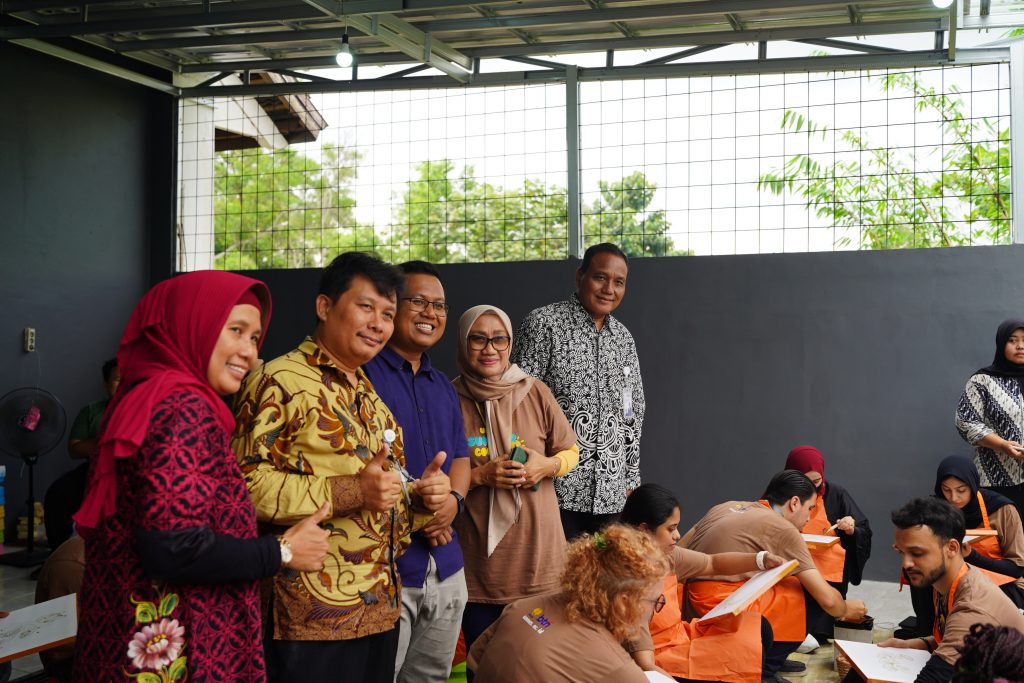
The activity was continued by visiting the Batik Lab in Building E10, Faculty of Engineering, UNNES, which was welcomed by the Dean of FT UNNES, Prof. Dr. Wirawan Sumbodo, M.T. and the Vice Dean. There, the Summer Course participants were given lectures related to batik and given direct guidance by the Lecturers of the PKK FT UNNES group. Hopefully, with this batik activity, batik can be more famous in the international world.