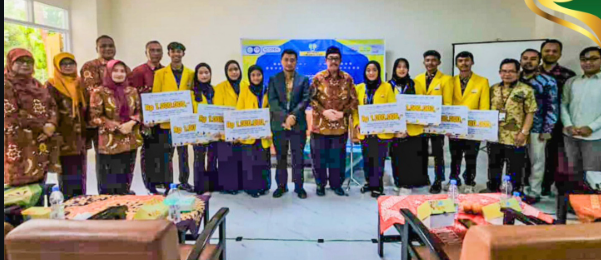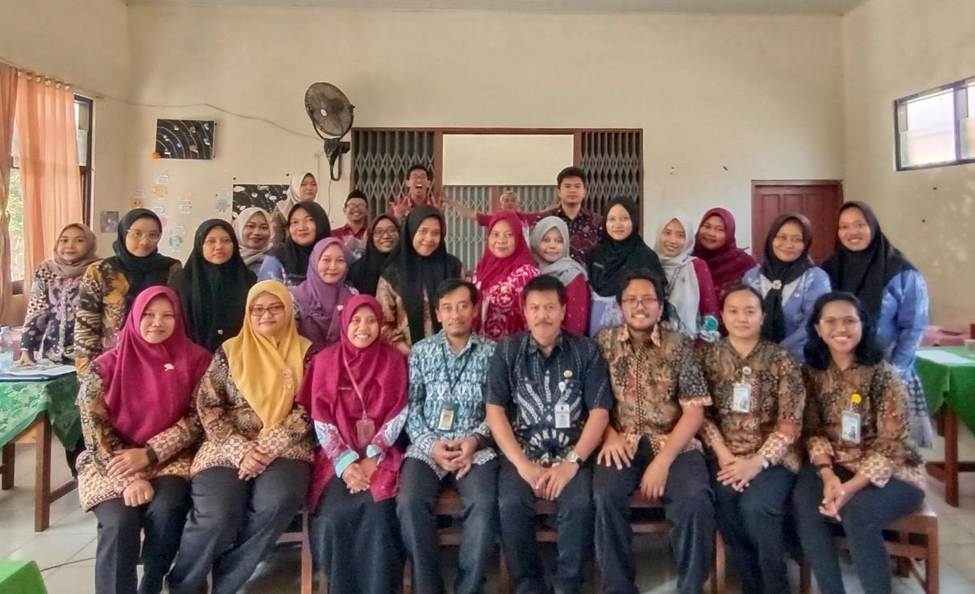


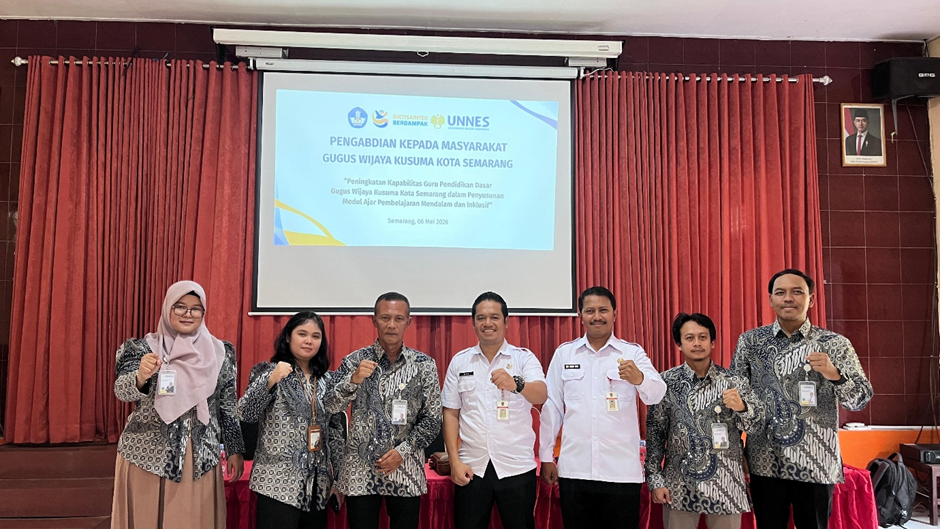
Semarang, May 6, 2026 – The community service team from the Faculty of Education and Psychology (FIPP) of Semarang State University (UNNES) held an activity entitled “Improving the Capabilities of Elementary Education Teachers in the Wijaya Kusuma Cluster in Semarang City in Developing In-Depth and Inclusive Learning Modules.” The activity took place at Wates 01 Public Elementary School and was attended by teachers and principals from the Wijaya Kusuma Cluster in Semarang City.
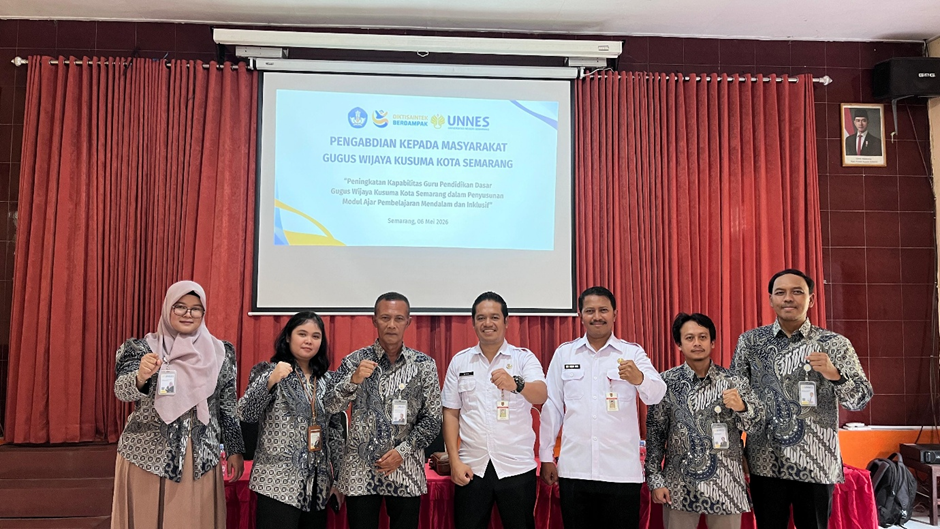
This community service program aims to improve the skills of elementary education teachers in developing teaching modules that are not only oriented towards competency achievement but also consider the principles of in-depth and inclusive learning. Through this activity, teachers are encouraged to design meaningful, enjoyable, adaptive learning that accommodates the diverse characteristics of elementary school students.
Participants came from several schools in the Wijaya Kusuma Cluster, including SDN Bringin 01, SDN Bringin 02, SDN Gondoriyo, SDN Podorejo 01, SDN Podorejo 02, SDN Podorejo 03, SDN Wates 01, SDN Wates 02, SD Nurul Islam, SDIT Bina Amal, and SD Texmaco. The event was also attended by the Head of the Wijaya Kusuma Cluster, Mr. Musri’an, S.Pd., M.M., M.Pd.
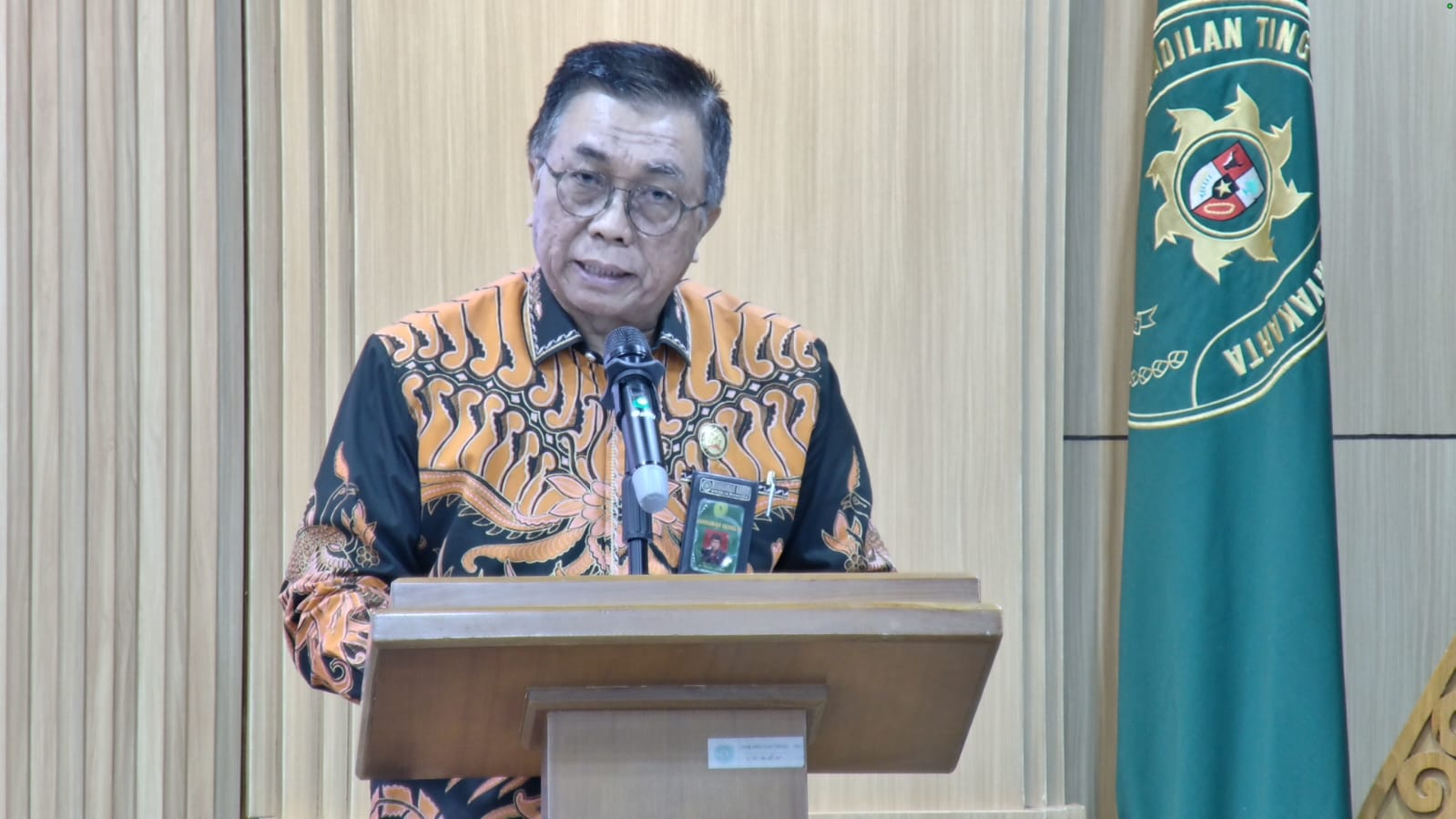
In his remarks, the Head of the Wijaya Kusuma Cluster expressed his appreciation for the implementation of the community service activity. He stated that the assistance in developing teaching modules was highly relevant to teachers’ needs in developing more contextual, in-depth, and student-friendly learning for all students.
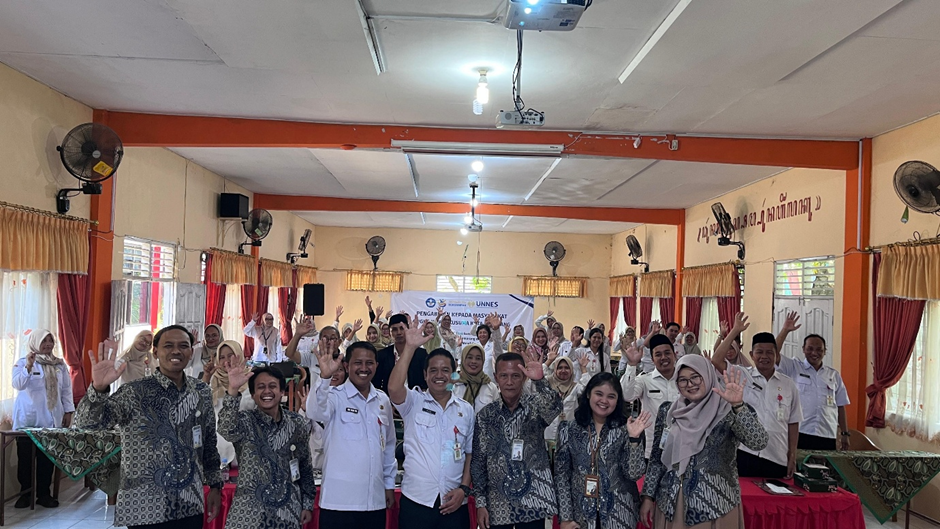
The FIPP UNNES community service team consisted of Prof. Dr. Sungkowo Edy Mulyono, S.Pd., M.Si. from Non-Formal Education; Sony Zulfikasari, S.Pd., M.Pd., Niam Wahzudik, S.Pd., M.Pd., Basuki Sulistio, S.Pd., M.Pd., Woro Apriliana Sari, S.Psi., M.Si. from Psychology; and from Educational Technology.
Through this activity, teachers in the Wijaya Kusuma Cluster gained conceptual and practical reinforcement in developing in-depth and inclusive learning modules. The results of this activity are expected to support improving the quality of learning in elementary schools, particularly in creating a more meaningful, participatory, and student-centered learning process.