
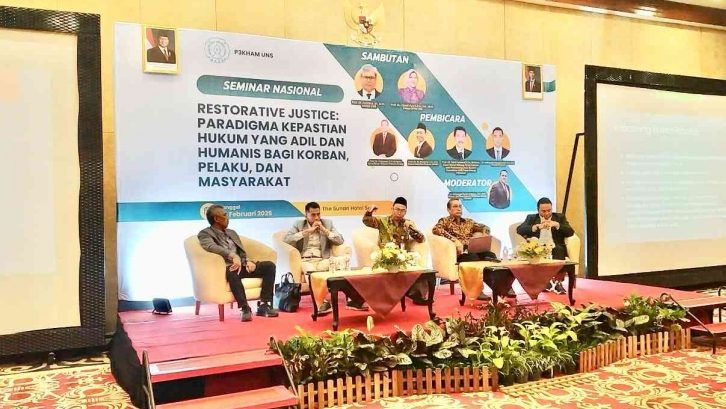
FH UNNES Teguhkan Peran dalam Seminar Restorative Justice

Dekan Fakultas Hukum Universitas Negeri Semarang (FH UNNES), Prof. Dr. Ali Masyhar, S.H., M.H., hadir sebagai narasumber dalam Seminar Nasional bertajuk “Restorative Justice: Paradigma Kepastian Hukum yang Adil dan Humanis bagi Korban, Pelaku, dan Masyarakat” yang diselenggarakan di Universitas Sebelas Maret (UNS) Solo, Rabu (26/2).

Seminar ini diikuti oleh berbagai pemangku kepentingan hukum se-Solo Raya, mulai dari hakim, jaksa, hingga penyidik. Ketua Lembaga Pengabdian kepada Masyarakat UNS, Prof. Dr. I Gusti Ayu, dalam sambutannya menyampaikan bahwa forum ini menjadi ruang penting untuk menggali dan mendiskusikan pendekatan restorative justice (RJ) secara lebih komprehensif.

Dalam paparannya, Prof. Dr. Ali Masyhar menyoroti pendekatan RJ dari perspektif korban. Menurutnya, RJ menjadi alternatif penting dalam sistem peradilan modern yang menjawab kelemahan penyelesaian perkara secara konvensional serta memberikan respons atas tantangan dalam pengawasan aparat penegak hukum.

“Restorative justice adalah solusi efektif, efisien, dan cepat dalam menyelesaikan perkara. Namun demikian, perlu penguatan secara normatif karena belum ada jaminan mutlak bahwa korban akan memperoleh keadilan secara utuh,” ungkapnya.

Sebagai bentuk penguatan, Prof. Ali mendorong pentingnya pengembangan norma pada Pasal 132 KUHP baru serta menganjurkan perluasan opsi putusan hakim, termasuk putusan permaafan, sebagai alternatif dari putusan bebas, lepas, maupun pidana.

Selain Prof. Ali, seminar juga menghadirkan sejumlah akademisi dan praktisi hukum, yakni Prof. Dr. Pujiono, S.H., M.Hum. (Guru Besar FH Undip), Prof. Hari Purwadi, S.H., M.Hum. (Guru Besar FH UNS), dan Dr. Adi Putro Pangarso, S.H., M.H. (Advokat). Kegiatan ditutup dengan sesi ramah tamah dan foto bersama sebagai simbol sinergi antara akademisi dan praktisi hukum dalam membangun sistem hukum yang adil dan humanis.

Keikutsertaan FH UNNES dalam forum nasional ini menjadi bagian dari komitmen institusi dalam memperkuat kontribusi keilmuan dan pengembangan hukum progresif, sejalan dengan visi mencetak lulusan unggul, berintegritas, dan berdaya saing global.


Related Posts

Leave a Reply

* Kode Akses Komentar:

* Tuliskan kode akses komentar diatas:

GDPR

  • Privacy Policy

Privacy Policy

Who we are

Our website address is: https://unnes.ac.id.

Comments

When visitors leave comments on the site we collect the data shown in the comments form, and also the visitor’s IP address and browser user agent string to help spam detection.

An anonymized string created from your email address (also called a hash) may be provided to the Gravatar service to see if you are using it. The Gravatar service privacy policy is available here: https://automattic.com/privacy/. After approval of your comment, your profile picture is visible to the public in the context of your comment.

Media

If you upload images to the website, you should avoid uploading images with embedded location data (EXIF GPS) included. Visitors to the website can download and extract any location data from images on the website.

Cookies

If you leave a comment on our site you may opt-in to saving your name, email address and website in cookies. These are for your convenience so that you do not have to fill in your details again when you leave another comment. These cookies will last for one year.

If you visit our login page, we will set a temporary cookie to determine if your browser accepts cookies. This cookie contains no personal data and is discarded when you close your browser.

When you log in, we will also set up several cookies to save your login information and your screen display choices. Login cookies last for two days, and screen options cookies last for a year. If you select “Remember Me”, your login will persist for two weeks. If you log out of your account, the login cookies will be removed.

If you edit or publish an article, an additional cookie will be saved in your browser. This cookie includes no personal data and simply indicates the post ID of the article you just edited. It expires after 1 day.

Embedded content from other websites

Articles on this site may include embedded content (e.g. videos, images, articles, etc.). Embedded content from other websites behaves in the exact same way as if the visitor has visited the other website.

These websites may collect data about you, use cookies, embed additional third-party tracking, and monitor your interaction with that embedded content, including tracking your interaction with the embedded content if you have an account and are logged in to that website.

Who we share your data with

If you request a password reset, your IP address will be included in the reset email.

How long we retain your data

If you leave a comment, the comment and its metadata are retained indefinitely. This is so we can recognize and approve any follow-up comments automatically instead of holding them in a moderation queue.

For users that register on our website (if any), we also store the personal information they provide in their user profile. All users can see, edit, or delete their personal information at any time (except they cannot change their username). Website administrators can also see and edit that information.

What rights you have over your data

If you have an account on this site, or have left comments, you can request to receive an exported file of the personal data we hold about you, including any data you have provided to us. You can also request that we erase any personal data we hold about you. This does not include any data we are obliged to keep for administrative, legal, or security purposes.

Where your data is sent

Visitor comments may be checked through an automated spam detection service.