Dorong Optimalisasi Hasil Udang, BEM FEB UNNES Gelar Integrated Fishfolk Training

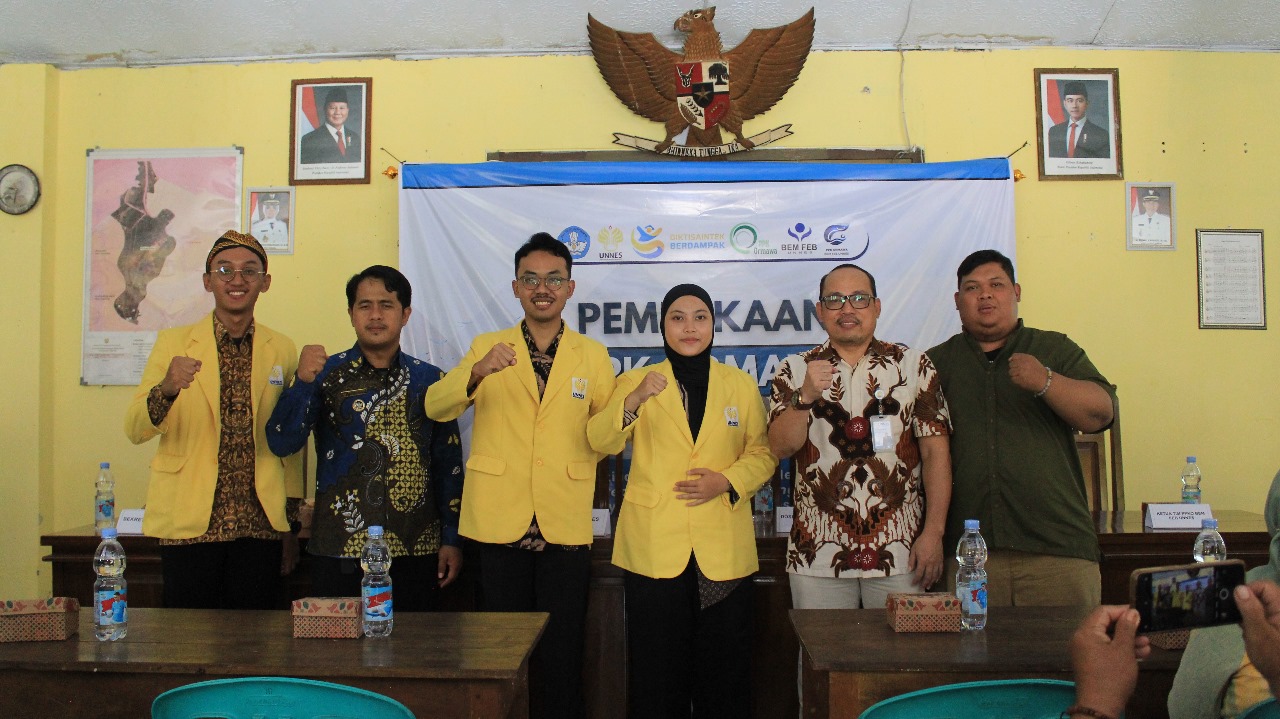
Program Penguatan Kapasitas Organisasi Kemahasiswaan (PPK Ormawa) yang diusung BEM Fakultas Ekonomi dan Bisnis (FEB) UNNES resmi dimulai melalui kegiatan Integrated Fishfolk Training. Acara pembukaan berlangsung Selasa (29/07/2025) di Balai Desa Pidodo Kulon, Kecamatan Patebon, Kabupaten Kendal.

Program ini menjadi awal sinergi antara mahasiswa, masyarakat, pemerintah desa, dan mitra pemberdayaan wilayah pesisir. Hadir dalam kegiatan tersebut Wakil Dekan I Bidang Akademik dan Kemahasiswaan FEB UNNES Agung Yulianto, S.Pd., M.Si., Kepala Pusat Pemberdayaan dan Pelayanan Masyarakat Pesisir (P3MP) Kendal, Ketua Kelompok Pengawas Masyarakat, Kelompok Nelayan Pengolah Udang, serta Kepala Desa Pidodo Kulon Didik Prastiawan beserta perangkat desa.

PPK Ormawa BEM FEB UNNES tahun ini berfokus pada pengembangan potensi pengolahan hasil udang. Selama ini, komoditas udang memiliki peluang besar untuk mendukung kemandirian ekonomi masyarakat pesisir, namun belum dimanfaatkan secara optimal oleh kelompok nelayan setempat.

Dalam sambutannya, Agung Yulianto menegaskan komitmen fakultas dalam mendampingi mahasiswa menjalankan program berbasis pemberdayaan masyarakat.

“Kami berharap kegiatan ini tidak hanya memberikan manfaat nyata bagi masyarakat, tetapi juga menjadi ruang pembelajaran bagi mahasiswa untuk mengaplikasikan ilmu yang diperoleh di bangku kuliah,” ungkapnya.

Senada dengan itu, Dosen Pendamping Satsya Yoga Baswara, S.E., M.Sc., Ak. menekankan pentingnya menjaga semangat kolaborasi dan menjadikan kegiatan ini sebagai pengalaman kontekstual yang berharga bagi mahasiswa.

Program ini juga mendapat dukungan dari mitra kolaboratif FPIK Universitas Diponegoro yang menyampaikan sosialisasi terkait strategi pengolahan hasil laut berbasis potensi lokal. Materi tersebut ditujukan untuk memperkuat kapasitas Kelompok Nelayan Pengolah Udang dalam mengembangkan produk olahan yang bernilai tambah.

Kepala Desa Pidodo Kulon, Didik Prastiawan, menyambut positif inisiatif ini.

“Kehadiran mahasiswa di tengah masyarakat diharapkan menjadi katalisator perubahan yang menyentuh potensi desa, khususnya dalam pemberdayaan kelompok nelayan pengolah udang,” tegasnya.

Pembukaan Integrated Fishfolk Training diharapkan menjadi langkah awal kolaborasi berkelanjutan yang memberi dampak nyata bagi masyarakat sekaligus membentuk mahasiswa UNNES sebagai agen perubahan di lingkungan sosialnya.
Related Posts

Leave a Reply

* Kode Akses Komentar:

* Tuliskan kode akses komentar diatas:

GDPR

  • Privacy Policy

Privacy Policy

Who we are

Our website address is: https://unnes.ac.id.

Comments

When visitors leave comments on the site we collect the data shown in the comments form, and also the visitor’s IP address and browser user agent string to help spam detection.

An anonymized string created from your email address (also called a hash) may be provided to the Gravatar service to see if you are using it. The Gravatar service privacy policy is available here: https://automattic.com/privacy/. After approval of your comment, your profile picture is visible to the public in the context of your comment.

Media

If you upload images to the website, you should avoid uploading images with embedded location data (EXIF GPS) included. Visitors to the website can download and extract any location data from images on the website.

Cookies

If you leave a comment on our site you may opt-in to saving your name, email address and website in cookies. These are for your convenience so that you do not have to fill in your details again when you leave another comment. These cookies will last for one year.

If you visit our login page, we will set a temporary cookie to determine if your browser accepts cookies. This cookie contains no personal data and is discarded when you close your browser.

When you log in, we will also set up several cookies to save your login information and your screen display choices. Login cookies last for two days, and screen options cookies last for a year. If you select “Remember Me”, your login will persist for two weeks. If you log out of your account, the login cookies will be removed.

If you edit or publish an article, an additional cookie will be saved in your browser. This cookie includes no personal data and simply indicates the post ID of the article you just edited. It expires after 1 day.

Embedded content from other websites

Articles on this site may include embedded content (e.g. videos, images, articles, etc.). Embedded content from other websites behaves in the exact same way as if the visitor has visited the other website.

These websites may collect data about you, use cookies, embed additional third-party tracking, and monitor your interaction with that embedded content, including tracking your interaction with the embedded content if you have an account and are logged in to that website.

Who we share your data with

If you request a password reset, your IP address will be included in the reset email.

How long we retain your data

If you leave a comment, the comment and its metadata are retained indefinitely. This is so we can recognize and approve any follow-up comments automatically instead of holding them in a moderation queue.

For users that register on our website (if any), we also store the personal information they provide in their user profile. All users can see, edit, or delete their personal information at any time (except they cannot change their username). Website administrators can also see and edit that information.

What rights you have over your data

If you have an account on this site, or have left comments, you can request to receive an exported file of the personal data we hold about you, including any data you have provided to us. You can also request that we erase any personal data we hold about you. This does not include any data we are obliged to keep for administrative, legal, or security purposes.

Where your data is sent

Visitor comments may be checked through an automated spam detection service.