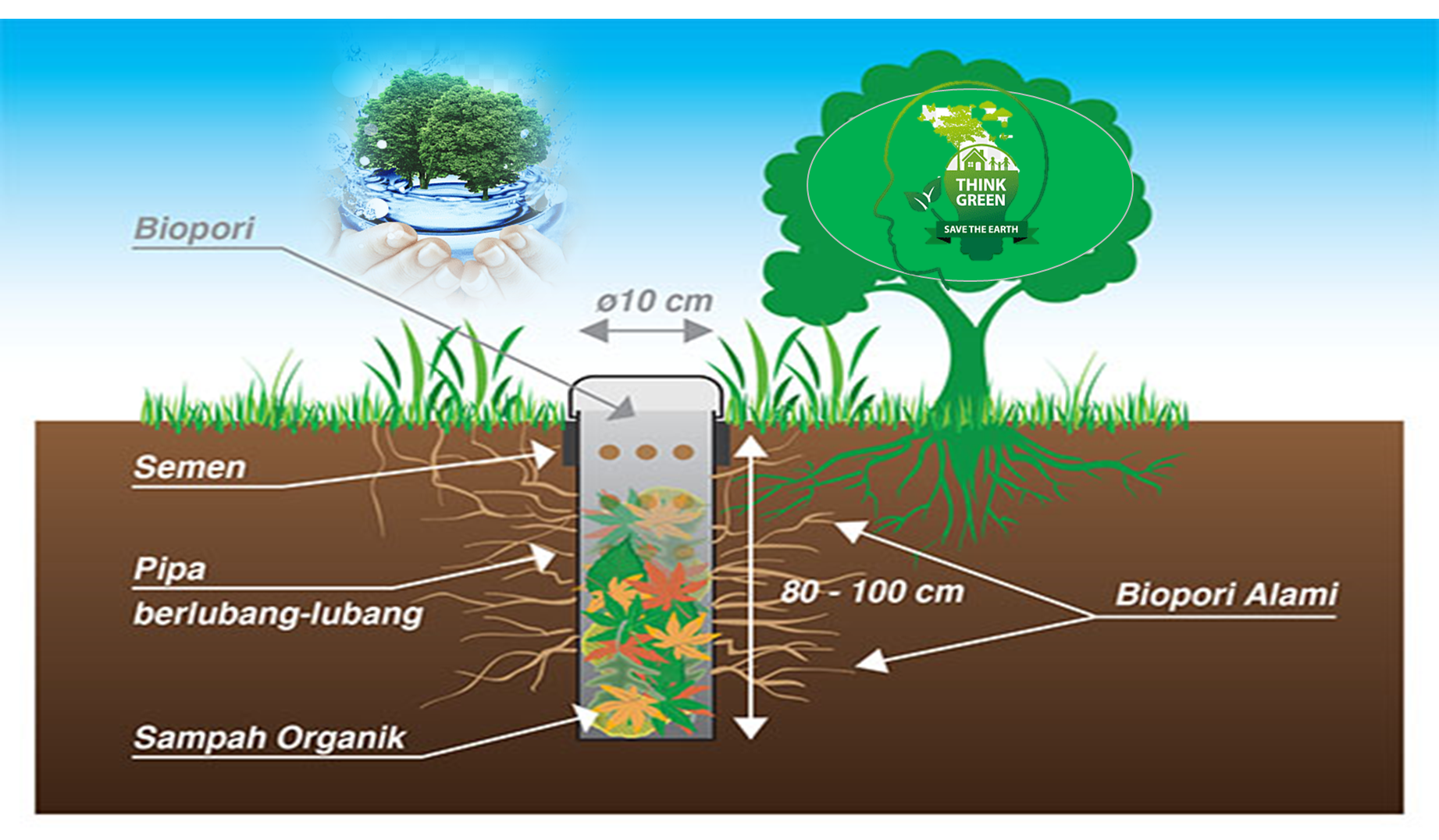

One of the valuable water sources is rainwater, particularly in agricultural and urban environments. The issue of rapid surface runoff and the soil’s inability to absorb rainwater are common problems in many areas. To address this challenge and promote sustainable water management, biopores are an effective solution.

What is Biopore?
A biopore is a small hole dug in the ground to enhance the percolation of rainwater into the soil. This method aids in reducing the risk of flooding, enhancing groundwater quality, and offering various ecological benefits.
The primary function of a biopore hole is to serve as a repository for organic waste. By filling the biopore hole with organic waste, the intention is to nourish the living organisms in the soil, such as worms, microorganisms, and even plant roots.
Benefits of Biopores
Creating biopore holes offers benefits not only to the organisms in the soil but also to humans and the environment. Let’s explore the following explanations regarding the advantages of biopores for both humans and the environment.

1. Reducing Organic Waste
The presence of biopore holes enables us to diminish organic waste in our surroundings. Organic waste from our homes can be conveniently disposed of at the final disposal site, known as the TPA (Temporary Placement Area), where biopore holes can be implemented. Beyond waste reduction, biopores also serve an educational purpose. Creating biopore holes within the community helps individuals differentiate between organic and inorganic waste.”.
2. Soil Fertilization and Soil Recovery
The presence of organic waste in a biopore hole enhances soil fertility. This occurs through the biological process that transforms organic waste into compost. Consequently, the compost enriches the soil, making it more fertile. Thus, there is no need to seek chemical fertilizers, as biopores offer a cost-free alternative for providing fertilizer.
3. Flood Prevention and Improving Soil Drainage
In recent times, many areas, both urban and rural, have experienced increased susceptibility to flooding. Various factors contribute to this issue, with a poor drainage system being a significant one. In densely populated areas, the inadequate absorption of water into the soil exacerbates the problem. Implementing biopore holes can play a crucial role in flood prevention. By facilitating direct water infiltration into the soil, biopores mitigate the risk of flooding. They enhance soil drainage by allowing rainwater to seep more effectively into the ground, thereby reducing surface water accumulation and the likelihood of flooding events.
4. Balancing Water Content in the Soil and Improving Water Quality
The presence of soil dwellers, such as worms, plays a vital role in balancing the water content within the soil. Worm activity, fueled by their consumption of organic waste, creates small tunnels that enhance water absorption into the soil. These tunnels significantly increase the water absorption area, up to 40 times. As rainwater infiltrates the soil, the potential for surface water pollution diminishes, as the soil layer acts as a natural filter, purifying the water.
Biopores embody a simple yet effective concept that enhances water percolation into the soil. This process reduces the risk of flooding, enhances water quality, and improves soil health. By implementing biopore creation and integrating this practice into rainwater management strategies, we can make significant contributions to environmental conservation and promote more sustainable water management practices. Biopores represent a small yet crucial step towards fostering better agricultural practices and environmental stewardship.
So, how is it? Are you interested in making biopore holes?
The method is very easy and we can also get a lot of benefits.
To begin creating biopore holes, the first step is to gather the necessary tools and materials. Here’s what you’ll need:
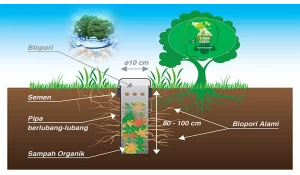
Here are the steps for making biopore holes:
These biopore holes can be encouraged in densely populated urban areas so that they can help reduce the risk of flooding.