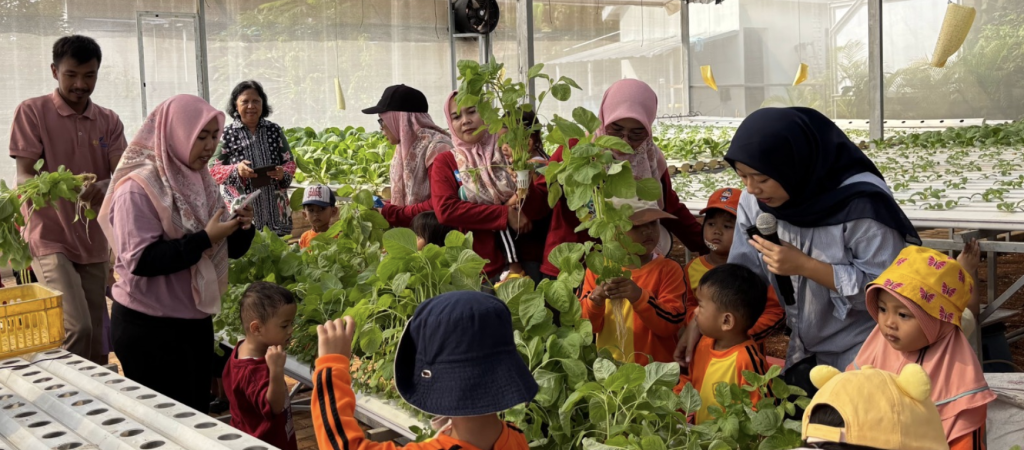
Universitas Negeri Semarang (UNNES) offers diverse menu food choices, including vegetarian and vegan meals, across all campus canteens, including vegetarian and vegan meals, across all campus canteens. These initiatives are directly supported by the Eco-Farm managed by the Subdirektorat Konservasi UNNES, which supplies fresh, organic vegetables and herbs cultivated through environmentally friendly and chemical-free methods.
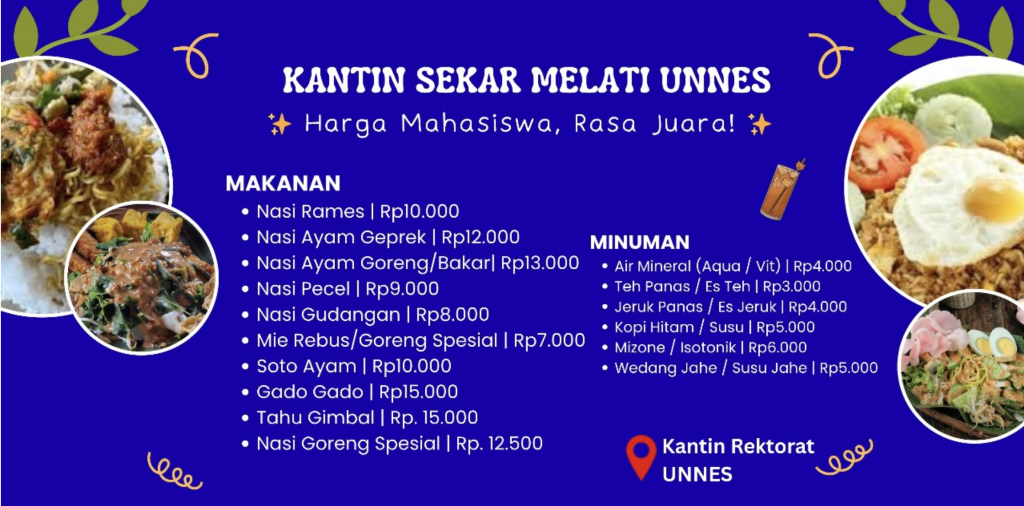
The harvest from the eco-farm—such as spinach, kale, mustard greens, chilies, tomatoes, and tofu soybeans—is distributed daily to canteens across campus. The produce is then used to prepare nutritious vegetarian and vegan dishes, including gado-gado (vegetable salad with peanut sauce), nasi pecel (rice with steamed vegetables and peanut dressing), sayur bayam (spinach soup), tumis kangkung (stir-fried water spinach), and capcay (mixed vegetable stir-fry). These meals are available every day at affordable prices, making healthy eating accessible to all students and staff.
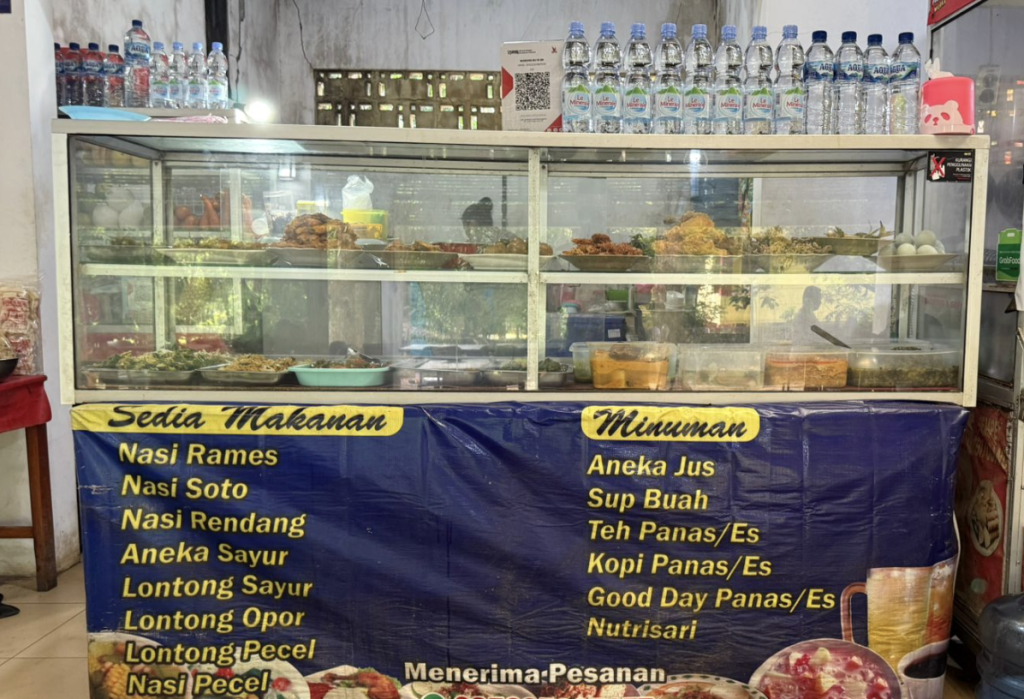
UNNES also ensures that the food ingredients come from local organic farmers and campus-based eco-production, helping reduce the university’s carbon footprint while supporting the local green economy. To maintain high food quality, all campus canteens are regularly monitored by the Health and Food Safety Team from the Student Affairs Office to ensure hygiene, safety, and nutritional value.
In addition, UNNES applies a zero-waste approach in its dining system. Canteens use biodegradable packaging, minimize single-use plastics, and practice waste segregation, where leftover organic waste is processed into compost at the university’s Integrated Waste Management Center (TPST) and reused at the eco-farm. UNNES consistently measures and manages food waste produced across all campus buildings, including canteens and offices where staff and students bring their own meals. Food waste is collected daily by cleaning service teams and sent to the Final Waste Management Facility (TPST) for weighing, data recording, and processing.