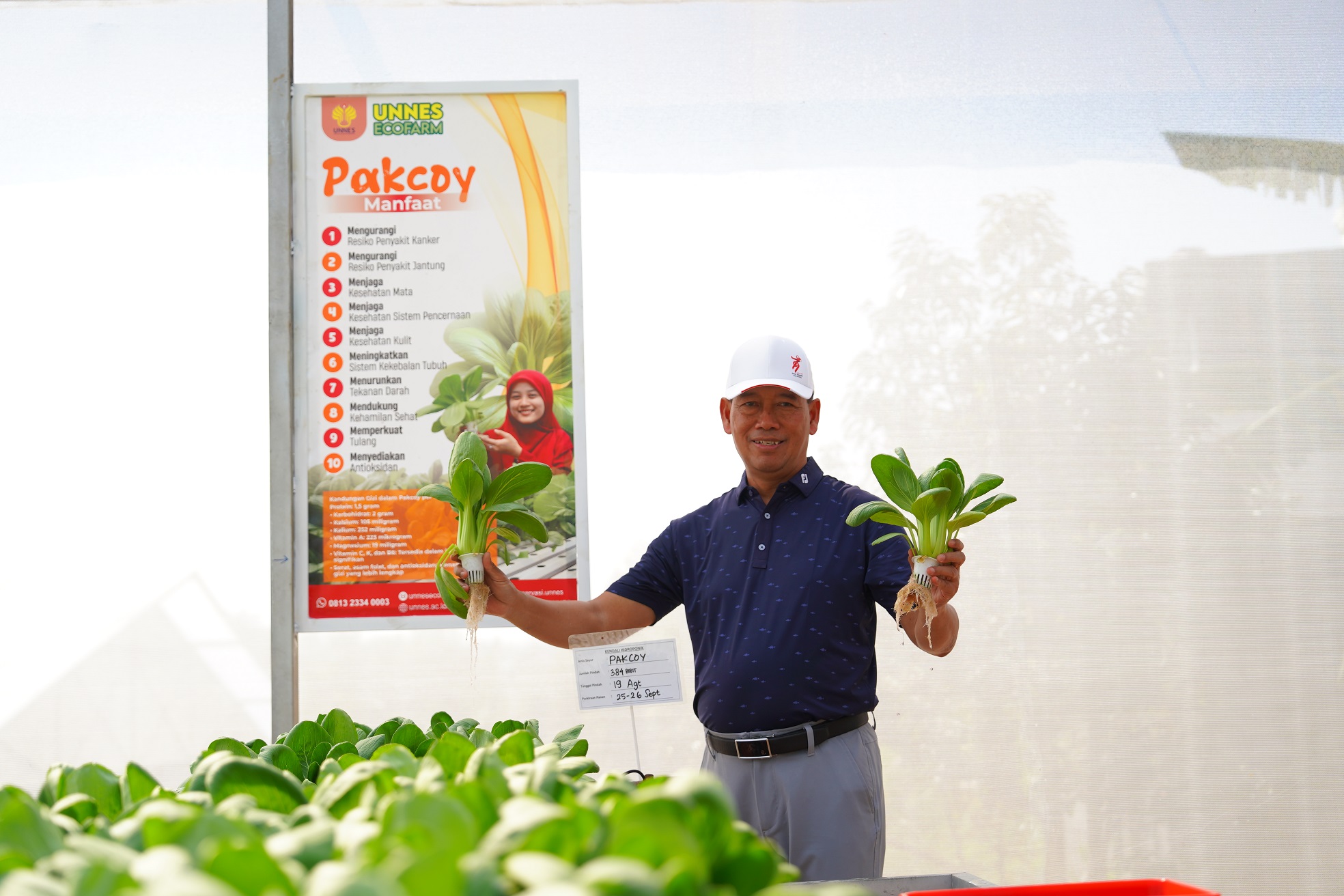
Universitas Negeri Semarang (UNNES) has strengthened its commitment to conservation and sustainable development by issuing Circular Letter No. B/28473/UN37/RT.02/2024 on the Utilization of Campus Facilities for Local Farmers in Sustainable Farming. This policy serves as a concrete step for UNNES to support the Tri Dharma of Higher Education while fostering stronger partnerships with local farming communities around the campus.
Campus Facilities for Sustainable Agriculture
According to the circular, campus facilities may be utilized by local farmers, particularly through the UNNES Subdirectorate of Conservation, to support research, training, and the development of sustainable farming systems. These facilities include land, laboratories, and research infrastructure that can be jointly used with UNNES students and researchers
To ensure order and sustainability, UNNES has set several rules for local farmers wishing to use campus facilities, including:
- Submitting a formal written request to the Rector with details such as general description, activity information, and schedule.
- Maintaining cleanliness, order, and environmental sustainability during activities.
- Ensuring that activities do not disrupt academic and operational processes on campus.
- Utilization may also be carried out through official collaboration invitations from UNNES to local farming communities
Collaboration between UNNES and Local Communities
Vice Rector for Planning, General Affairs, Human Resources, and Finance, Prof. Heri Yanto, M.B.A., Ph.D., emphasized that the policy not only supports sustainable agricultural research but also provides direct benefits to society. “Collaboration with local farmers is a tangible effort by UNNES to integrate knowledge with practice in the field, creating a more sustainable agricultural ecosystem,” he said.
Conservation Commitment
Through this policy, UNNES reaffirms its role as a conservation university actively contributing to the achievement of the Sustainable Development Goals (SDGs), particularly in the areas of food, environment, and community welfare