Demonstrating its leadership as a Conservation University, Universitas Negeri Semarang (UNNES) has developed a comprehensive food waste monitoring and treatment system that integrates measurement, recycling, and community empowerment. Each year, UNNES systematically calculates food waste generated across all campus buildings—including canteens, offices, and academic facilities where staff and students bring meals from home.
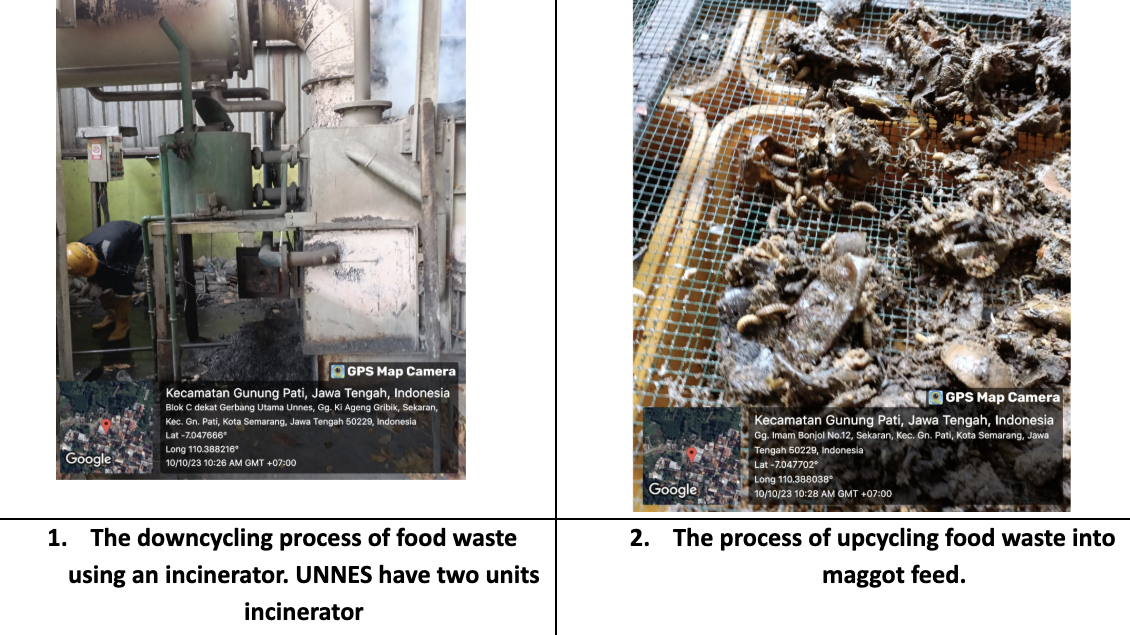
Food waste is collected daily by cleaning service teams from each building and transported to the Final Waste Management Facility (TPST UNNES), where it is weighed, recorded, and treated. In 2024, UNNES recorded a total of 34.75 tons of food waste, which is then processed as feed material for maggot cultivation (Black Soldier Fly larvae). Interestingly, the demand for maggot feedstock exceeds the available supply, leading UNNES to collaborate with surrounding communities to obtain additional food waste materials.
The produced maggots are highly marketable, serving as protein-rich feed for poultry and fish, and as organic fertilizer, which is quickly absorbed by the agricultural market. This initiative reflects UNNES’s innovative approach to linking waste reduction, sustainable food production, and economic empowerment.
Integrated Waste Management Facility (TPST UNNES)
The TPST UNNES manages up to 20 tons of waste per day—equivalent to around 5,200 tons annually—from various campus operations. The majority originates from leaf litter, averaging 17.65 tons daily. In total, UNNES generates approximately 4,645.936 tons of waste per year, categorized into leaf litter, food waste, and other organic waste.
Of this, 4,589.936 tons consist of leaf litter waste, which is processed through downcycling and upcycling methods to create high-quality compost. The compost is then reused for tree planting within the UNNES campus, distributed to local residents, and partially sold, creating a circular economic model.
Meanwhile, 21.254 tons of other waste—mostly branches and wood residues that cannot be composted—are processed using an incinerator and wood crusher. The ash from this process is repurposed for soil conditioning and mixed into compost materials, ensuring minimal landfill use.
Maggot Cultivation: Turning Waste into Sustainable Resources
UNNES has pioneered the use of maggot cultivation as an eco-friendly method of processing organic waste. Food waste collected on campus serves as the primary substrate for maggot rearing. The maggots decompose organic material rapidly, converting waste into biomass that can be used as feed and fertilizer, thus completing a closed-loop waste cycle. Due to limited internal food waste availability, UNNES collaborates with surrounding communities, collecting additional waste from nearby households and food vendors. This collaboration not only supports the maggot production process but also raises local awareness of sustainable waste management practices.
Community Empowerment through Maggot Training Program
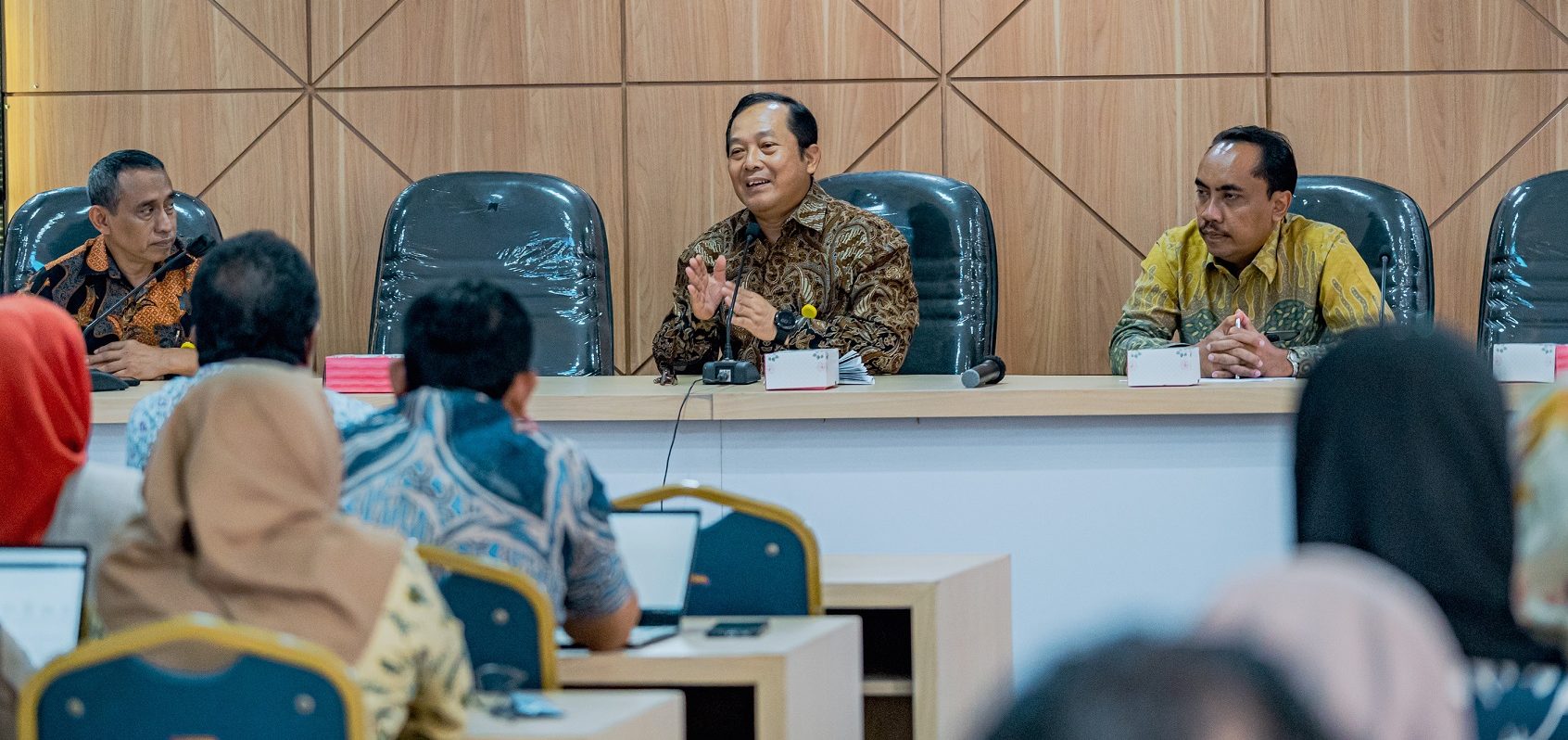
To expand the environmental and economic impact of its waste management efforts, UNNES—through the Faculty of Mathematics and Natural Sciences (FMIPA) and the Environmental Conservation Center (PPLH)—regularly conducts Maggot Cultivation Training for Organic Waste Management. As reported by Jatengkita.id, the training aims to empower local residents, students, and micro-entrepreneurs to turn organic waste into profitable resources. Participants learn the biology of maggots, waste segregation, fermentation, and cultivation techniques, as well as methods to produce compost and animal feed from waste.
This program has successfully inspired community-based waste recycling initiatives, reducing household waste and encouraging sustainable micro-business development in the surrounding area. It also enhances public participation in UNNES’s vision of conservation-based education and community partnership.
Data-Driven Waste Monitoring and Sustainability Impact
UNNES’s waste management process is fully data-driven, integrating regular monitoring, weighing, and reporting systems. Waste collection and measurement are coordinated by the Green Campus Task Force, with all results stored and analyzed to guide future waste reduction strategies. The data not only support internal sustainability reports but also serve as educational material for students and researchers working on environmental engineering, circular economy, and food security.