UNNES Implements Comprehensive Programs to Prevent and Alleviate Hunger Among Students

Universitas Negeri Semarang > Sustainable Development Goals Universitas Negeri Semarang > News > News > UNNES Implements Comprehensive Programs to Prevent and Alleviate Hunger Among Students

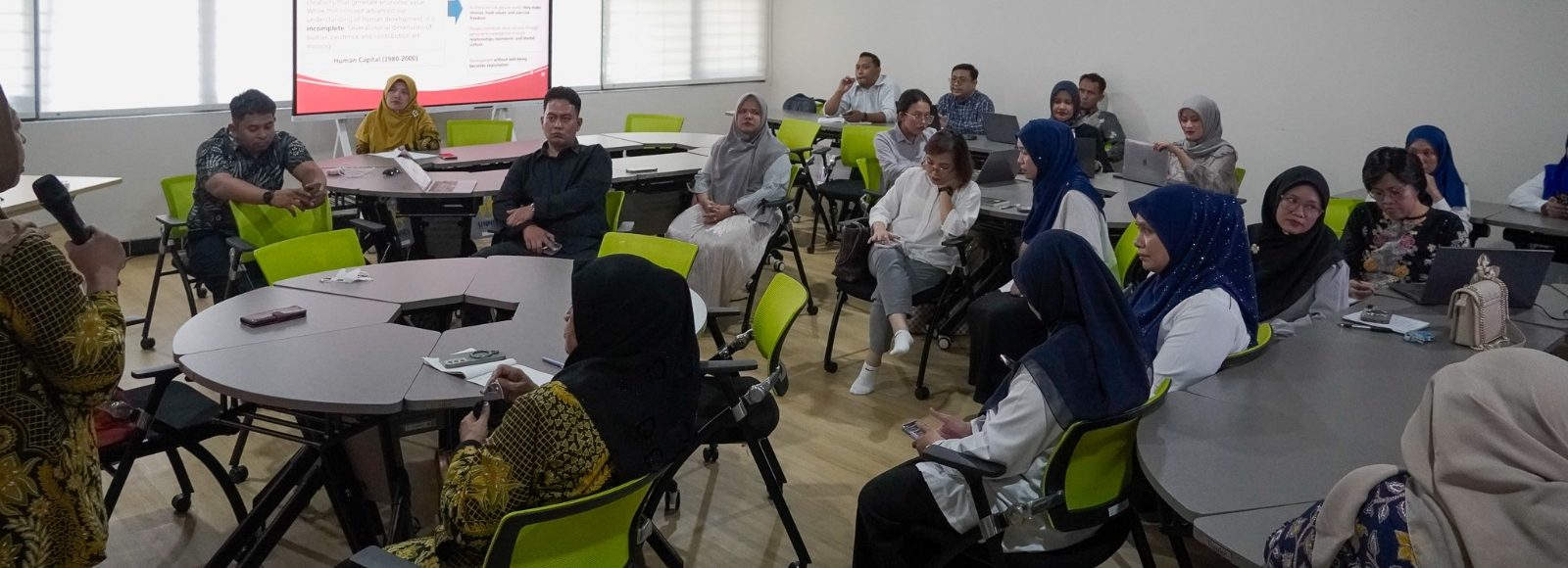
As part of its strong social responsibility, Universitas Negeri Semarang (UNNES) has developed various sustainable programs to prevent and alleviate hunger among students, ensuring access to nutritious, affordable, and balanced meals for the entire academic community.

Every campus canteen at UNNES offers nutritious menus such as nasi goreng, soto, nasi pecel, gado-gado, sayur bayam, tumis kangkung, capcay, and tofu or tempe dishes as plant-based protein sources. Priced between IDR 8,000–15,000 (USD 0.50–0.90) per portion, these meals ensure that all students can afford healthy food every day.

To further support student welfare, UNNES provides free iftar meals during Ramadan and distributes around 2,000 qurban meat packages from sacrificial donations during Eid al-Adha, benefiting both students and the surrounding community.

Universitas Negeri Semarang (UNNES) continues to demonstrate its strong social commitment to student welfare through the Program Jumat Berkah (Friday Blessing Program). Through this initiative, UNNES aims to ensure that no student goes hungry.

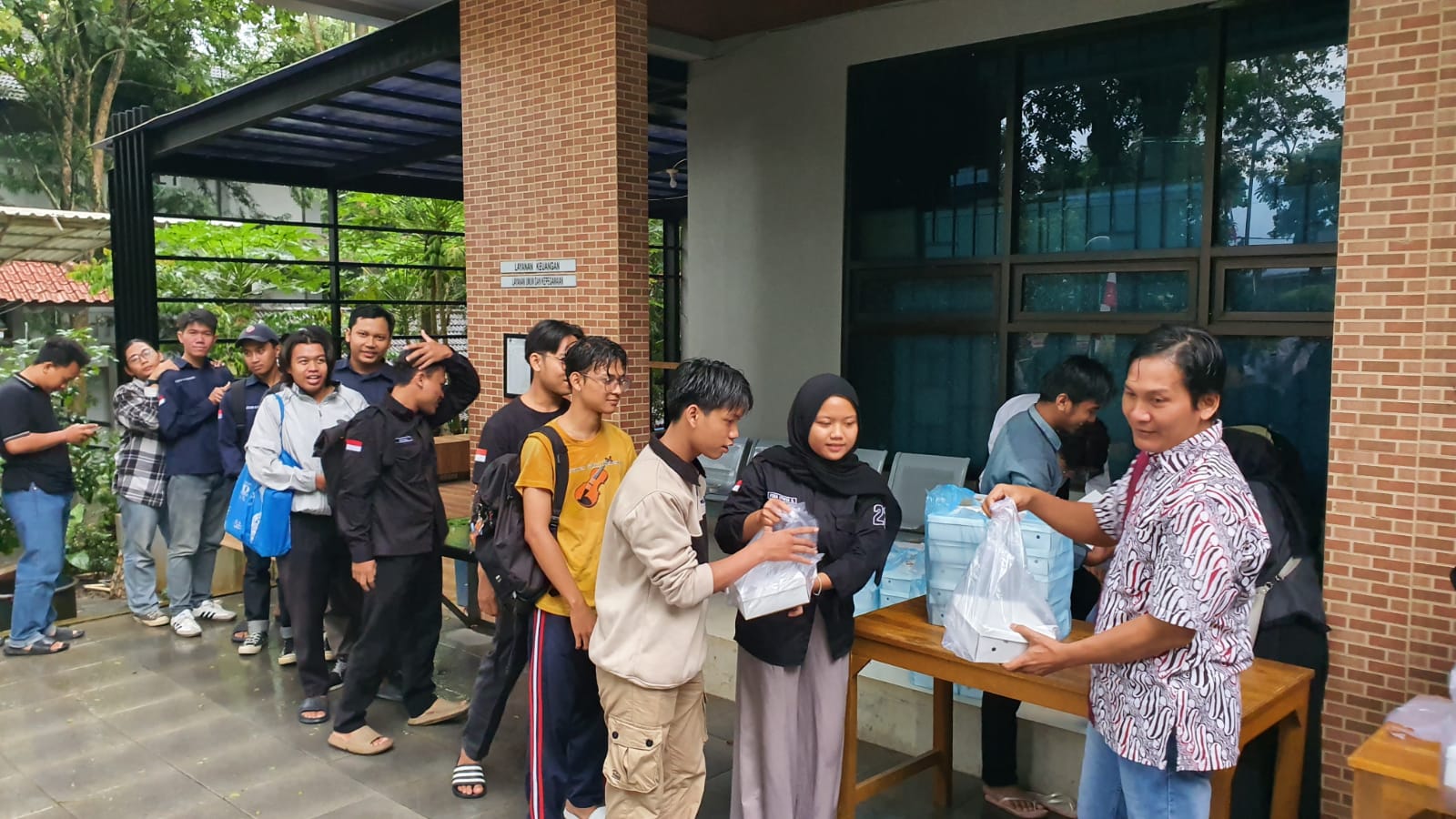
The program is realized by distributing free nutritious meals every Friday to UNNES students. It is implemented collaboratively by various work units within the university. Through this spirit of cooperation, an average of 2000 nutritious meal packages are distributed each Friday to students across campus.

Program Jumat Berkah is carried out jointly by several faculties and institutions within UNNES, including the Faculty of Economics and Business (FEB), Faculty of Engineering (FT), the Institute for Research and Community Service (LPPM), and the UNNES Women’s Association (Dharma Wanita Persatuan/DWP).

Collaboration

FEB and LPPM regularly organize Program Jumat Berkah activities by distributing meals to students, typically in front of the FEB building and the LPPM office. Meanwhile, DWP UNNES provides free meals at the Rectorate Mosque, and the Faculty of Engineering distributes meal packages in the form of iftar meals during the month of Ramadan.

This cross-unit collaboration makes the Program Jumat Berkah a platform for synergy among the academic community, staff, and women’s organizations at UNNES. It not only ensures that no student experiences hunger, but also promotes better nutrition and health on campus.

The Chairperson of the Dharma Wanita UNNES, Mrs Karniti S Martono stated that the program is expected to not only support students economically but also foster a spirit of social awareness within the university environment.

Program Jumat Berkah is a form of gratitude and care. We want to make sure that no UNNES student studies on an empty stomach,” she said.
UNNES’s Consistent Social Commitment

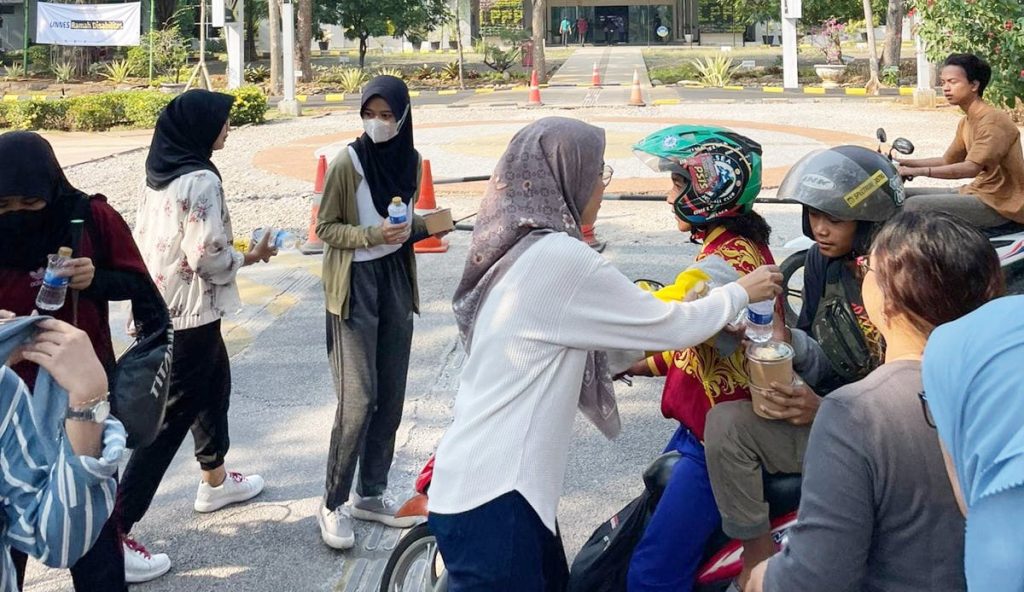
In addition to the weekly Program Jumat Berkah, UNNES actively organizes other meal distribution and food-sharing initiatives. During the holy month of Ramadan, UNNES provides free iftar meal packages, while during the celebration of Eid al-Adha, the university distributes sacrificial meat packages to students and surrounding communities.

In 2024, UNNES successfully collected 16 sacrificial animals, consisting of 9 cows and 7 goats. From these, approximately 2,000 packages of sacrificial meat were distributed to local residents and students.

UNNES Rector, Prof. Dr. S. Martono, emphasized that these social programs reflect the university’s core values of conservation and social care, which are central to its identity.

“UNNES is committed to creating a campus environment that is not only intellectually excellent but also caring, empathetic, and compassionate,” he affirmed.

Through these initiatives, UNNES continues to strengthen its role as a socially responsible and humane university, ensuring that every member of its academic community thrives in both mind and body.
Related Posts

Leave a Reply

* Kode Akses Komentar:

* Tuliskan kode akses komentar diatas:

GDPR

  • Privacy Policy

Privacy Policy

At unnes.ac.id, the privacy of our visitors is of extreme importance to us. This privacy policy document outlines the types of personal information that is received and collected by unnes.ac.id and how it is used.

Log Files

Like many other Web sites, unnes.ac.id makes use of log files. The information inside the log files includes internet protocol (IP) addresses, type of browser, Internet Service Provider (ISP), date/time stamp, referring/exit pages, and number of clicks to analyze trends, administer the site, track user’s movement around the site, and gather demographic information. IP addresses and other such information are not linked to any information that is personally identifiable.

Cookies

unnes.ac.id uses cookies to store information about visitors’ preferences, to record user-specific information on which pages the site visitor accesses or visits, and to personalize or customize our web page content based upon visitors’ browser type or other information that the visitor sends via their browser.

Third-party ad servers or ad networks use technology in their respective advertisements and links that appear on unnes.ac.id and which are sent directly to your browser. They automatically receive your IP address when this occurs. Other technologies (such as cookies, JavaScript, or Web Beacons) may also be used by our site’s third-party ad networks to measure the effectiveness of their advertising campaigns and/or to personalize the advertising content that you see on the site.

unnes.ac.id has no access to or control over these cookies that are used by third-party advertisers.

You should consult the respective privacy policies of these third-party ad servers for more detailed information on their practices as well as for instructions about how to opt-out of certain practices. unnes.ac.id’s privacy policy does not apply to, and we cannot control the activities of, such other advertisers or web sites.

If you wish to disable cookies, you may do so through your individual browser options. More detailed information about cookie management with specific web browsers can be found at the browsers’ respective websites.

Consent

By using our website, you hereby consent to our privacy policy and agree to its terms.

Update

This Privacy Policy was last updated on: 2023-02-14. Should we update, amend or make any changes to our privacy policy, those changes will be posted here.

Contact Us

If you have any questions, comments, or concerns about our Privacy Policy or our practices with regards to your personal information, please feel free to contact us through the contact form on our website or by emailing us at humas[at]mail.unnes.ac.id.

This Privacy Policy is intended as a general guide to our practices in collecting and using information. If there is any inconsistency between this Privacy Policy and the terms of the Service Agreement or any other terms that may apply to specific services you use, then those specific service terms shall apply.

Terms of Use

By using our website, you agree to abide by this Privacy Policy. If you do not agree with this Privacy Policy, please do not use our website. We reserve the right to update this Privacy Policy from time to time without prior notice. Please review our Privacy Policy periodically to check for changes. Your continued use of our website following the posting of changes to this Privacy Policy means that you accept the changes.

Thank you for reading our Privacy Policy. We are committed to protecting the privacy of our website visitors and will continue to update our Privacy Policy to ensure optimal protection.