Guwahati, Assam – 13–17 October 2025
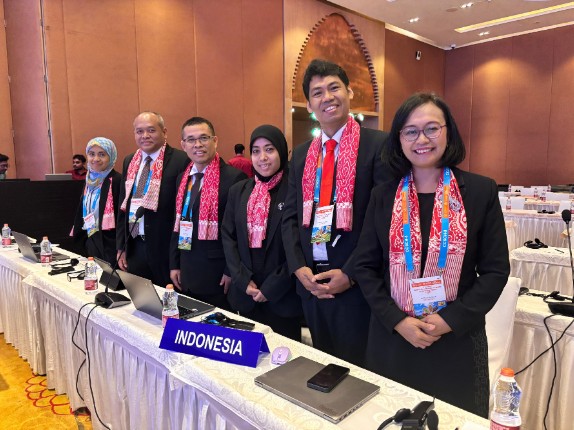
The Center of Excellence for Postharvest Coffee and Spices (PUI-PT) of Universitas Negeri Semarang (UNNES) once again reaffirmed its strategic international role through active participation in the 8th Session of the Codex Committee on Spices and Culinary Herbs (CCSCH) held in Guwahati, Assam, India, from 13 to 17 October 2025. This year, Indonesia, under the leadership of Miranti Reine Devilana from Bappenas as the Head of the Indonesian Delegation, took on a more influential position by serving as Co-Chair for discussions on the international standard of cinnamon, one of Indonesia’s flagship commodities, while also actively contributing to the Electronic Working Group on vanilla standards.
CCSCH is a committee under the Codex Alimentarius Commission that focuses on developing international standards for spices and culinary herbs to ensure food safety and facilitate global trade. In its 8th session, the forum discussed several draft standards for spice commodities that are also major export products of Indonesia.
The Indonesian delegation consisted of representatives from government and research institutions, including Bappenas (Miranti Reine Devilana), Universitas Negeri Semarang (Eka Yuli Astuti), Ministry of Foreign Affairs (Rasyid Mahmuddin and Darmia Dimu), Embassy of the Republic of Indonesia in New Delhi (Tri Suroso), Indonesian Spice Council (Sigit Ismaryanto), and National Research and Innovation Agency/BRIN (Jon Hendri). This cross-sector collaboration reflects Indonesia’s national strategy to strengthen its position as one of the world’s leading spice producers.
“Postharvest standardization of spices is a key factor in ensuring that Indonesian products remain competitive in the global market. This forum serves as a strategic platform to advocate for the quality and identity of our spices,” said Miranti, Head of the Indonesian Delegation.
Representing UNNES in the official delegation, Dr. Eka Yuli Astuti, Head of the UNNES Center of Excellence for Postharvest Coffee and Spices (PUI-PT) from the Faculty of Languages and Arts (FBS), marked her second participation in CCSCH after previously attending the 7th session. Her continued involvement highlights UNNES’s active contribution to research-based diplomacy and scientific advocacy in the global spice sector.
Indonesia’s appointment as Co-Chair in the formulation of cinnamon standards represents a strategic move to enhance the country’s influence in the international spice trade. Both cinnamon and vanilla are high-value export commodities with significant economic potential but continue to face challenges in terms of quality standards and market access. “Serving as Co-Chair is a recognition of Indonesia’s crucial position in the global spice supply chain. It is also a form of technical diplomacy to ensure that Indonesian cinnamon and vanilla are represented by fair and beneficial international standards—particularly for the benefit of smallholder farmers,” Eka explained.
As an academic and researcher, Eka also emphasized the importance of adopting a research-based approach in formulating quality and postharvest standards that reflect local characteristics while complying with global requirements.
Indonesia’s and UNNES active participation in CCSCH 8 not only supports trade and food quality enhancement but also contributes to the achievement of several Sustainable Development Goals (SDGs), including SDG 2 (Zero Hunger) through improved food safety and quality, SDG 8 (Decent Work and Economic Growth) by increasing the value-added and competitiveness of local products, SDG 9 (Industry, Innovation, and Infrastructure) through postharvest technology and research-based innovation, SDG 12 (Responsible Consumption and Production) by promoting sustainable and environmentally friendly spice management, and SDG 17 (Partnerships for the Goals) through multilateral cooperation and Indonesia’s active engagement in setting international standards.
UNNES consistent presence in international forums such as CCSCH underscores its role as a strategic academic partner of the government in advancing knowledge-based economic diplomacy. Through the Center of Excellence for Postharvest Coffee and Spices, UNNES continues to contribute concretely to research, standardization, and advocacy for Indonesia’s national interests at the global level. This ongoing participation reaffirms UNNES commitment as a conservation-oriented and internationally reputable university that continuously promotes national excellence through scientific, collaborative, and sustainable approaches.