The belis tradition, or bridal dowry, has long been an integral part of Nusa Tenggara Timur’s (NTT) cultural heritage. But how is this tradition viewed through the eyes of NTT women themselves? This question drives a collaborative research project between Universitas Negeri Semarang (UNNES) and Solidaritas Perempuan Flobamoratas, titled “Belis from the Perspective of Women Writers in NTT.”
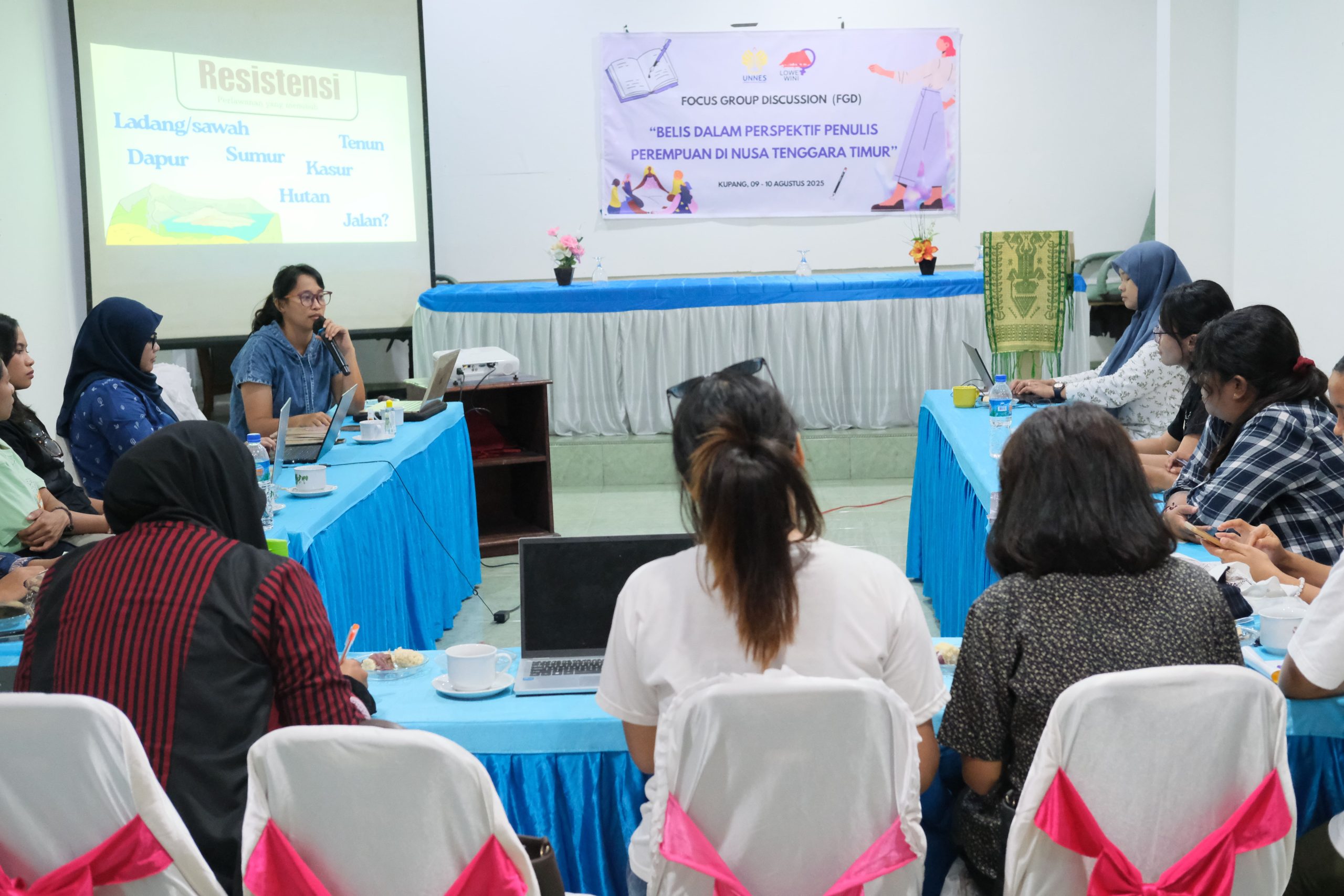
Running from June to December 2025, the project involves ten women writers from Flores, Sumba, Timor, Alor, Rote, and Sabu. They will produce short stories centered on the belis tradition, take part in focus group discussions (FGDs), and share their experiences through in-depth interviews. The outcomes will include international journal publications, an article on The Conversation, and an anthology of short stories that will also be registered for intellectual property rights.
Lead investigator Imas Istiani emphasized that this initiative marks an important step toward amplifying women’s voices in cultural discourse.
“Narratives about belis have mostly come from male writers, even though women experience its impacts directly,” she said. “Through this project, we aim to provide a space for women to share their lived experiences and shape public understanding.”
The collaboration contributes to several Sustainable Development Goals (SDGs): promoting gender equality by empowering women writers (SDG 5), advancing quality education by fostering cultural and gender literacy through literature (SDG 4), and reducing inequalities by including marginalized voices in cultural narratives (SDG 10).
Linda Tagie from Solidaritas Perempuan Flobamoratas also highlighted the importance of the project in bringing women’s perspectives to the forefront.
“We want to ensure that NTT women have the opportunity to write, tell their stories, and influence how society perceives belis,” she said.