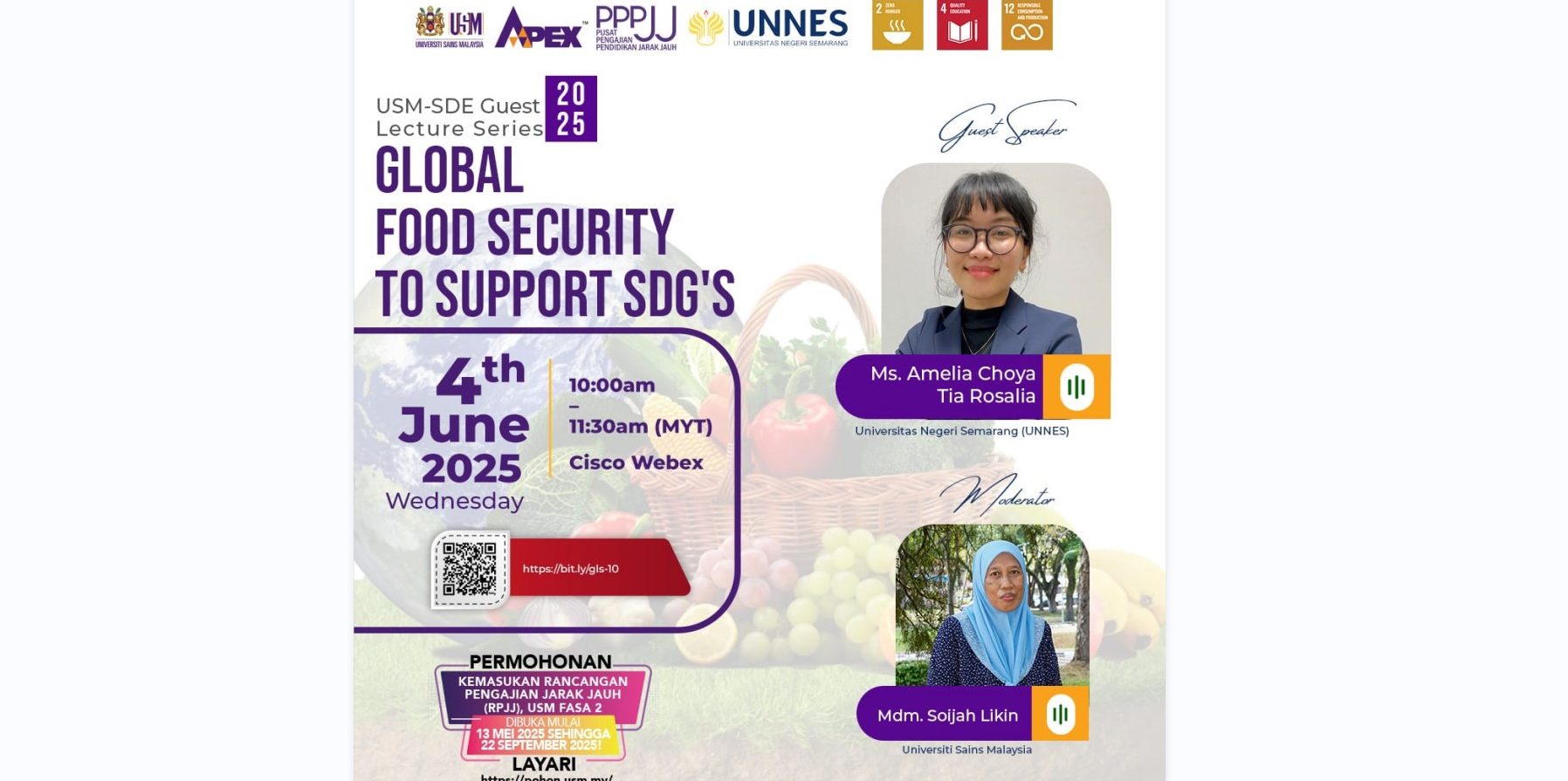
On June 4th, 2025, Universitas Sains Malaysia (USM) hosted a significant guest lecture titled Global Food Security to Support SDGs. The event, conducted virtually through Cisco Webex, aimed to address one of the most critical issues of our time, global food security, and its connection to the United Nations Sustainable Development Goals (SDGs). The lecture featured Ms. Amelia Choya Tia Rosalia from Universitas Negeri Semarang (UNNES) as the guest speaker and Mdm. Soijah Likin from USM is the moderator.
The lecture, which ran from 10:00 AM to 11:30 AM (MYT), attracted a diverse audience eager to learn about the global challenges surrounding food security. Ms. Amelia provided a comprehensive overview of how food security is directly linked to achieving SDGs, especially SDG 2-Zero Hunger. This SDG aims to end hunger, achieve food security, improve nutrition, and promote sustainable agriculture. Food security is about ensuring access to food and enhancing agricultural productivity, supporting rural development, and making food systems more resilient to climate change.
The rising challenges of climate change, population growth, and the increasing demand for sustainable food production systems amplify the importance of this topic. According to Ms. Amelia, food security is not just about alleviating hunger in the short term but also creating long-term solutions for sustainable food systems that support people and the planet. She emphasized that achieving SDG 2 requires a multifaceted approach that includes innovation, policy changes, and collaborative global efforts to ensure that all people, especially the most vulnerable, have access to nutritious and sufficient food.
As part of the lecture, Ms. Amelia highlighted innovative solutions to address food security, such as the role of digital agriculture, improved farming practices, and enhanced local food systems. By emphasizing the need for a balance between environmental sustainability and food production, she underscored that the sustainability of our food systems is directly tied to the success of SDG 2 and its integration into global development strategies.
The informative session encouraged active participation through discussions, allowing attendees to explore how local actions can contribute to global goals. By shedding light on these pressing issues, the event emphasized the crucial role of individuals, communities, and nations in achieving food security and advancing the SDGs.
In conclusion, the lecture reinforced that global food security is central to achieving SDG 2 and other interconnected SDGs. It is clear that sustainable food systems are vital for the overall progress of society, and tackling food security is a key step toward ensuring a healthier, more equitable world for future generations.