Menguatkan dan Merajut Kemitraan: Peran Krusial Pendidikan Nonformal Menuju Indonesia Tangguh

Universitas Negeri Semarang/Fakultas Ilmu Pendidikan dan Psikologi/Berita/PLS/Menguatkan dan Merajut Kemitraan: Peran Krusial Pendidikan Nonformal Menuju Indonesia Tangguh

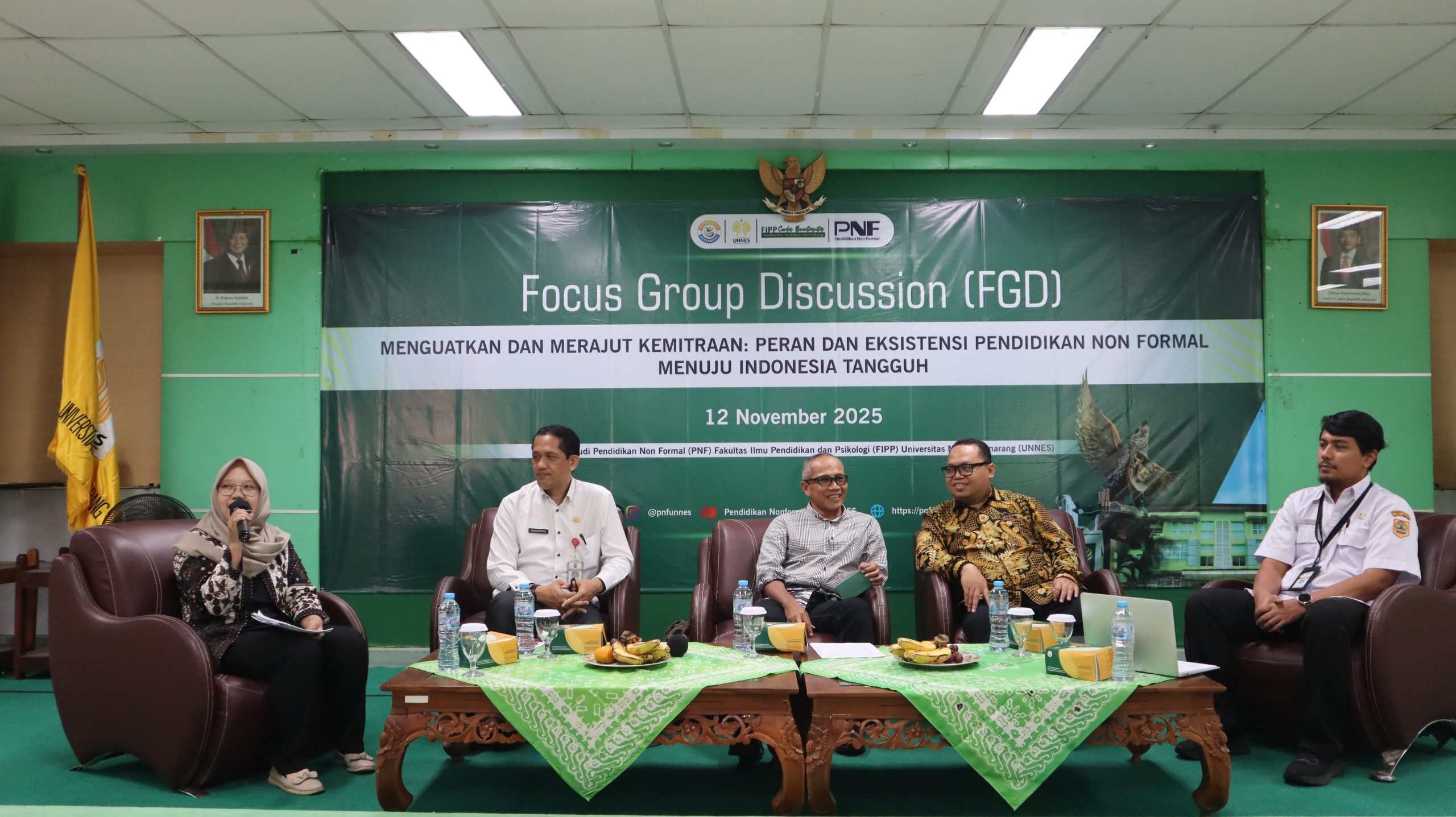
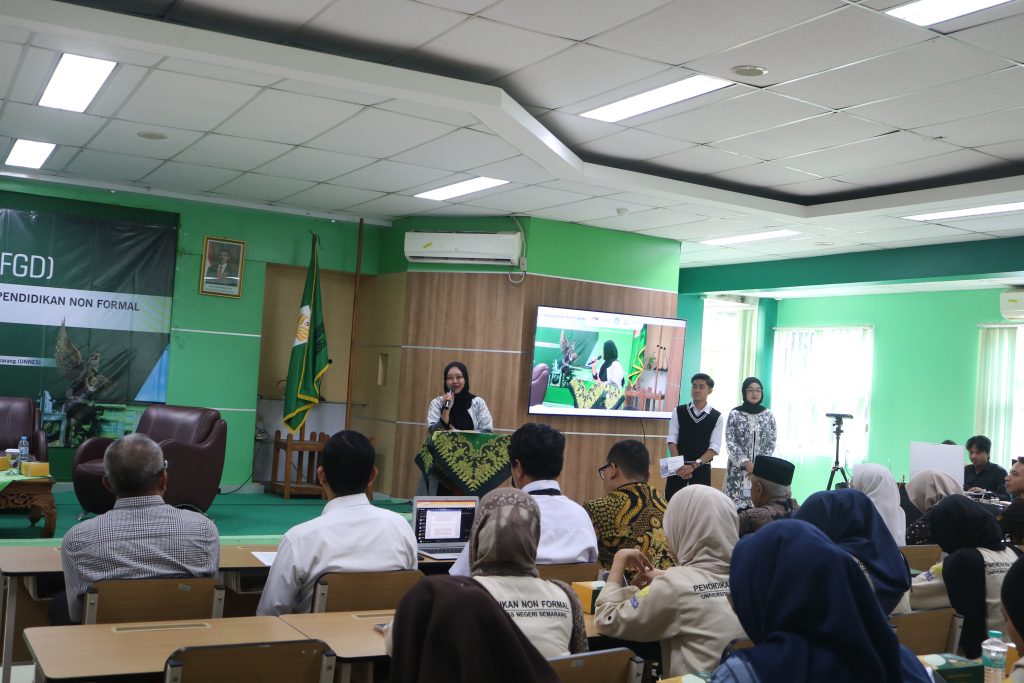
SEMARANG – Dalam rangka implementasi Asta Cita dan Sustainable Development Goals (SDG’s), Program Studi Pendidikan Nonformal (PNF) Fakultas Ilmu Pendidikan dan Psikologi (FIPP) menyelenggarakan Forum Group Discussion (FGD) bertema “Menguatkan dan Merajut Kemitraan: Peran dan Eksistensi Tangguh Pendidikan Nonformal Menuju Indonesia Tangguh”. Kegiatan ini dibuka oleh Wakil Dekan III FIPP, Siti Nuzulia, S.Psi., M.Si., PhD., dan dihadiri oleh narasumber dari Dinas Pemberdayaan Desa, BBPMP Jawa Tengah, dan Dinas Pendidikan Kota Semarang.
Kegiatan ini secara spesifik mengamanatkan:

  • Asta Cita: Memperkuat pembangunan sumber daya manusia (Asta Cita ke-4), membangun dari desa untuk pemberantasan kemiskinan (Asta Cita ke-6), dan memperkuat penyelarasan kehidupan yang harmonis (Asta Cita ke-8).
  • SDG’s: Penyelenggaraan pendidikan berkualitas (SDG’s ke-4), kelembagaan yang tangguh (SDG’s ke-16), dan kemitraan untuk mencapai tujuan (SDG’s ke-17).
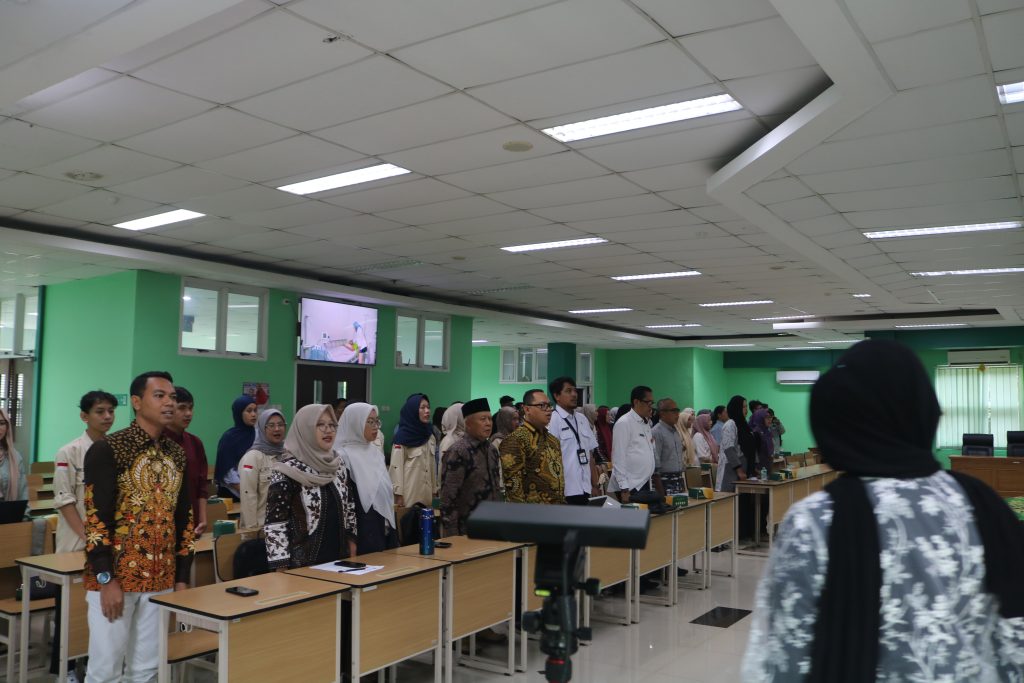
Kepala Sub Bagian Program Dinas Pemberdayaan Desa, Bapak Adhiyatma, menekankan bahwa PNF memiliki kaitan erat dengan pemberdayaan masyarakat desa, yang merupakan “miniatur Indonesia”. PNF diharapkan mampu mendorong kreativitas pemimpin desa yang masih bergantung pada dana transfer pusat, terutama dalam mengelola keuangan desa dan Badan Usaha Milik Desa (BUMDes) yang banyak dibentuk hanya karena tren.

Senada dengan hal tersebut, Kepala Sub Koordinator Kurikulum dan Penilaian Dinas Pendidikan Kota Semarang, Bapak Rifki Nugroho, S.Pd., M.Kom, menyatakan bahwa PNF memiliki keunggulan dalam fleksibilitas dan penyesuaian kebutuhan peserta. Pengalamannya di Mangunharjo, Semarang, menunjukkan bahwa pendekatan keterampilan (teknik perkapalan dan listrik) menjadi kunci untuk mengatasi masalah buta aksara dan penolakan belajar di kalangan nelayan.

Widyaprada Ahli Madya BBPMP Jawa Tengah, Bapak Heri Martono, S. S., M.Pd, menyoroti bahwa PNF (dahulu dikenal sebagai PLS) memiliki ruang lingkup yang sangat luas—diibaratkan ikan yang hidup di lautan.

Tantangan utama terletak pada:

  • Tingginya jumlah Anak Tidak Sekolah (ATS) di Jawa Tengah yang mencapai sekitar 33.000 orang, sementara kapasitas SKB dan PKBM masih terbatas.
  • Tugas PNF tidak hanya mengajar, tetapi mencari, mempertahankan, dan membantu peserta didik mendapatkan pekerjaan.
  • Tantangan terbesar adalah membangkitkan motivasi belajar peserta, bukan sekadar menyediakan fasilitas atau dana.

Peluang besar bagi PNF mencakup:

  • Potensi lapangan kerja yang luas di luar ASN, seperti pengelola kursus, PKBM, PAUD, dan program pemerintah.
  • Banyaknya contoh pengelola lembaga PNF yang berhasil secara ekonomi dan lebih sejahtera dibanding ASN.
  • Rencana kebijakan ke depan yang akan menjadikan PNF sebagai ujung tombak dalam pengentasan ATS dan peningkatan kesetaraan pendidikan.

Diskusi menguatkan bahwa keberhasilan PNF sangat dipengaruhi oleh sistem yang baik, mencakup SKTP (Surat Keterangan Tanda Tamat PAUD), Dapodik, dan Sertifikasi tenaga pendidik. Akreditasi juga menjadi syarat penting untuk menjaga mutu dan memastikan ijazah diakui.

Ketua Panitia, Bapak Mu’arifuddin, S.Pd., M.Pd., menyatakan bahwa kompetensi utama lulusan PNF adalah mengelola program dan lembaga pendidikan nonformal. Ia berharap mahasiswa magang di PKBM yang sederhana agar dapat belajar mengembangkan lembaga, bukan hanya memanfaatkan fasilitas yang sudah lengkap.

FGD ini menyimpulkan bahwa mahasiswa PNF harus turun ke lapangan sesuai dengan kebutuhan nyata masyarakat, bukan sekadar mengikuti tren. Selain itu, pentingnya kolaborasi antara sekolah, orang tua, dan masyarakat untuk mengembalikan marwah pendidikan yang berawal dari rumah. Program studi PNF berkomitmen menjalin kerja sama agar mahasiswa mampu mengembangkan potensi diri dan menjaga sikap di mana pun berada.
Related Posts

Leave a Reply

* Kode Akses Komentar:

* Tuliskan kode akses komentar diatas:

GDPR

  • Privacy Policy

Privacy Policy

At unnes.ac.id, the privacy of our visitors is of extreme importance to us. This privacy policy document outlines the types of personal information that is received and collected by unnes.ac.id and how it is used.

Log Files

Like many other Web sites, unnes.ac.id makes use of log files. The information inside the log files includes internet protocol (IP) addresses, type of browser, Internet Service Provider (ISP), date/time stamp, referring/exit pages, and number of clicks to analyze trends, administer the site, track user’s movement around the site, and gather demographic information. IP addresses and other such information are not linked to any information that is personally identifiable.

Cookies

unnes.ac.id uses cookies to store information about visitors’ preferences, to record user-specific information on which pages the site visitor accesses or visits, and to personalize or customize our web page content based upon visitors’ browser type or other information that the visitor sends via their browser.

Third-party ad servers or ad networks use technology in their respective advertisements and links that appear on unnes.ac.id and which are sent directly to your browser. They automatically receive your IP address when this occurs. Other technologies (such as cookies, JavaScript, or Web Beacons) may also be used by our site’s third-party ad networks to measure the effectiveness of their advertising campaigns and/or to personalize the advertising content that you see on the site.

unnes.ac.id has no access to or control over these cookies that are used by third-party advertisers.

You should consult the respective privacy policies of these third-party ad servers for more detailed information on their practices as well as for instructions about how to opt-out of certain practices. unnes.ac.id’s privacy policy does not apply to, and we cannot control the activities of, such other advertisers or web sites.

If you wish to disable cookies, you may do so through your individual browser options. More detailed information about cookie management with specific web browsers can be found at the browsers’ respective websites.

Consent

By using our website, you hereby consent to our privacy policy and agree to its terms.

Update

This Privacy Policy was last updated on: 2023-02-14. Should we update, amend or make any changes to our privacy policy, those changes will be posted here.

Contact Us

If you have any questions, comments, or concerns about our Privacy Policy or our practices with regards to your personal information, please feel free to contact us through the contact form on our website or by emailing us at humas[at]mail.unnes.ac.id.

This Privacy Policy is intended as a general guide to our practices in collecting and using information. If there is any inconsistency between this Privacy Policy and the terms of the Service Agreement or any other terms that may apply to specific services you use, then those specific service terms shall apply.

Terms of Use

By using our website, you agree to abide by this Privacy Policy. If you do not agree with this Privacy Policy, please do not use our website. We reserve the right to update this Privacy Policy from time to time without prior notice. Please review our Privacy Policy periodically to check for changes. Your continued use of our website following the posting of changes to this Privacy Policy means that you accept the changes.

Thank you for reading our Privacy Policy. We are committed to protecting the privacy of our website visitors and will continue to update our Privacy Policy to ensure optimal protection.