

Semarang, June 15, 2025 — Youth from marginalised groups face complex challenges that often go unnoticed by the public. They live in environments with limited access to education, emotional support, and mental health services. Additionally, social stigma, gender-based violence, and structural poverty further constrain their opportunities to grow and thrive. The absence of supportive figures, limited family roles, and the lack of safe spaces for expression make these youth more susceptible to psychological disorders, decreased motivation, and social disconnection. Therefore, comprehensive support is required—not only at the individual level but also by engaging the social systems around them, particularly families and volunteer communities.
On June 14–15, 2025, Universitas Negeri Semarang (UNNES), in collaboration with the Indonesian Family Planning Association (PKBI), the University of Auckland, and The Safina Trust, conducted a research project aimed at addressing the challenges faced by marginalised youth groups. The activity took place in the heart of Semarang, at the Monod Diephuis building located in the historical Old Town tourist area.
The research was supported by the Institute for Research and Community Service (LP2M) and the Faculty of Education and Psychology (FIPP) of UNNES, which provided funding for the research. This study focused on strengthening the resilience of marginalised youth through a holistic approach involving adolescents, parents, and volunteers. Titled “Building the Mental Resilience of Marginalised Youth with Families and Volunteers”, the project was led by Anna Undarwati, S.Psi., M.A., Ph.D., with the following team members:
- Pradipta Christy Pratiwi, S.Psi., M.Psi, Psychologist
- Nuke Martiarini, S.Psi., M.A.
- Fikrotul Hanifah, S.Psi., M.Psi., Psychologist
- Adelina Rahmawati, M.Psi., Psychologist
- Chamilul Hikam Al Karim, S.Psi., M.Psi
- Kannitha Atalla Shede
- Aggacitto
- Anggita Anjar Sharez
- Putri Mumtaza Al Ameera
Notably, this activity directly involved several community groups such as Rumpin Bangjo in Kota Lama (mentored by PKBI Semarang City), ASA EDU Community (a children and youth community in the Tambak Lorok fishing village), Harapan Community or KOMHAR (focused on child and youth education in Pasar Johar), and Satoe Atap Community, which consistently supports socially marginalised youth. The involvement of these communities was key to the program’s success, as they deeply understand the daily lives of marginalised youth groups. The activity was carried out in two sessions with different focuses. The first day centered on volunteers and parents as support systems for youth resilience. The second day focused on the marginalised youth themselves.
Day One: FGD and Psychoeducation for Volunteers and Parents
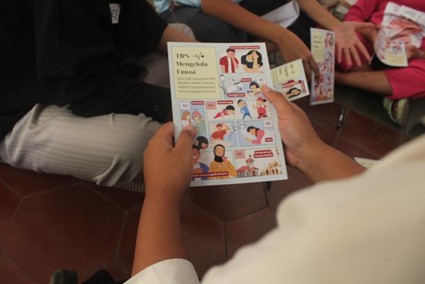
The first day began with a Focus Group Discussion (FGD) involving community volunteers. The discussion explored the challenges and strategies for building youth mental and emotional health. Volunteers also received training in self-care and psychological first aid as initial steps to providing basic psychological support in their communities.
The next session involved parents, who were invited to discuss the role of the family in building children’s resilience. This FGD was followed by psychoeducation on family functioning and a reflective session on the extent of their roles so far.
Day Two: Safe Expression Space for Youth
The main focus on the second day was a session with youth from ASA EDU, Rumpin Bangjo, KOMHAR, and Satoe Atap communities. The activities aimed to help adolescents recognize their potential, identify available social support, and plan for their future with greater awareness of their strengths and barriers.
The session concluded with a free and expressive drawing activity. This provided a safe space for the youth to express themselves creatively and showcase their full potential.
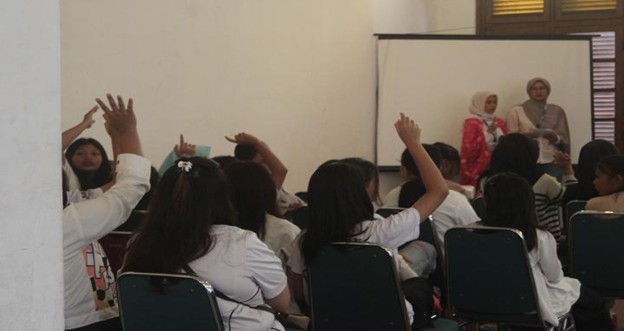
This research was not merely an academic activity but also a social initiative that supports the empowerment of marginalised groups through collaboration between academics, NGOs, and communities. The active roles of ASA and Rumpin Bangjo communities proved that social transformation begins at the grassroots level.