UNNES Students Develop COMA: A Local Wisdom–Based E-Comic to Enhance Mathematical Problem-Solving Skills

Universitas Negeri Semarang > Sustainable Development Goals Universitas Negeri Semarang > News > News > UNNES Students Develop COMA: A Local Wisdom–Based E-Comic to Enhance Mathematical Problem-Solving Skills

A team from the Student Creativity Program in Social Humanities Research (PKM-RSH) AMLI 2025 of Universitas Negeri Semarang (UNNES) has introduced an educational innovation through the development of a technology-based learning media that integrates local wisdom, called COMA. COMA is an innovative problem-based e-comic that incorporates Semarang’s traditional culinary heritage to enhance students’ mathematical problem-solving skills.
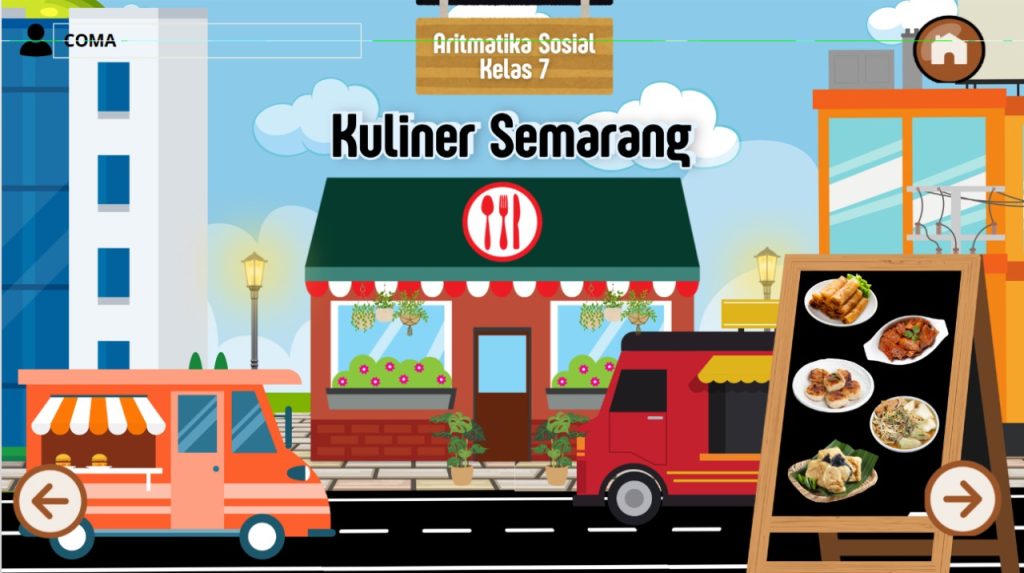
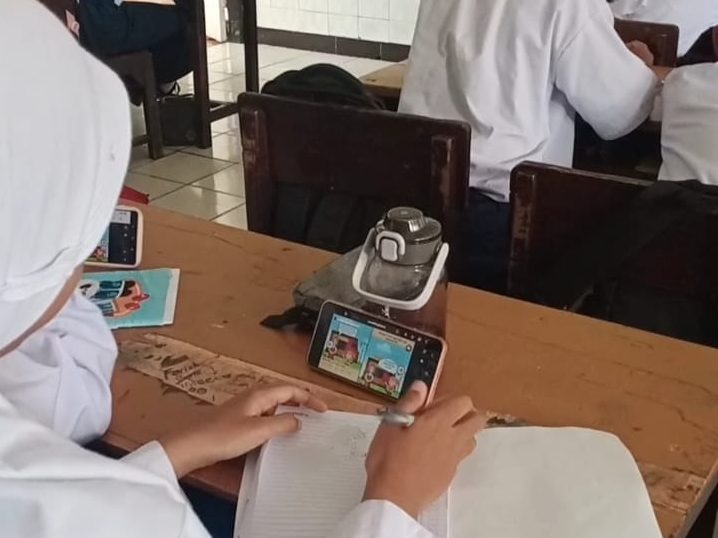
This learning media is specifically designed for junior high school students and has been implemented at SMP Negeri 9 Semarang. In this initiative, students are guided to solve mathematical problems embedded within interactive comic stories that feature Semarang’s local delicacies such as lumpia rebung, soto bangkong, wingko babat, babat gongso, and tahu petis. The use of these contextual elements makes mathematics learning more engaging, relatable, and grounded in students’ daily experiences. Furthermore, the activity involved mathematics teachers from the school to ensure the feasibility, validity, and pedagogical effectiveness of the developed media.

The underlying issue addressed by this project is the low level of mathematical problem-solving skills among Indonesian students. Educational surveys indicate that many students struggle to comprehend high-level mathematical concepts and non-routine problems, especially in topics related to social arithmetic. This difficulty often stems from a lack of engaging learning media and repetitive, routine-based exercises that fail to promote critical thinking.

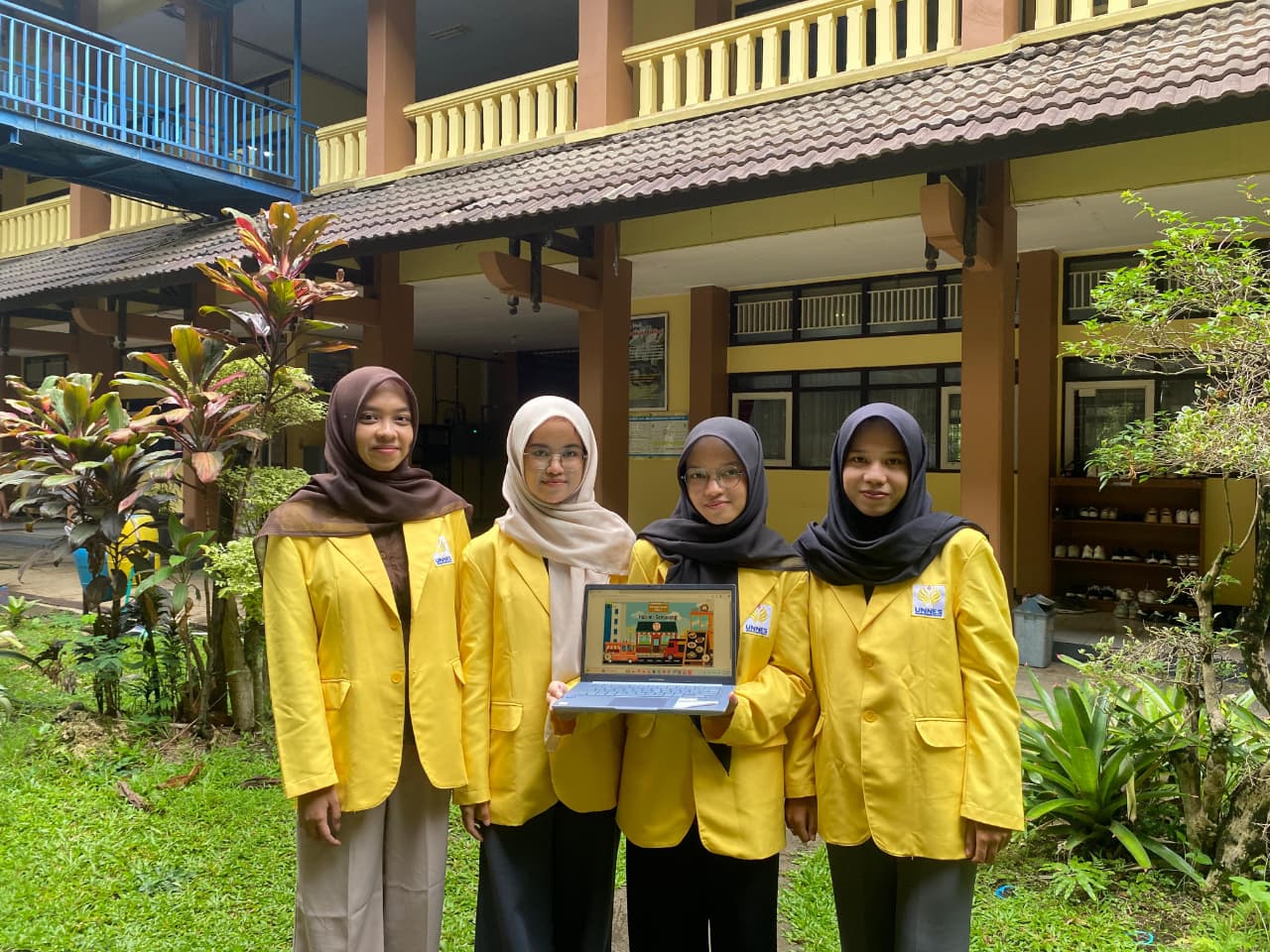
As a solution, a team of students from the Mathematics Education Study Program at UNNES, led by Hayu Dhiya Rahmadani, with members Aulia Faiqoh, Khansa’ Hanun Nabilah, and Riska Marselina, under the supervision of Mr. Adi Satrio Ardiansyah, S.Pd., M.Pd., developed COMA (Contextual Math E-Comic Application)—a problem-based digital comic integrating Semarang’s culinary culture. This media allows students to explore mathematical concepts and solve real-world problems interactively and enjoyably through digital storytelling.

The impact of this initiative was evident after a trial implementation at SMP Negeri 9 Semarang. Based on observation and assessment results, COMA was found to be feasible, effective, and well-received by students. Students reported that the e-comic made it easier for them to understand previously difficult mathematical concepts, while teachers observed a significant increase in student engagement and motivation. One of the mathematics teachers even expressed interest in adopting COMA for continuous classroom use.
In the long term, this innovation is expected to serve as a sustainable digital learning solution for teachers and schools, particularly in enhancing the quality of mathematics education in the digital era. COMA exemplifies the synergy between technology, local culture, and pedagogy, reinforcing UNNES’s commitment to promoting innovative and contextually relevant education aligned with global educational goals.

This innovation contributes primarily to the following SDGs:

  • SDG 4 – Quality Education:
    COMA enhances the quality and inclusivity of education by integrating digital technology, problem-based learning, and cultural context to improve students’ critical thinking and problem-solving skills.
  • SDG 9 – Industry, Innovation, and Infrastructure (secondary link):
    The use of technology-driven learning platforms supports innovation in education through digital transformation and creative learning design.
  • SDG 11 – Sustainable Cities and Communities (supporting link):
    By embedding local wisdom and cultural heritage into education, COMA fosters the preservation of Semarang’s culinary identity and promotes sustainable local knowledge within modern educational systems.
Related Posts

Leave a Reply

* Kode Akses Komentar:

* Tuliskan kode akses komentar diatas:

GDPR

  • Privacy Policy

Privacy Policy

At unnes.ac.id, the privacy of our visitors is of extreme importance to us. This privacy policy document outlines the types of personal information that is received and collected by unnes.ac.id and how it is used.

Log Files

Like many other Web sites, unnes.ac.id makes use of log files. The information inside the log files includes internet protocol (IP) addresses, type of browser, Internet Service Provider (ISP), date/time stamp, referring/exit pages, and number of clicks to analyze trends, administer the site, track user’s movement around the site, and gather demographic information. IP addresses and other such information are not linked to any information that is personally identifiable.

Cookies

unnes.ac.id uses cookies to store information about visitors’ preferences, to record user-specific information on which pages the site visitor accesses or visits, and to personalize or customize our web page content based upon visitors’ browser type or other information that the visitor sends via their browser.

Third-party ad servers or ad networks use technology in their respective advertisements and links that appear on unnes.ac.id and which are sent directly to your browser. They automatically receive your IP address when this occurs. Other technologies (such as cookies, JavaScript, or Web Beacons) may also be used by our site’s third-party ad networks to measure the effectiveness of their advertising campaigns and/or to personalize the advertising content that you see on the site.

unnes.ac.id has no access to or control over these cookies that are used by third-party advertisers.

You should consult the respective privacy policies of these third-party ad servers for more detailed information on their practices as well as for instructions about how to opt-out of certain practices. unnes.ac.id’s privacy policy does not apply to, and we cannot control the activities of, such other advertisers or web sites.

If you wish to disable cookies, you may do so through your individual browser options. More detailed information about cookie management with specific web browsers can be found at the browsers’ respective websites.

Consent

By using our website, you hereby consent to our privacy policy and agree to its terms.

Update

This Privacy Policy was last updated on: 2023-02-14. Should we update, amend or make any changes to our privacy policy, those changes will be posted here.

Contact Us

If you have any questions, comments, or concerns about our Privacy Policy or our practices with regards to your personal information, please feel free to contact us through the contact form on our website or by emailing us at humas[at]mail.unnes.ac.id.

This Privacy Policy is intended as a general guide to our practices in collecting and using information. If there is any inconsistency between this Privacy Policy and the terms of the Service Agreement or any other terms that may apply to specific services you use, then those specific service terms shall apply.

Terms of Use

By using our website, you agree to abide by this Privacy Policy. If you do not agree with this Privacy Policy, please do not use our website. We reserve the right to update this Privacy Policy from time to time without prior notice. Please review our Privacy Policy periodically to check for changes. Your continued use of our website following the posting of changes to this Privacy Policy means that you accept the changes.

Thank you for reading our Privacy Policy. We are committed to protecting the privacy of our website visitors and will continue to update our Privacy Policy to ensure optimal protection.