A study conducted by Shaiba Ayu Widyawati, a postgraduate student of Social Studies Education at Universitas Negeri Semarang (UNNES), highlights the crucial role of students in supporting the university’s conservation mission through responsible plastic waste management.
The research, titled “Students’ Behavior in Plastic Waste Management to Support the Conservation Mission of Universitas Negeri Semarang,” reveals that despite UNNES’s strong identity as a Conservation University, challenges remain in aligning student behavior with environmental goals. The study was supervised by Prof. Dr. Sucihatiningsih Dian Wisika Prajanti, M.Si. and Dr. Puji Hardati, M.Si.
Using a qualitative descriptive method supported by quantitative data and the Analytic Hierarchy Process (AHP) model, the research analyzed student behavior both on campus and in their boarding houses around Sekaran, Gunungpati. The findings indicate that student behavior in waste management differs between these environments due to internal and external constraints.
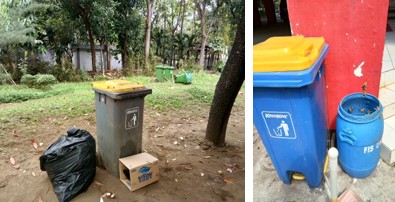
Internally, students often show limited environmental awareness, creativity, and skills in recycling practices. Externally, the main barriers include insufficient facilities and weak enforcement of campus policies related to waste reduction.
To overcome these challenges, the study identifies three key strategies that UNNES should prioritize:
- Improving waste management facilities and infrastructure, including adequate sorting bins and collection systems.
- Enhancing human resources through continuous education, training, and environmental campaigns.
- Strengthening policy enforcement and ensuring consistent application of conservation-based campus regulations.
This research reinforces UNNES’s vision as a Conservation University, declared in 2010, and supports its target for sustainable waste management milestones—processing 50% of campus waste by 2025, 60% by 2030, and 80% by 2035 (RENIP UNNES, 2017).
By focusing on behavioral change and policy optimization, this study contributes significantly to the implementation of UNNES’s conservation pillars and advances several Sustainable Development Goals (SDGs):
🟢 SDG 12 – Responsible Consumption and Production
🟢 SDG 13 – Climate Action
🟢 SDG 14 – Life Below Water
🟢 SDG 15 – Life on Land