Universitas Negeri Semarang (UNNES) is actively collaborating with various local, national, and international health institutions to enhance health and wellbeing outcomes. This concerted effort stems from the recognition that health and wellbeing issues are complex and multidimensional, requiring a comprehensive approach that engages academia, business, and government sectors, alongside global networks. As a conservation university committed to achieving the SDGs, particularly SDG 3: Good Health and Wellbeing, UNNES strives to integrate resources and expertise from its diverse partners including hospitals, the healthcare industry, research institutions, NGOs, and international universities. The aim is to strengthen innovative research, develop relevant community service programs, improve the quality of education in the health sector, and ensure that every intervention and policy generated has a tangible and sustainable impact on the wider community.
Collaboration with Local Institutions
UNNES has current and robust local collaborations with various Public Health Centers (Puskesmas) in Semarang City through its routine Tri Dharma Perguruan Tinggi programs, consistently demonstrating its commitment to improving local health and wellbeing outcomes throughout 2024. These partnerships involve specific interventions and community service programs. The Faculty of Medicine partnered with Puskesmas Kedungmundu to introduce a system called Monalisa and an assistance book for community health workers (Poksila) to enhance local health services.
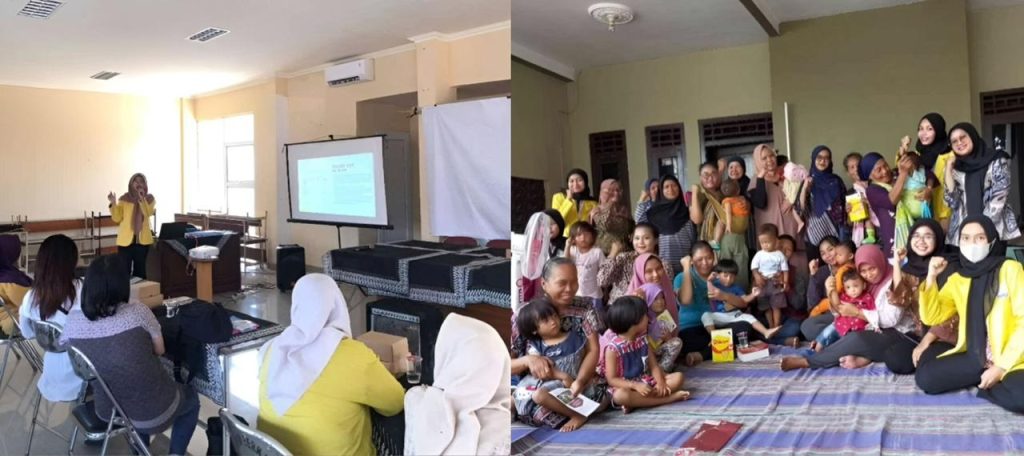
Concurrently, UNNES Nutrition students engaged in crucial public health efforts by collaborating with Puskesmas Halmahera to provide Supplementary Feeding (PMT) Counseling for malnourished children and conducted the “GEMASKU” Education Activity at UPTD Puskesmas Bulu Lor. The activity was carried out by providing education to mothers of toddlers regarding efforts that can be implemented to reduce the incidence of underweight in toddlers, namely by implementing a clean and healthy lifestyle, fulfilling balanced nutritional intake for toddlers, providing additional food for toddlers, and education on providing additional recovery food (PMT-P).
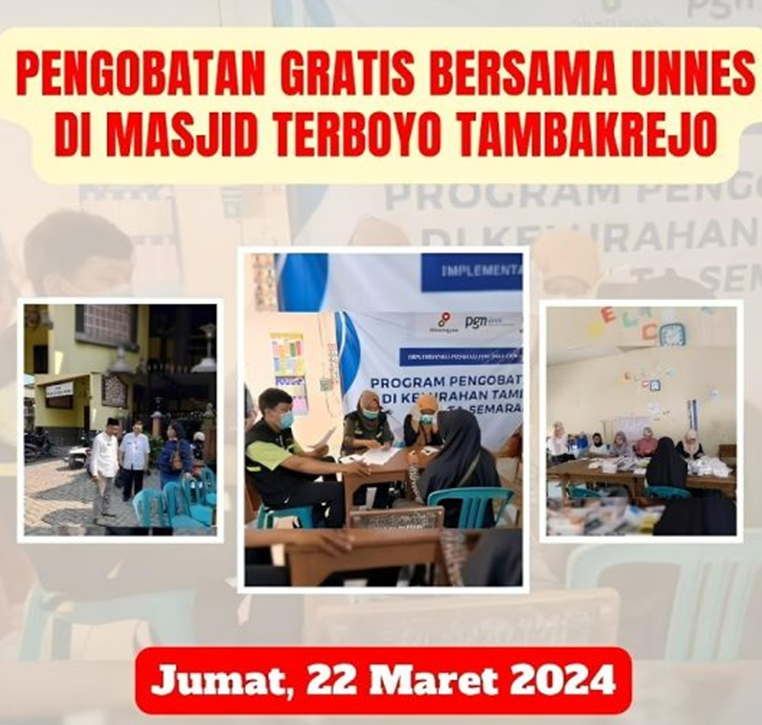
Furthermore, UNNES actively contributed to community wellbeing by organizing free medical treatment events in areas such as Terboyo Tambakrejo. The aim of the collaboration was to provide essential healthcare services and education to the local residents in need. These localized collaborations confirm UNNES’s active role in health education and outreach efforts.
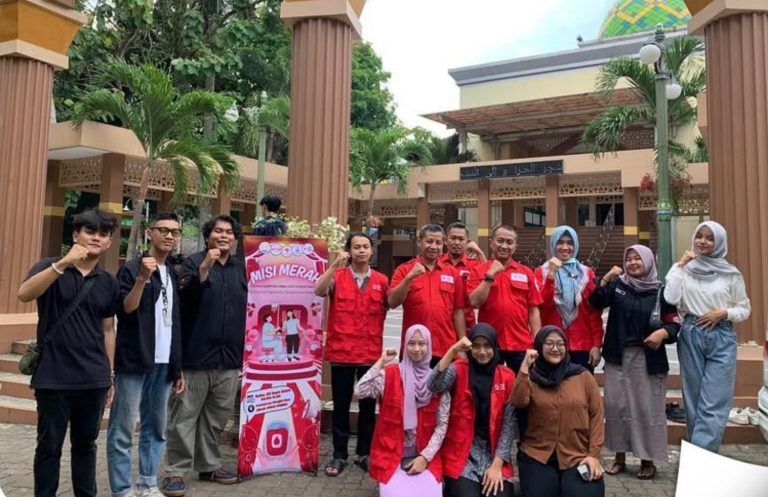
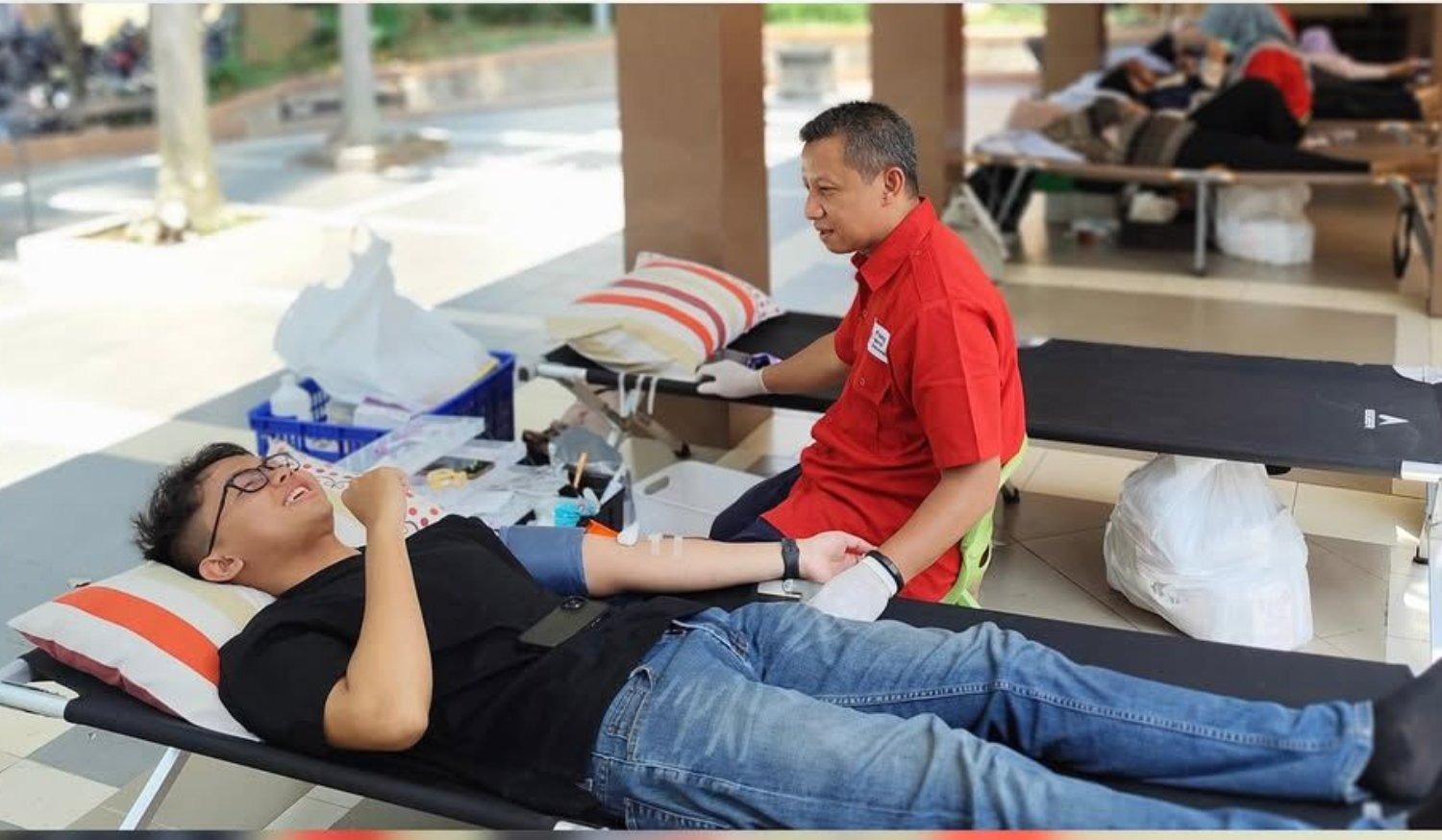
Furthermore, UNNES maintains a strong and sustainable collaboration with the Indonesian Red Cross or Palang merah Indonesia (PMI). UNNES routinely, once a month carries out Voluntary Blood Donation activities on campus in collaboration with the Blood Transfusion Unit of PMI Semarang City and Central Java Province. This vital contribution, driven by UNNES to maintain the blood stock availability for humanitarian needs especially in Semarang City. UNNES continues to play an active role in developing human resources for health and humanitarian volunteers through various activities, such as holding Basic Education and Training (Diklatsar) for new members of KSR PMI sub-units in various faculties, one of which was in May 2024. This commitment is increasingly evident with the election of KSR PMI Unit UNNES members as Humanitarian Ambassadors for PMI Semarang City for the 2024-2025 period, whose task is to voice issues of health, environment, and PMI social action at the city level.
Collaboration with National Institutions
At the National level, UNNES demonstrates strategic collaboration with institutions focused on health and wellbeing, notably the RSJD Amino Gondo Central Java Province and BPJS. UNNES maintains a current and routine collaboration with RSJD Dr. Amino Gondohutomo (a major regional hospital) to conduct mandatory health and narcotics/drug abuse (NAPZA) screening checks for all new Medical Faculty students during the admission period. This program directly impacts the quality of future medical professionals, is routinely conducted to ensure the physical and mental fitness, as well as the drug-free status, of the incoming students. The main impact is that it actively promotes a healthier, safer, and academically sound environment within the university community while guaranteeing that future health providers meet the highest standards of wellbeing and integrity from the start of their education
Additionally, UNNES has also established cooperation with the Social Security Administrator for Health (BPJS Kesehatan) of Central Java and Yogyakarta Regions. The MoU, also numbered T/12704/UN37/KS/2021, emphasizes synergy between both parties in strengthening the implementation of the Tri Dharma of Higher Education while expanding the reach of the National Health Insurance (JKN) program. Through this partnership, all UNNES students are integrated into the JKN system, ensuring they receive proper health coverage throughout their studies. The collaboration also includes joint activities such as public awareness programs, seminars, workshops, and human resource capacity building aimed at increasing understanding of the importance of health insurance.
Collaboration with International Institutions
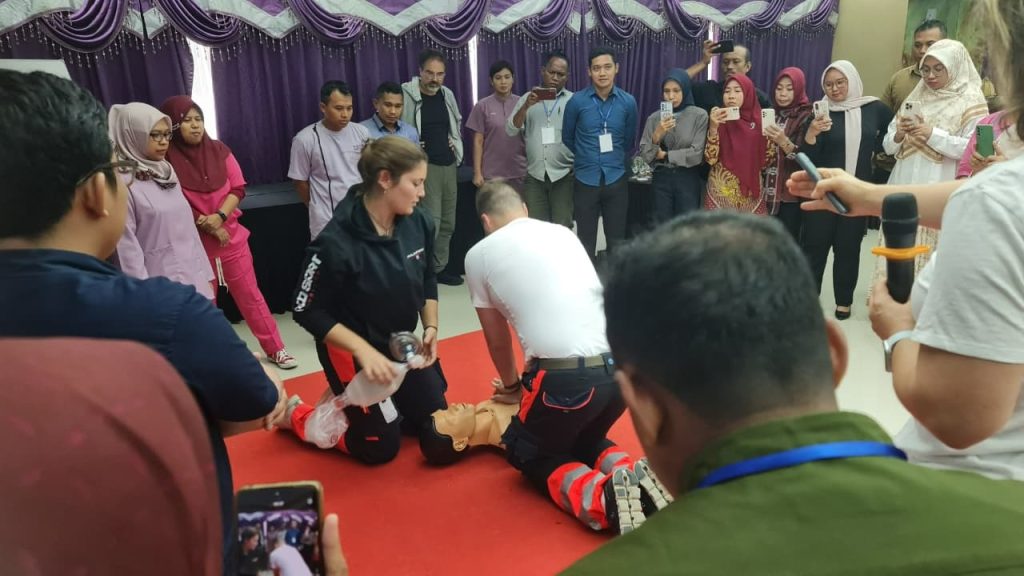
UNNES has demonstrated its commitment to improving public health and well-being through active collaborations with global health institutions. UNNES proudly partnered with the World Health Organization (WHO) a key global health body to deliver a crucial “Emergency Response Training in Primary Services” program across Jambi and Southeast Sulawesi Provinces. This collaborative effort underlines UNNES’s role as an active contributor to health sector capacity building at a national and global scale. The university’s faculty and experts were responsible for developing and implementing the training curriculum, ensuring that local healthcare workers were equipped with the latest, globally-recognized emergency response protocols. This initiative is a clear testament to UNNES’s current and active collaborations that translate academic expertise into tangible, positive impacts on health and well-being outcomes in the community.