UNNES Advances Sustainable Water Management through ICT and Treated Water System
Semarang – Universitas Negeri Semarang (UNNES) continues to enhance its commitment to sustainability through integrated water management powered by Information and Communication Technology (ICT) and eco-efficient treatment systems.
This initiative ensures that water resources across the campus are managed efficiently, safely, and sustainably, aligning with UNNES’s vision as a World Reputable University and Pioneer of Excellence in Education.
Efficient and Safe Water Utilization
UNNES provides an average of 412,275 liters of treated water per day for approximately 16,989 daily users, including students, lecturers, and staff.
Of this total, around 339,786 liters are used daily, reflecting a remarkable 82% efficiency rate in water utilization.
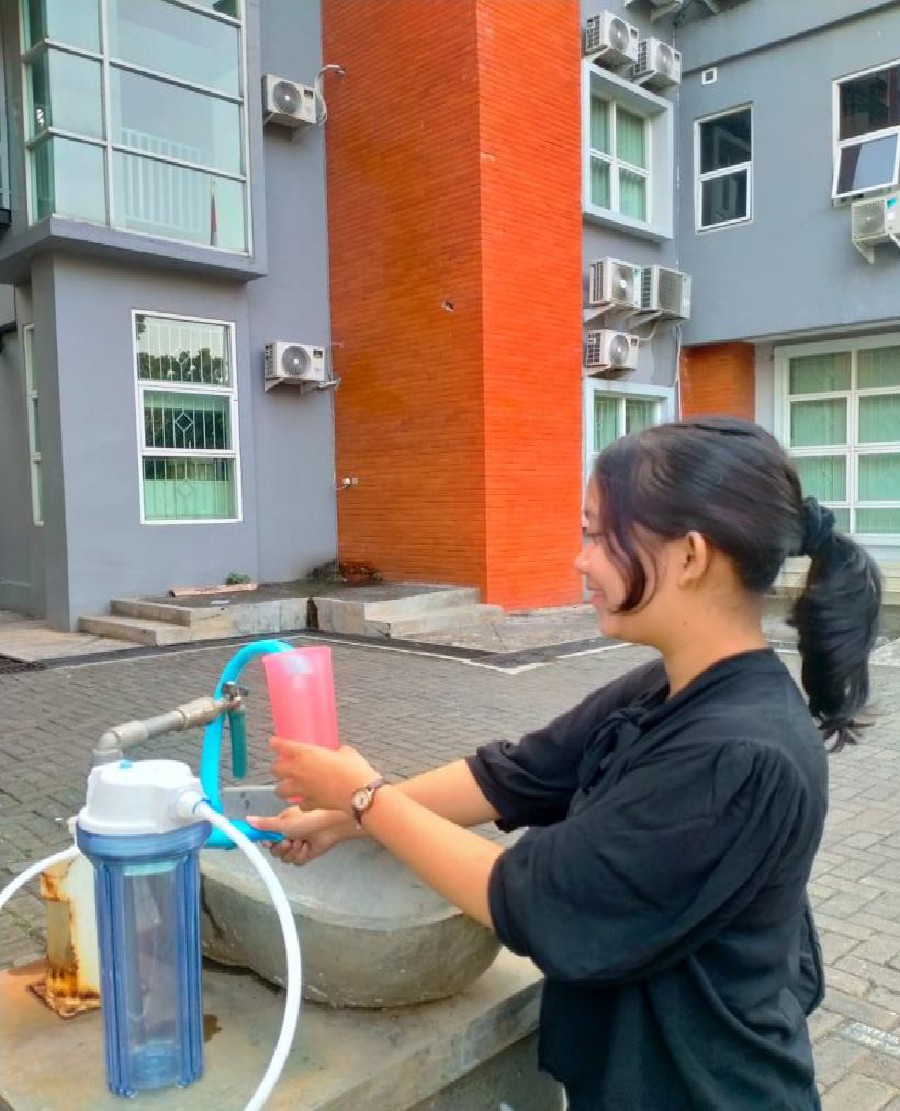
All water designated for drinking and sanitation is treated through ozonation and filtration technologies, ensuring the highest safety and quality standards.
This system supports facilities throughout the campus — including faculties, administrative offices, mosques, and sanitation areas — promoting a clean and healthy lifestyle while conserving natural resources.
Integration of ICT and IoT in Water Management
In line with its digital transformation agenda, UNNES integrates Information and Communication Technology (ICT) and Internet of Things (IoT) across all stages of water management — from planning and implementation to monitoring and evaluation.
Key technologies include:
- Smart water meters and real-time monitoring software to track usage and detect inefficiencies;
- Water-saving mobile applications to promote awareness among the campus community;
- Data analytics systems for planning and evaluating conservation performance.
This digital infrastructure enables automated control, instant data access, and continuous supervision of water use and distribution, ensuring accuracy, transparency, and accountability in every operation.
Strategic Implementation and Evaluation Framework
UNNES’s water management strategy is structured into four main stages:
- Planning – Developing comprehensive water conservation targets supported by analytics software to identify potential savings.
- Implementation – Installing water-saving fixtures, such as low-flow taps and toilets, while integrating smart meters and conservation apps to encourage responsible use.
- Monitoring – Utilizing real-time monitoring systems to track consumption and calculate daily water savings across faculties.
- Evaluation – Conducting periodic assessments using data analysis tools and stakeholder feedback to improve efficiency.
Through this integrated system, UNNES ensures that every drop of water is used wisely and contributes to the university’s long-term sustainability goals.
Supporting the Conservation University Vision
Supported by connected digital infrastructure and specialized facilities such as water towers, tanks, and drinkable water taps, UNNES ensures reliable and sustainable water distribution across all areas — including academic buildings, sanitation facilities, and prayer areas.
This system reflects UNNES’s holistic approach to resource management, balancing technological innovation, environmental conservation, and community well-being.
Contribution to the Sustainable Development Goals (SDGs)
The integration of ICT and treated water management at UNNES contributes directly to multiple United Nations Sustainable Development Goals (SDGs):
- SDG 6: Clean Water and Sanitation – Ensuring sustainable management of clean and safe water for all.
- SDG 9: Industry, Innovation, and Infrastructure – Utilizing digital technology and smart systems for efficient water management.
- SDG 12: Responsible Consumption and Production – Promoting efficiency and sustainability in campus resource use.
- SDG 13: Climate Action – Strengthening resilience and reducing environmental impact through conservation-oriented operations.