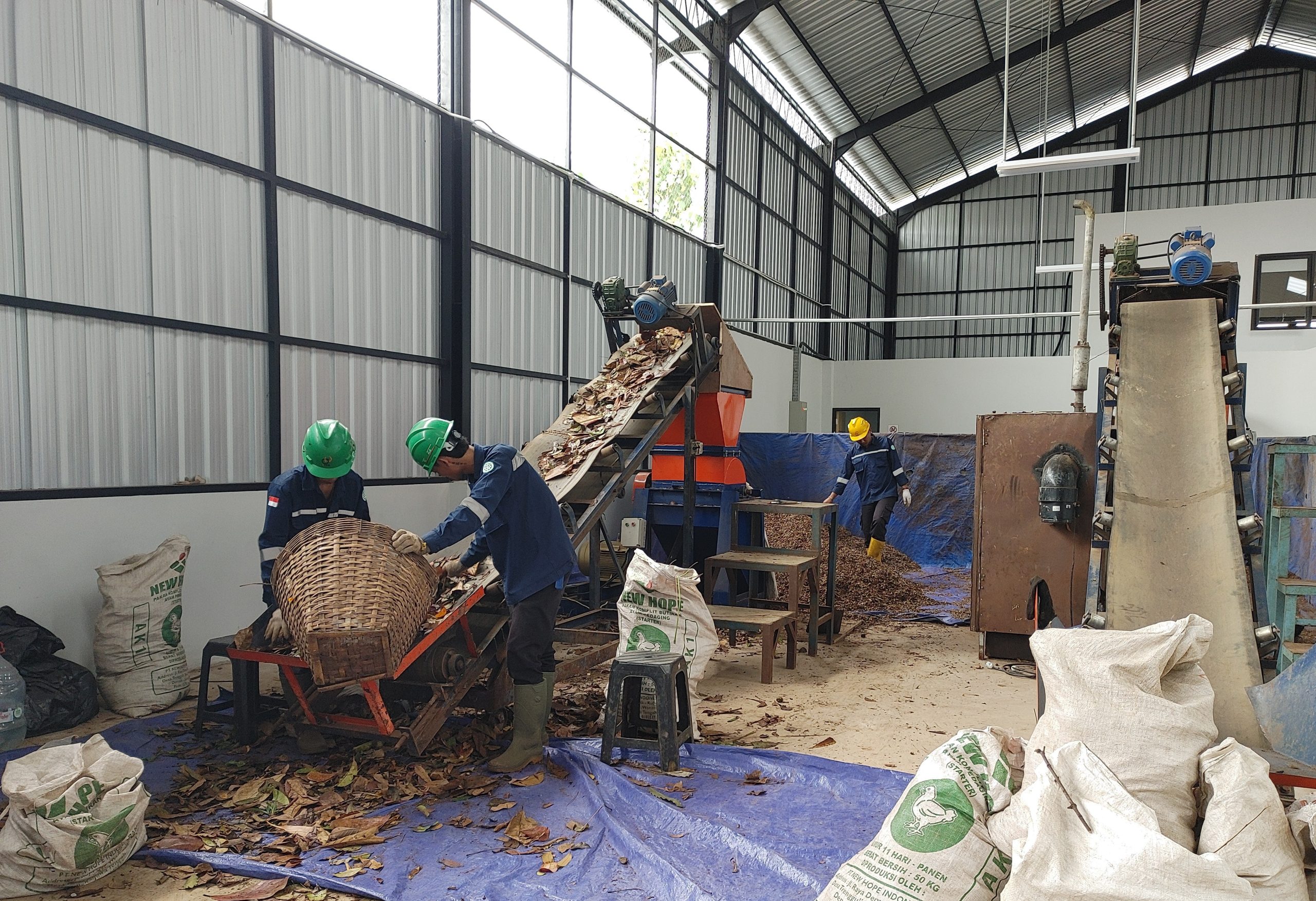
Universitas Negeri Semarang (UNNES) continues to demonstrate its commitment to environmental sustainability through comprehensive organic and inorganic waste management practices. The university’s Waste Processing Facility (TPST) currently has a maximum capacity of 20 tons per day and effectively manages both organic and inorganic non-toxic waste to minimize landfill impact and promote circular economy principles.
Organic Waste Management
Throughout the year, UNNES processed a total of 4,645.936 tons of organic waste. This includes 4,589.936 tons of leaf litter, 34.746 tons of food waste, and 21.254 tons of other organic materials. Most of the leaf litter is upcycled into compost (4,558.936 tons per year), which is reused for campus greening programs, distributed to local residents, and partially sold to generate economic value. Meanwhile, food waste is used as feed for maggot production, an initiative that supports the circular management of organic waste. Due to the limited supply of food waste, UNNES collaborates with surrounding communities to supplement additional raw materials.
Inorganic Waste Management
For inorganic non-toxic waste, UNNES processed a total of 49.47 tons in 2024, consisting of paper, soft plastic, hard plastic, and other recyclable materials. Paper waste (6.76 tons) is collected and sold to a paper factory in Kudus. Soft plastic (39.95 tons) and hard plastic (1.54 tons) are sorted—materials with resale value are sold to third parties, while the rest are incinerated. Additionally, glass and bottle waste (1.22 tons) are incinerated at 800°C. These actions align with Rector’s Decree Number 21 of 2019, which prohibits the use of single-use plastics within the campus.
Contribution to the SDGs
UNNES’s waste management program contributes directly to several Sustainable Development Goals (SDGs):
- SDG 12 – Responsible Consumption and Production: implementing waste reduction, reuse, and recycling programs.
Through these integrated initiatives, UNNES reaffirms its position as a Conservation University that continuously advances eco-friendly practices and community-based sustainability.