Semarang – Universitas Negeri Semarang (UNNES) continues to reaffirm its strong commitment to sustainability by developing an environmentally friendly campus covered in diverse vegetation and green spaces.
This initiative aligns with the university’s identity as a World Reputable University and a Pioneer of Excellence in Education, integrating environmental conservation into every aspect of academic and campus life.
Sustainable Campus Infrastructure and Green Coverage
As part of the UI GreenMetric 2024 framework, UNNES maintains an extensive green campus infrastructure to promote ecological balance and support sustainable development.
The total campus area of UNNES reaches 2,195,623.00 m², with 988,011.22 m² consisting of planted vegetation, including the UNNES Kehati Park, outdoor green areas, and lawns.
This large-scale green coverage helps reduce carbon emissions, enhance biodiversity, and create a healthy learning environment for students, staff, and visitors.
It also serves as a living laboratory for research, education, and conservation activities.
UNNES Kehati Park: A Hub for Biodiversity Conservation
The UNNES Kehati (Biodiversity) Park is a central component of the university’s conservation ecosystem. Located in the Mount Ledek area, Sukorejo, Gunungpati, Semarang, this park covers an area of 695,935.80 m² and functions as a conservation site, research center, and biodiversity habitat.
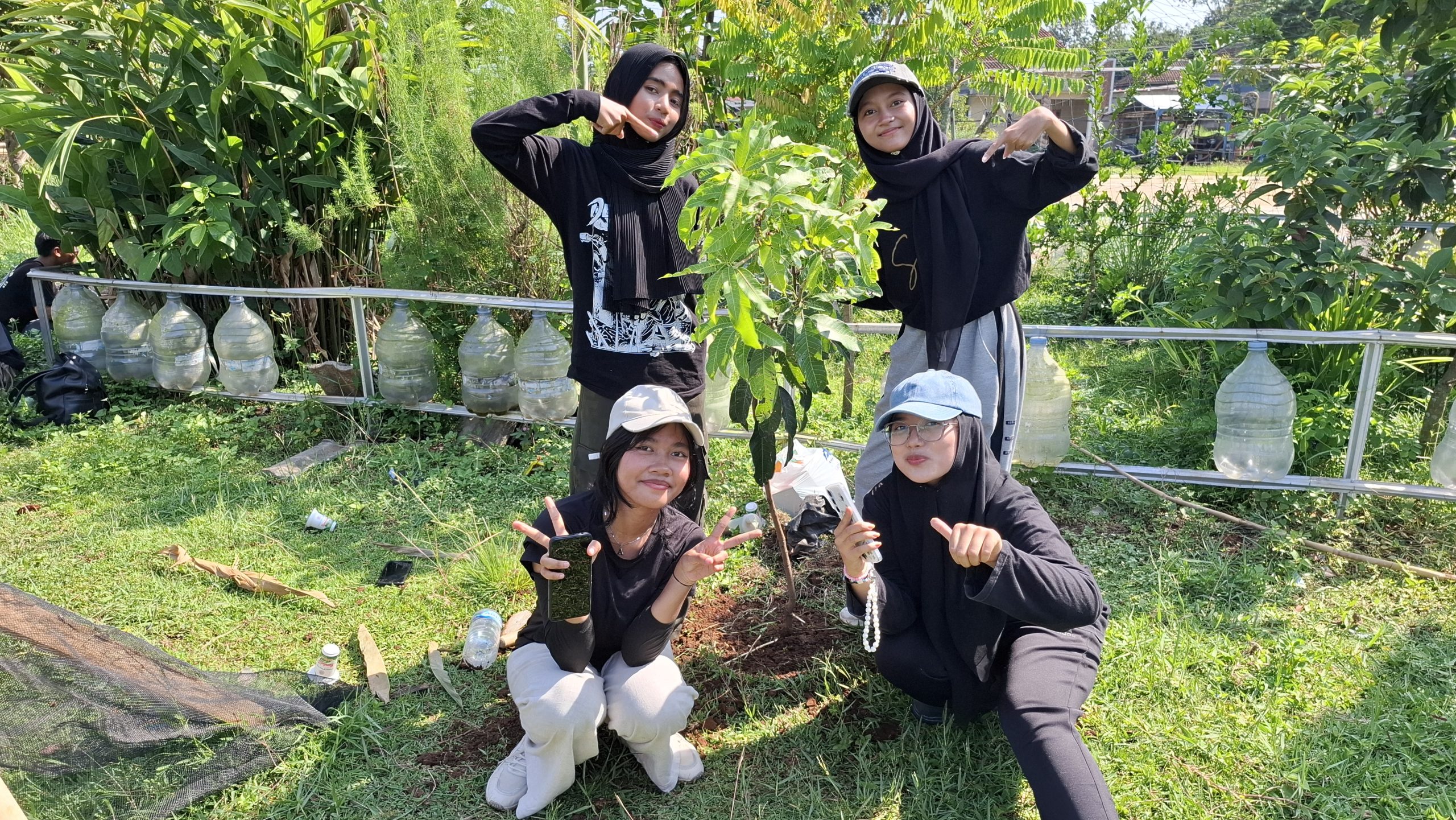
In 2023, UNNES collaborated with the Djarum Foundation through its Djarum Trees For Life program to plant 3,500 new trees within Kehati Park.
The initiative, conducted from September 25 to November 26, 2023, included coordination with stakeholders, area mapping, planting preparation, and a ceremonial tree planting.
This partnership enhances UNNES’s commitment to reforestation, climate action, and biodiversity protection.

Outdoor Gardens and Vertical Greening for Sustainable Aesthetics
To complement its biodiversity areas, UNNES maintains outdoor gardens across various faculties and administrative units.
Covering an area of 407,875.92 m², these gardens feature shrubs, flowers, and shade trees that not only beautify the campus but also improve air quality and provide natural cooling.
Several faculties have also implemented vertical gardens to optimize space and increase green coverage on building exteriors.
Some of these vertical gardens use automated watering systems, supporting low-maintenance and efficient greening initiatives.
Examples of Vertical Gardens at UNNES:
- Faculty of Engineering (FT): 32.5 m²
- Faculty of Economics and Business (FEB): 60.75 m²
- Faculty of Mathematics and Natural Sciences (FMIPA): 32 m²
- Faculty of Law (FH): 39 m²
- Faculty of Education (FIPP): 11 m²
- Postgraduate School (PPS): 21.25 m²
Lawns and Indoor Greenery Enhance Campus Health and Well-being
UNNES also maintains lawn areas totaling 58,013 m², distributed across open fields such as the Rectorate Field, UNNES Golf Field, and the Faculty of Sport Science complex.
These spaces are used for sports, ceremonies, and community activities, providing areas for relaxation and physical engagement.
In addition, indoor plants are widely used throughout campus buildings to improve air circulation, comfort, and aesthetics.
There are 2,789 indoor plants covering a total of 697.25 m², placed across faculties and offices, including the Rectorate, LPPM, and the University Library.