Universitas Negeri Semarang (UNNES), through its SDGs Center, continues to strengthen its international engagement in sustainability data collaboration and policy innovation. In July 2024, UNNES represented Indonesia in the Higher Education Sustainability Initiative (HESI) Global Forum, held as part of the UN High-Level Political Forum (HLPF) under the United Nations Economic and Social Council (ECOSOC).
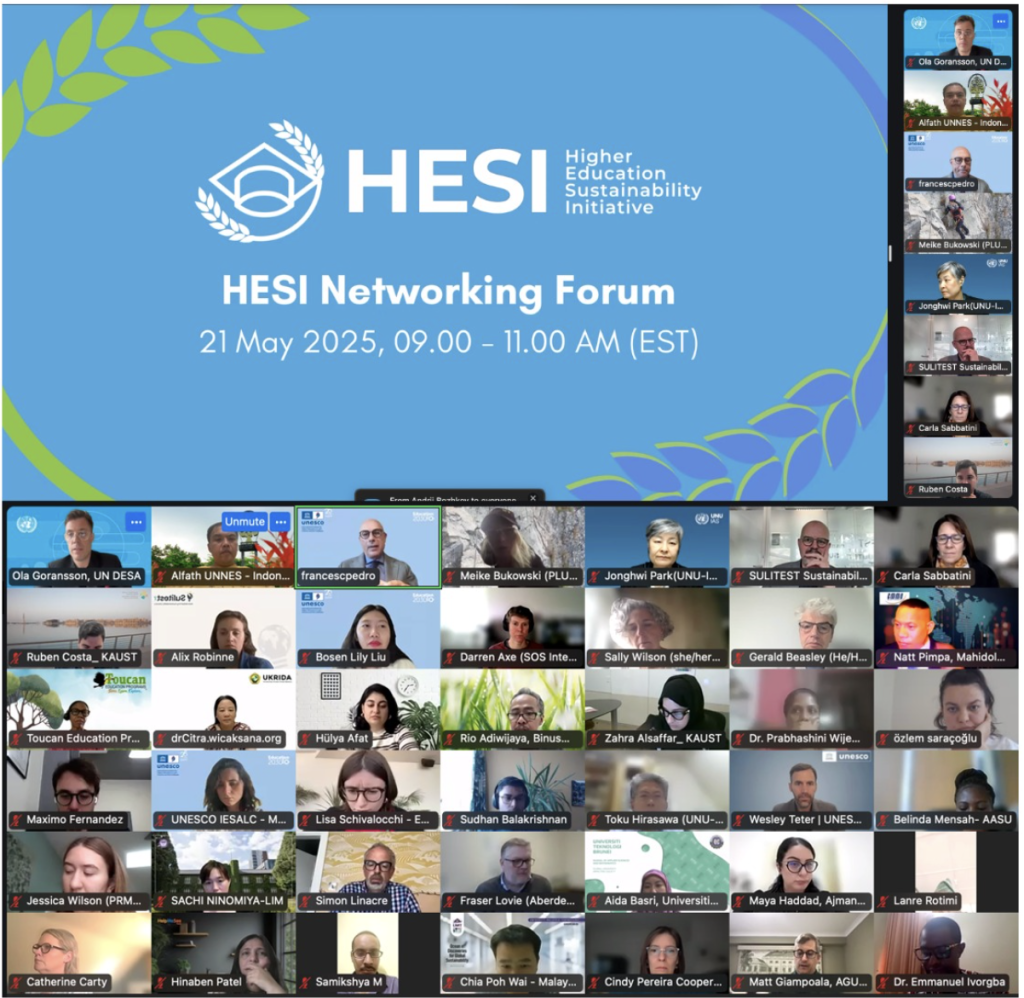
The 2024 HESI Global Forum, themed “Breaking Barriers in Sustainable Development through Scientific, Inclusive, and Equitable Solutions,” gathered over 600 delegates from 120 universities and 30 UN-affiliated institutions worldwide, including UNESCO, UNEP, and UNDP. The Head of the UNNES SDGs Center participated as a panelist and contributor in sessions focusing on SDG 3 (Good Health and Well-being), SDG 5 (Gender Equality), SDG 8 (Decent Work and Economic Growth), SDG 14 (Life Below Water), and SDG 17 (Partnerships for the Goals).
1. Sustainable Education
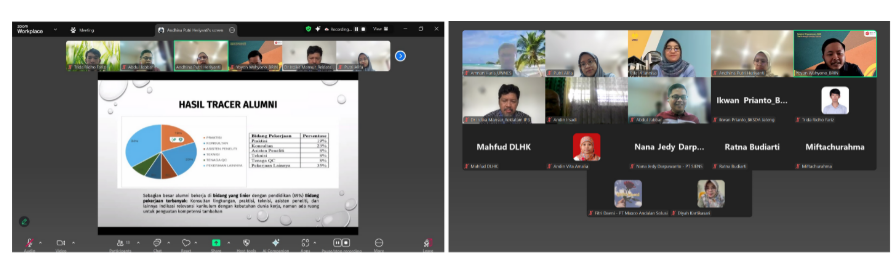
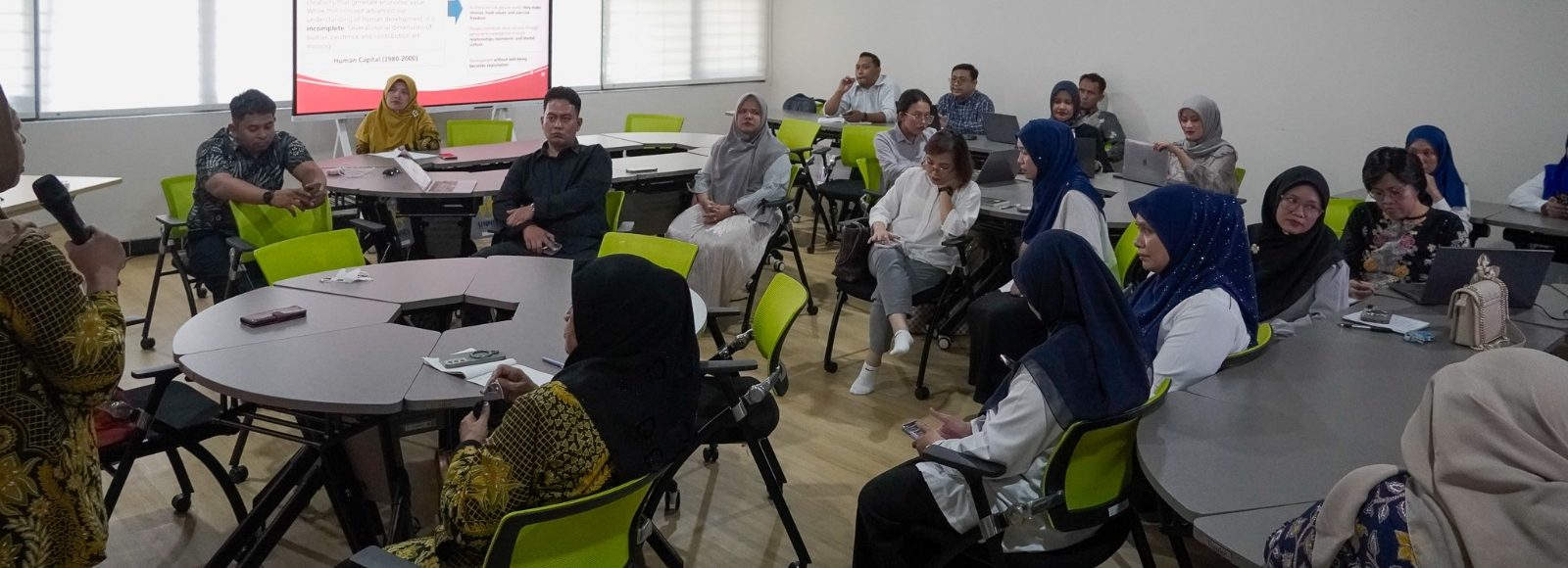
In June 2025 the Environmental Science study programme at UNNES held a Focus Group Discussion (FGD) to redesign its curriculum under the new Curriculum 2025: Outcome‑Impactful Based Learning framework. The FGD brought together stakeholders including government agencies (e.g., the Central Java Environment & Forestry Office / DLHK), environmental consultants, academicians, NGOs and alumni.
Through this, UNNES recommended embedding competencies such as low‑carbon development, circular economy, systems thinking, community‑based empowerment, foreign‑language proficiency and enhanced communication skills into the curriculum.
The FGD connected sustainable education (SDG 4) and climate action (SDG 13) with local curriculum design, and UNNES issued a formal statement that the new programme “ensures that every learning outcome contributes directly to measurable environmental and societal impacts”.
The university’s “15th National Science Seminar” in 2025 (organized by the Faculty of Mathematics & Natural Sciences, FMIPA) engaged 465 participants (155 paper presenters + 310 attendees) from 13 provinces and focused on integrating science education with environmental awareness for “Indonesia Emas 2045”.
Through this seminar, UNNES recommended greater collaboration between science education and environmental policy, and promoted the SETS (Science‑Environment‑Technology‑Society) approach for linking academia and practice.
These demonstrate UNNES’s evidence‑based recommendations for sustainable education: curriculum alignment, stakeholder engagement, and linking education with societal and environmental outcomes.
2. Green Economy Initiatives
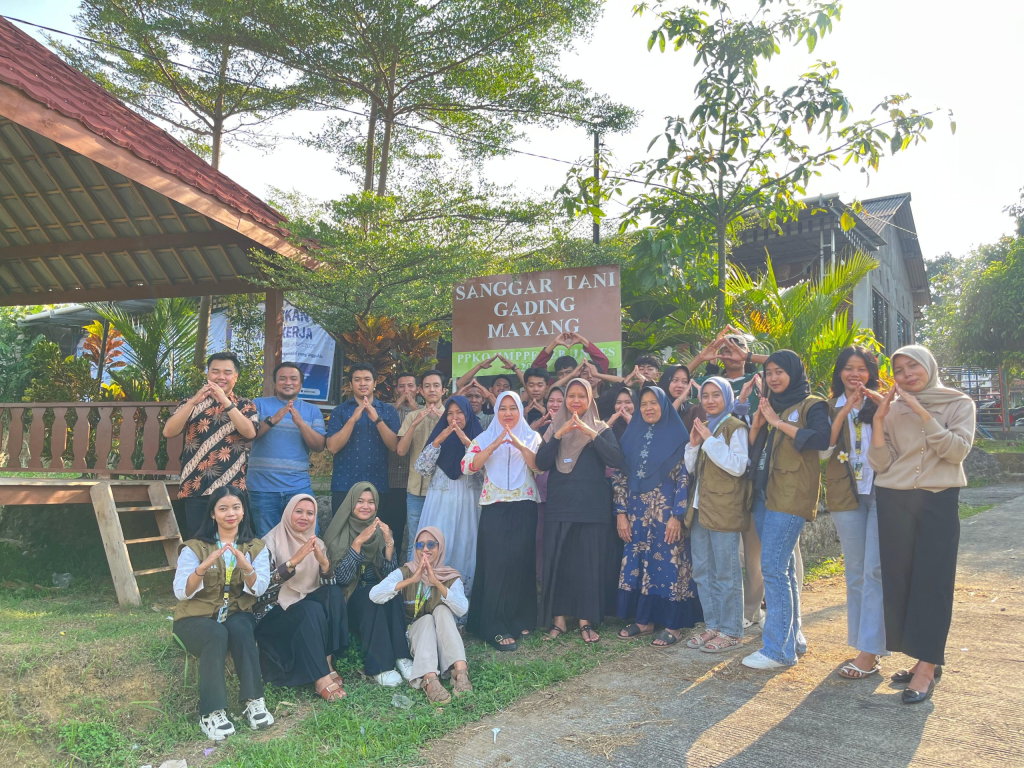
UNNES students from the Faculty of Economics & Business (FEB) in October 2025 worked with the community of Branjang Village (West Ungaran District, Semarang Regency) to develop a website and provide digital entrepreneurship training for the Gading Mayang Farmer Studio (agro‑business).
This project targeted SDG 8 (Decent Work & Economic Growth) and SDG 9 (Industry, Innovation & Infrastructure) by enabling farmers to move from selling raw produce via middle‑men to having direct digital access to markets.
Over the course of the workshop, participants gained training in production quality improvement, financial literacy (Cooperatives/SMEs Office), and website/digital marketing. This was a direct recommendation by UNNES to combine entrepreneurship, green economy thinking and digital infrastructure in community contexts.
Additionally, under UNNES’s “Green Campus” initiative (as described on the institutional site) the university has adopted the conservation perspective and green infrastructure strategy: implementing for example energy‑efficient buildings, waste reduction, and sustainable use of resources.
As part of this strategy, UNNES issued circular and institutional policies (such as Rector’s Circular Letter No. B/28595/UN37/PA.00.00/2024) requiring renovation/new buildings to comply with national energy‑efficiency and sustainable construction standards.
The university also partnered with the Central Java Regional Development Planning Agency (Bappeda) to support clean energy and energy‑efficient policy development.
These show UNNES’s proactive role in recommending and implementing green economy initiatives: digital rural entrepreneurship, sustainable campus infrastructure, and policy partnership for clean energy.
3. Community Empowerment
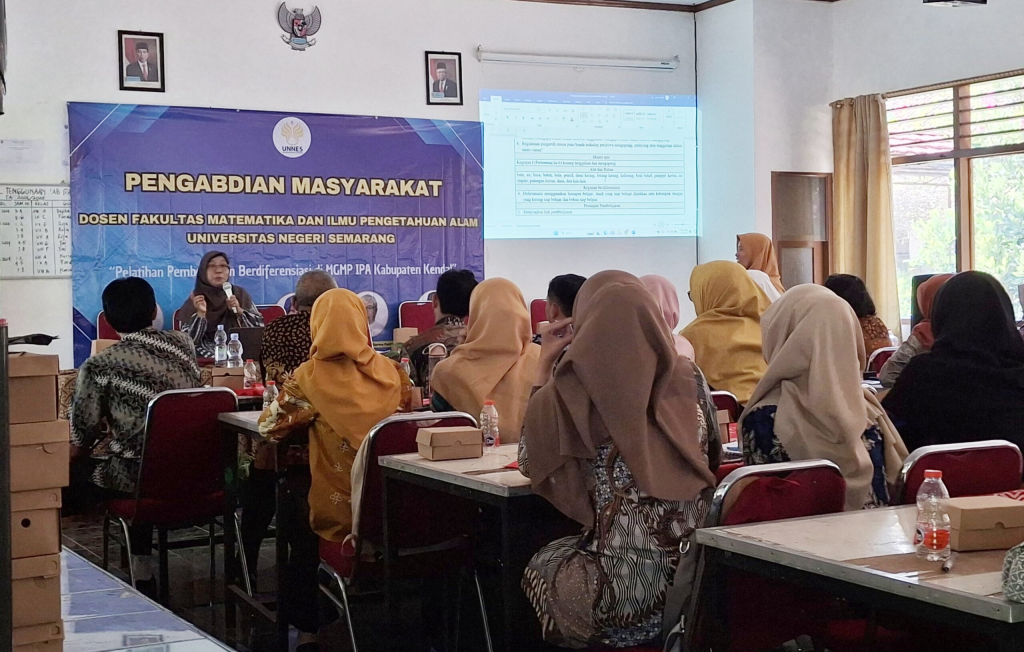
One programme “FBS Mengabdi” engaged 844 students from 14 study programmes in 5 villages (Sekaran, Patemon, Ngijo, Mangunsari, Kalisegoro) delivering training, socialisation, and education‑based initiatives.
Through these programmes, UNNES recommended village‑empowerment, local MSME development, waste‑bank management, legal literacy, and appropriate technology adoption.
At the student‑community level, the “Students Engage with Sustainability” initiative shows how student‑led organisations such as Mahapala UNNES, Pelatuk BSC UNNES, SAR UNNES, and Green Community (Bio dept) engage in nature conservation, disaster response, and biodiversity protection.
UNNES therefore acts as a generator of community‑based evidence and recommendations, empowering rural and peri‑urban communities with sustainable livelihood alternatives, local governance literacy and participatory approaches.
4. Local Monitoring Systems & Data‑Driven Policymaking
On its institutional website, UNNES describes its “Green Campus” framework: the Conservation perspective is used to guide attitudes, behaviours, and choices, and the strategic direction includes protection, preservation and sustainable use of natural resources and cultural arts.
UNNES also publicly reports its sustainability data in its “SDGS REPORT 2023” which records its outreach interventions, community service metrics, curricula changes, and environmental infrastructure.
In energy‑efficiency and clean energy policy, UNNES established institutional policy frameworks, data‑driven systems for energy consumption monitoring, renovation compliance, and partnership agreements (e.g., with PT Pertamina Retail for electric motorcycles) to track implementation of clean‑energy transitions.
The Environmental Science FGD in 2025 (see above) involved multi‑stakeholder data‑ and evidence‑based discussion of competency gaps, graduate employability, digital/green economy skills, local government needs—all feeding into curriculum design and local monitoring of graduate sustainability impact.
These examples show UNNES not only implementing monitoring systems but also using evidence and data as the basis for recommendations, policy dialogues, and curriculum reforms that integrate SDG principles and promote data‑driven policymaking.
5. Integration of SDG Principles into Higher Education & Collaborative Data‑Driven Policymaking
Through the FGD (Environmental Science programme) and the National Science Seminar, UNNES has proposed integration of SDG principles (e.g., SDG 4, SDG 12, SDG 13, SDG 17) into curricula, emphasising outcomes, learning for sustainability, community‑engagement, and interdisciplinary pedagogy.
The “Green Campus” strategy reflects integration of SDG 7, SDG 12, SDG 13 and SDG 17 into institutional operations and educational mission.
The Branjang Village digital entrepreneurship programme shows collaboration between UNNES (academia), local government (SME office), local community (farmers), and NGO/industry (digital marketing/training) to develop sustainable livelihood models—hence a data‑driven collaborative model linking government, academia and civil society.
Through these activities, UNNES proposes data‑driven policymaking: tracking student outcomes, community service metrics, digital economy impact, energy consumption data—feeding back into policy and curriculum adjustments. For example, the Sustainability Report lists metrics on kilometres of engagement, number of villages, number of students, funding amounts.