Semarang, October 2025 — As technology continues to evolve rapidly, the need for future-ready education becomes increasingly urgent. To strengthen digital literacy and prepare the younger generation to face technological challenges, the UNNES STEM EduCenter, in collaboration with Rumah Edukasi and the Undergraduate and Master’s Programs in Science Education, Faculty of Mathematics and Natural Sciences (FMIPA) Universitas Negeri Semarang (UNNES), successfully held a Coding, Artificial Intelligence (AI), and Robotics Training and Robot for Mission (R4M) Simulation based on the STEAM (Science, Technology, Engineering, Arts, and Mathematics) approach.
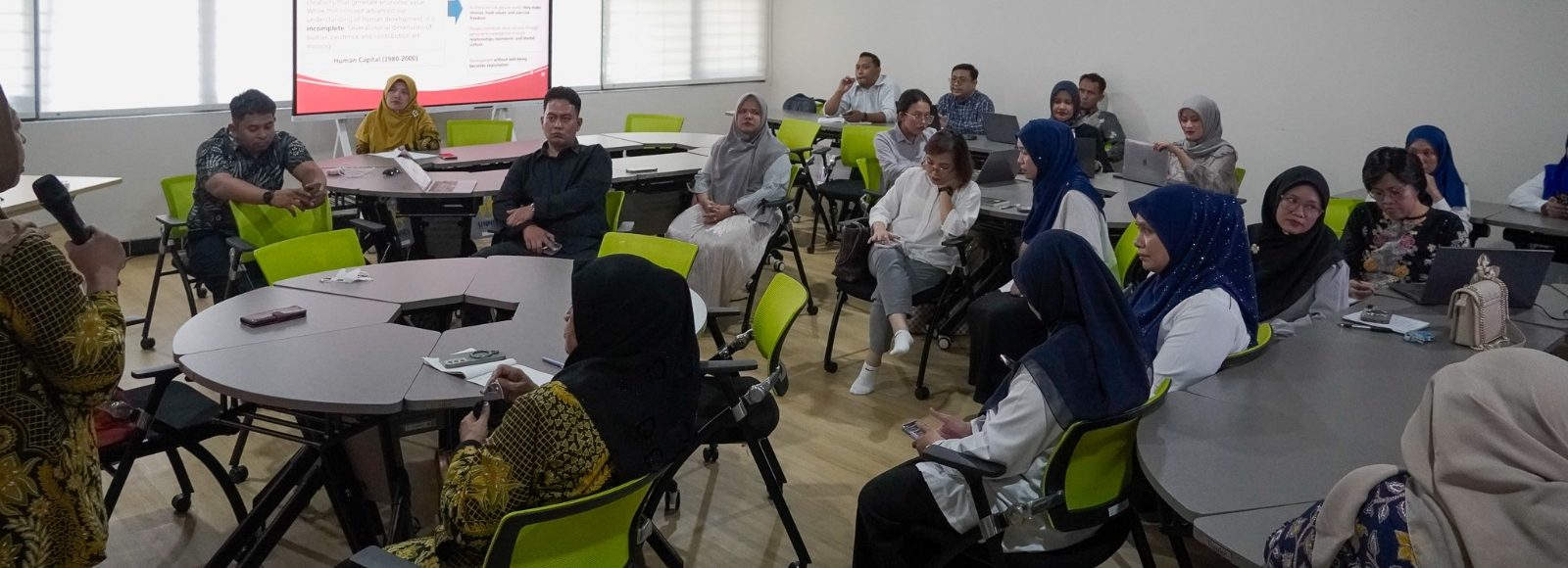
The training took place on Tuesday, May 27, 2025, at the Borobudur LP3M Building, Semarang State University, and brought together 150 participants, including science teachers from Semarang City and UNNES students.
This activity served as a concrete step in realizing SDG 4 (Quality Education) by integrating technological advancement with innovative learning. It aims to promote inclusive and equitable quality education while enhancing lifelong learning opportunities through practical exposure to coding, artificial intelligence, and robotics.
The training was officially opened by Arif Widiyatmoko, Ph.D., Head of the UNNES STEM EduCenter, who emphasized the importance of technology integration in education as a key foundation for developing superior human resources in the digital era. He also highlighted the vital role of STEM, Coding, and Robotics in transforming traditional learning into creative, interactive, and future-oriented experiences.
Participants received guidance from Mulia Anton, a robotics and AI practitioner from Rumah Edukasi, as well as a team of facilitators from the Science Education Study Program, consisting of experienced students actively involved in the UNNES STEM EduCenter.
The training was divided into interactive sessions. The first session introduced participants to basic programming logic using block-based algorithms (Scratch for Kids). They learned about pattern recognition, simple data processing, and everyday coding applications through hands-on activities. The second session focused on Scratch Microbit programming, where participants assembled robots and conducted Robot for Mission (R4M) simulations. This stage encouraged participants to think critically, design creatively, and collaborate in solving real-world challenges using technology.
The highlight of the event was the Robot for Mission (R4M) Challenge, in which participants competed to complete specific missions using the robots they designed. The simulation not only fostered teamwork and problem-solving skills but also strengthened creativity and innovation, key components of 21st-century learning.
The training also featured a STEM Project Competition, aligning with the goals of SDG 13 (Climate Action). Student participants designed innovative projects aimed at increasing awareness of climate change and enhancing environmental literacy through STEM-based problem-solving. Each project was evaluated by a panel of judges, and the winners received special awards from the UNNES STEM EduCenter, Rumah Edukasi, and the Science Education Study Program.
The program concluded with a reflection session and a group photo, marking the success of the collaborative initiative. Teachers and students alike expressed enthusiasm, noting that the hands-on experience helped bridge the gap between theory and practice. For many, assembling and programming robots provided a tangible understanding of how STEAM learning can inspire creativity and improve classroom engagement.
This initiative not only supports SDG 4 (Quality Education) but also contributes to SDG 9 (Industry, Innovation, and Infrastructure) by cultivating technological literacy, and SDG 17 (Partnerships for the Goals) through collaboration between academia and educational practitioners.
Moving forward, UNNES aims to sustain and expand this program across various regions in Indonesia, ensuring that teachers and students continue to develop digital competencies essential for the 21st century. Through such initiatives, UNNES reaffirms its commitment to nurturing an innovative, adaptive, and sustainability-oriented education ecosystem—a true realization of the university’s role as a Conservation and Future-Oriented Campus supporting the SDGs.