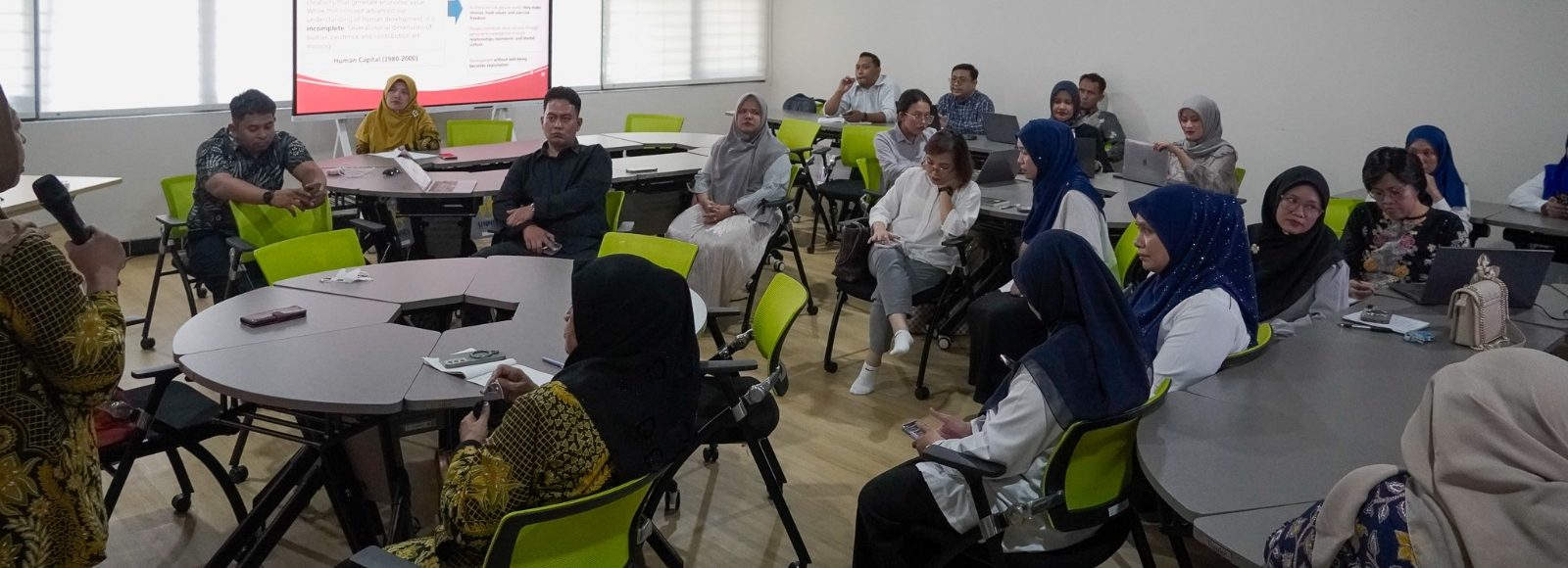
UNNES’s Commitment to Dedicated SDG-Focused Degree Programs

Universitas Negeri Semarang (UNNES) offers a wide range of dedicated degree programs and elective courses that address sustainability and the Sustainable Development Goals (SDGs) across various academic disciplines. This commitment is deeply embedded in the university’s academic structure, offering both full degrees and elective courses specifically designed to advance environmental and social sustainability.

Environmental Studies Program and Sustainability Degrees

UNNES offers a dedicated Environmental Studies Study Program, which is central to its commitment to SDG 13 (Climate Action), SDG 15 (Life on Land), and SDG 12 (Responsible Consumption and Production).

  • 350 students are currently enrolled in the Environmental Studies Program, with a graduation rate of 95%.
  • Over 100 faculty members contribute to this program, focusing on research related to conservation, climate change, biodiversity, and resource management.
  • The program includes practical fieldwork, with students engaging in over 50 community-based projects that directly address environmental challenges, such as reforestation, waste management, and renewable energy adoption.

Integration of SDG Principles in Other Degree Programs

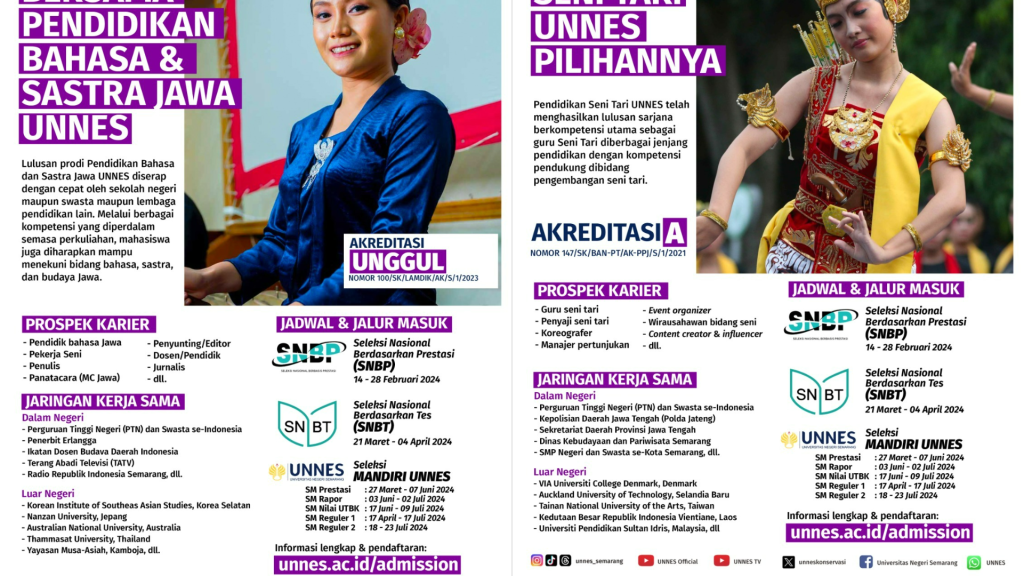
Beyond environmental studies, UNNES incorporates sustainability into its other degree programs. Programs like Music Education, Dance Education, and Javanese Studies play an important role in preserving traditional and cultural sustainability, aligning with SDG 4 (Quality Education) and SDG 11 (Sustainable Cities and Communities).

  • More than 1,500 students in these programs benefit from curriculum modules that explore how traditional arts can promote sustainability and cultural heritage preservation.
  • For example, Music Education students engage in projects that use music as a medium to raise awareness about environmental conservation and social issues.
  • The Dance Education program incorporates themes related to cultural sustainability and how traditional dance forms, such as Javanese dance, can help maintain cultural identity and local ecosystems.
  • Javanese Studies includes coursework that teaches how traditional agricultural practices (such as those used in batik and handicraft) contribute to local sustainability and economic resilience.

SDG-Oriented Elective Courses Across Disciplines

UNNES also offers a wide array of elective courses on sustainability, which are available to all undergraduate and graduate students, regardless of their field of study.

  • In 2024, over 8,000 students participated in these electives, which cover topics such as sustainable business practices, climate change mitigation, environmental ethics, and social sustainability.
  • These courses are taught by over 50 faculty members from diverse disciplines, ensuring a broad, interdisciplinary approach to SDG education.
  • Additionally, these electives have been incorporated into the curriculum of 12 different faculties, making sustainability education accessible to students in fields ranging from engineering to the arts.

Research Initiatives Aligned with SDG-Focused Courses

UNNES’s commitment to research on sustainability is integral to its academic programs.

  • In 2024, over 100 research projects were conducted by students and faculty members, focusing on various SDG-related issues such as water conservation, waste reduction, and renewable energy.
  • 40% of these research projects directly contributed to improving local policies and community practices related to sustainability.
  • UNNES also offers research grants specifically for projects that address the SDGs, providing over Rp 2 billion in funding annually to support student-led sustainability initiatives.
For futher information about the admission, please visit https://unnes.ac.id/admission/sm-reguler-2024/.

Related Posts

Leave a Reply

* Kode Akses Komentar:

* Tuliskan kode akses komentar diatas:

GDPR

  • Privacy Policy

Privacy Policy

At unnes.ac.id, the privacy of our visitors is of extreme importance to us. This privacy policy document outlines the types of personal information that is received and collected by unnes.ac.id and how it is used.

Log Files

Like many other Web sites, unnes.ac.id makes use of log files. The information inside the log files includes internet protocol (IP) addresses, type of browser, Internet Service Provider (ISP), date/time stamp, referring/exit pages, and number of clicks to analyze trends, administer the site, track user’s movement around the site, and gather demographic information. IP addresses and other such information are not linked to any information that is personally identifiable.

Cookies

unnes.ac.id uses cookies to store information about visitors’ preferences, to record user-specific information on which pages the site visitor accesses or visits, and to personalize or customize our web page content based upon visitors’ browser type or other information that the visitor sends via their browser.

Third-party ad servers or ad networks use technology in their respective advertisements and links that appear on unnes.ac.id and which are sent directly to your browser. They automatically receive your IP address when this occurs. Other technologies (such as cookies, JavaScript, or Web Beacons) may also be used by our site’s third-party ad networks to measure the effectiveness of their advertising campaigns and/or to personalize the advertising content that you see on the site.

unnes.ac.id has no access to or control over these cookies that are used by third-party advertisers.

You should consult the respective privacy policies of these third-party ad servers for more detailed information on their practices as well as for instructions about how to opt-out of certain practices. unnes.ac.id’s privacy policy does not apply to, and we cannot control the activities of, such other advertisers or web sites.

If you wish to disable cookies, you may do so through your individual browser options. More detailed information about cookie management with specific web browsers can be found at the browsers’ respective websites.

Consent

By using our website, you hereby consent to our privacy policy and agree to its terms.

Update

This Privacy Policy was last updated on: 2023-02-14. Should we update, amend or make any changes to our privacy policy, those changes will be posted here.

Contact Us

If you have any questions, comments, or concerns about our Privacy Policy or our practices with regards to your personal information, please feel free to contact us through the contact form on our website or by emailing us at humas[at]mail.unnes.ac.id.

This Privacy Policy is intended as a general guide to our practices in collecting and using information. If there is any inconsistency between this Privacy Policy and the terms of the Service Agreement or any other terms that may apply to specific services you use, then those specific service terms shall apply.

Terms of Use

By using our website, you agree to abide by this Privacy Policy. If you do not agree with this Privacy Policy, please do not use our website. We reserve the right to update this Privacy Policy from time to time without prior notice. Please review our Privacy Policy periodically to check for changes. Your continued use of our website following the posting of changes to this Privacy Policy means that you accept the changes.

Thank you for reading our Privacy Policy. We are committed to protecting the privacy of our website visitors and will continue to update our Privacy Policy to ensure optimal protection.