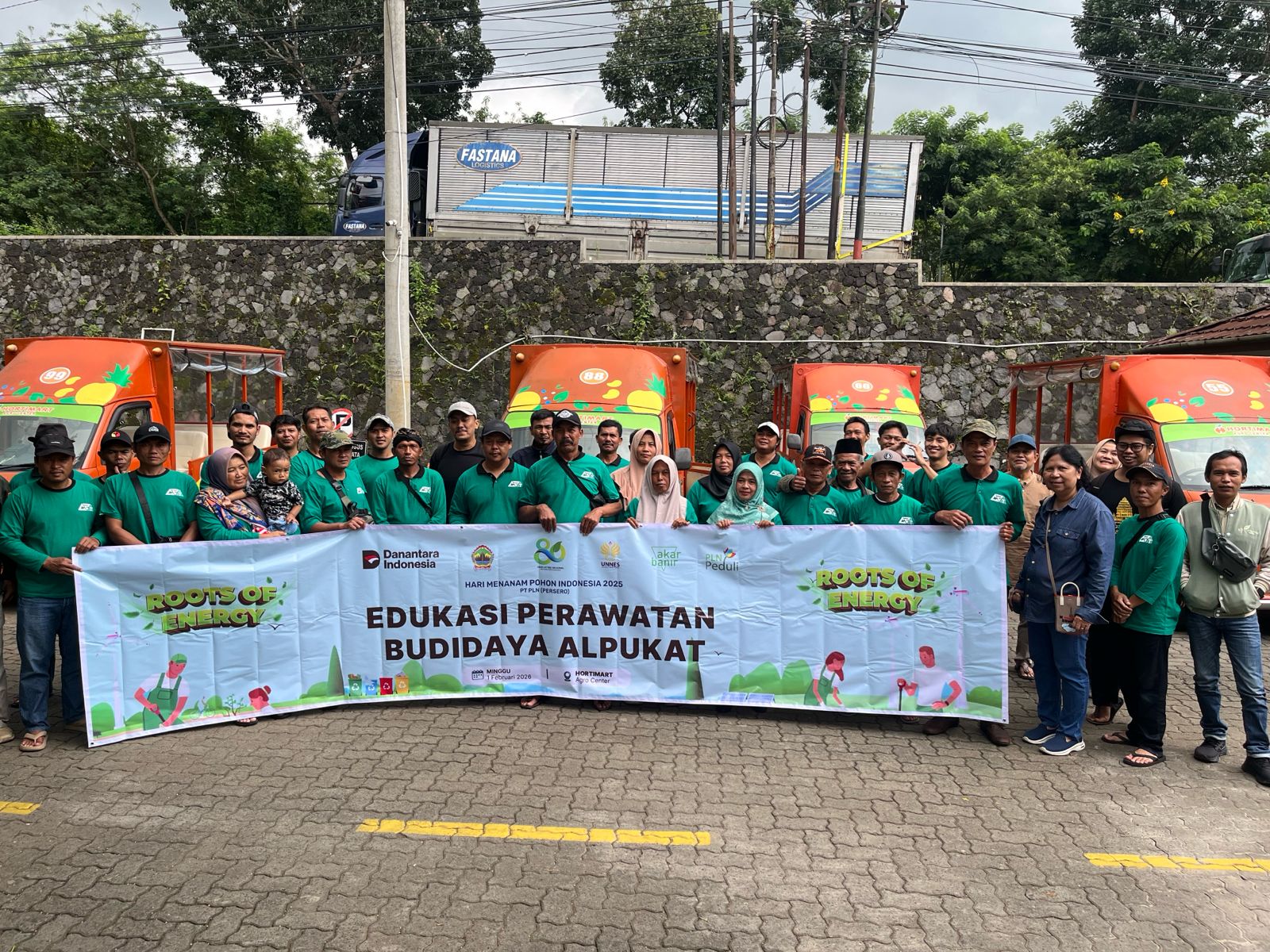
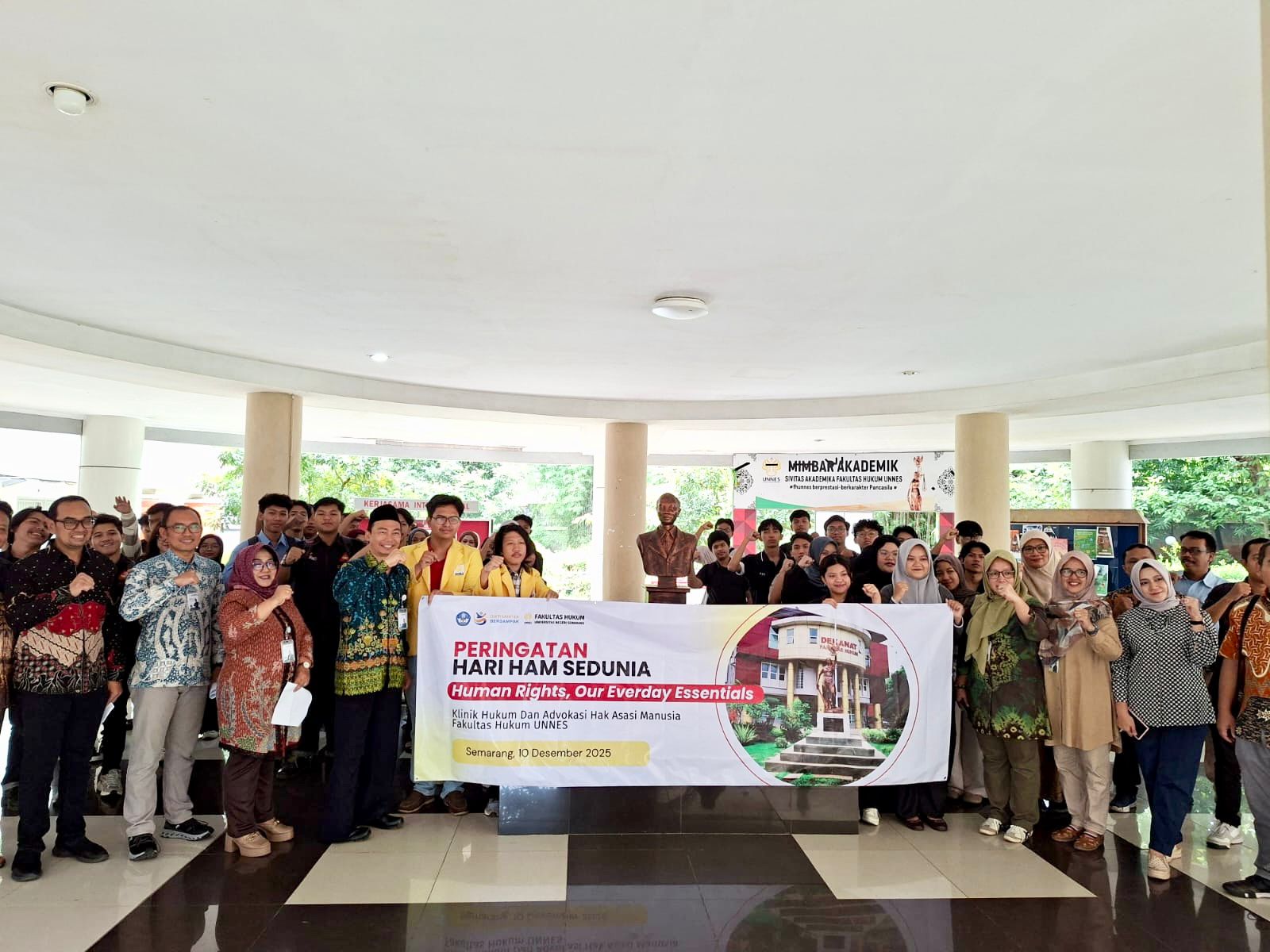
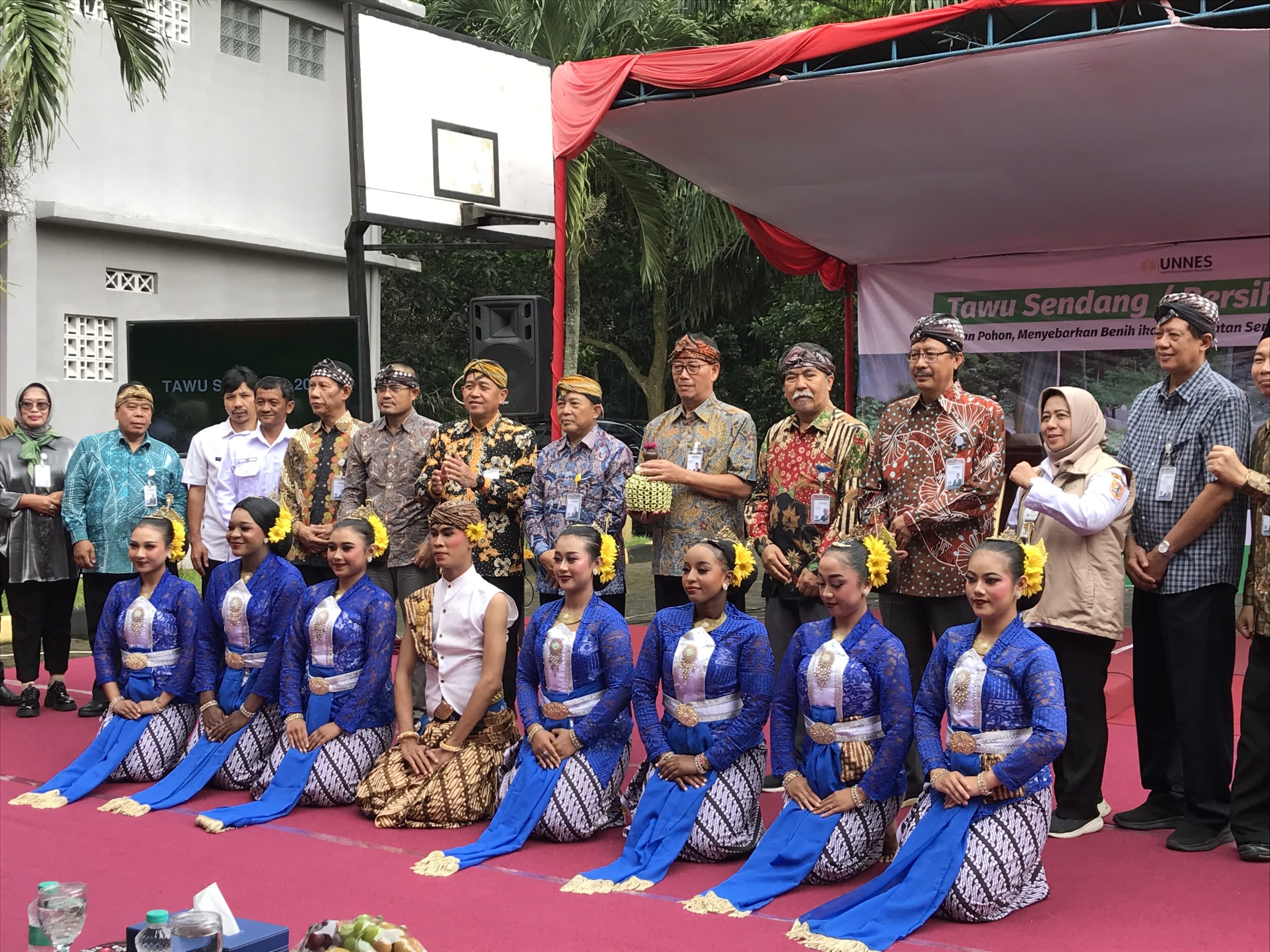
Universitas Negeri Semarang (UNNES) demonstrates a strong commitment to supporting local and regional governments in developing early warning, risk monitoring, and community resilience systems for climate change-related disasters. Through academic expertise, research, and community service programs, UNNES integrates disaster education, risk mitigation, and participatory approaches into sustainable development planning across Central Java.
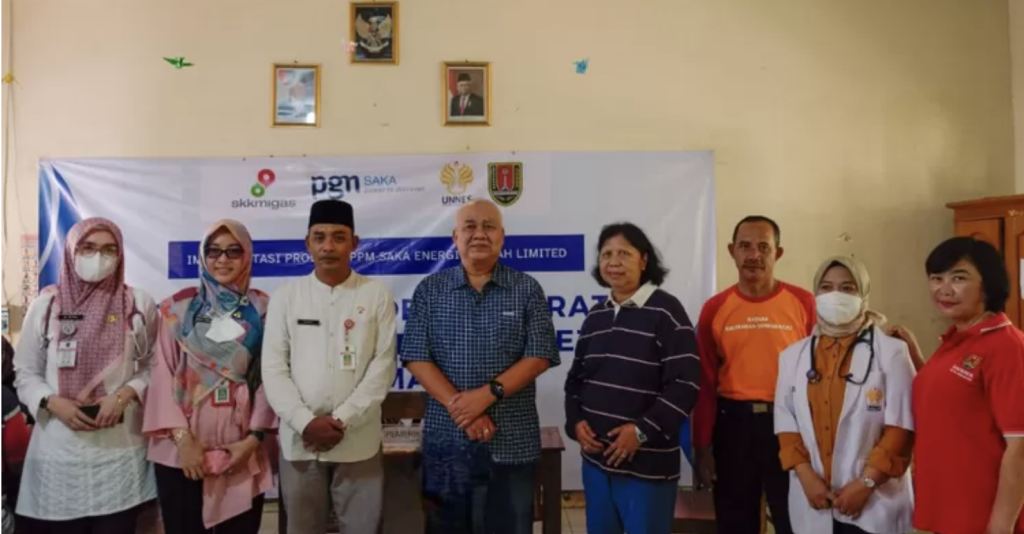
One of UNNES’s flagship initiatives is the Innovation Diffusion Partnership Program, supported by the Ministry of Education, Culture, Research, and Technology (Kemendikbudristek) and the Indonesia Endowment Fund for Education (LPDP). Under this program, UNNES developed a Disaster-Resilient Smart Village in Tambakrejo, Semarang, an area highly vulnerable to flooding and tidal inundation (rob). The program, led by Prof. Dr. Nana Kariada TM and her team, involved multiple community resilience activities, including the establishment of the Safe School Unit (SPAB) at SD Negeri 3 Tambakrejo, TB screening using the Si-Kribo mobile application, creation of local food barns and urban farming systems, and free medical check-ups for flood-affected residents. These initiatives, implemented in collaboration with local government agencies, directly address public health and food security issues caused by climate-induced disasters.
The head of the Tambakrejo Subdistrict, Sukiswo, praised this initiative as an example of cross-sector collaboration between academia, government, and citizens in building disaster-adaptive and resilient communities. UNNES’s direct response to the March 2024 flood disaster through medical outreach and education reflects its role in supporting early recovery, monitoring, and adaptation planning for vulnerable populations.
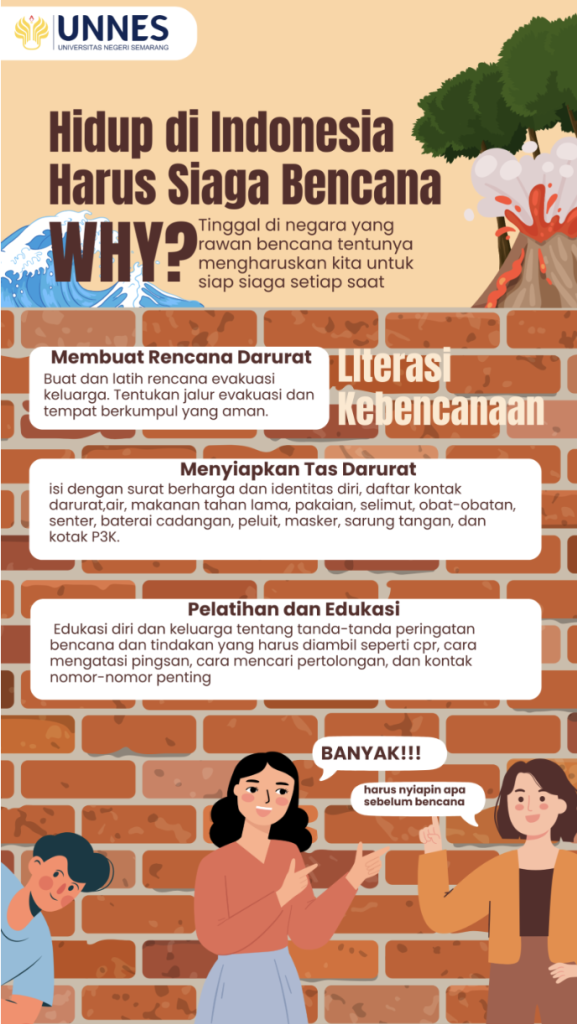
In strengthening disaster literacy, UNNES also conducts the Forum Diskusi Sadar Bencana (Disaster Awareness Discussion Forum) through its KKN PRIGEL community service program. Held in Karang Kulon Village, this forum engages local youth in Focus Group Discussions (FGD) to enhance their knowledge of climate hazards, first response, and collective preparedness. Students train participants in emergency teamwork and mitigation strategies, fostering a strong culture of environmental awareness and disaster readiness at the village level.
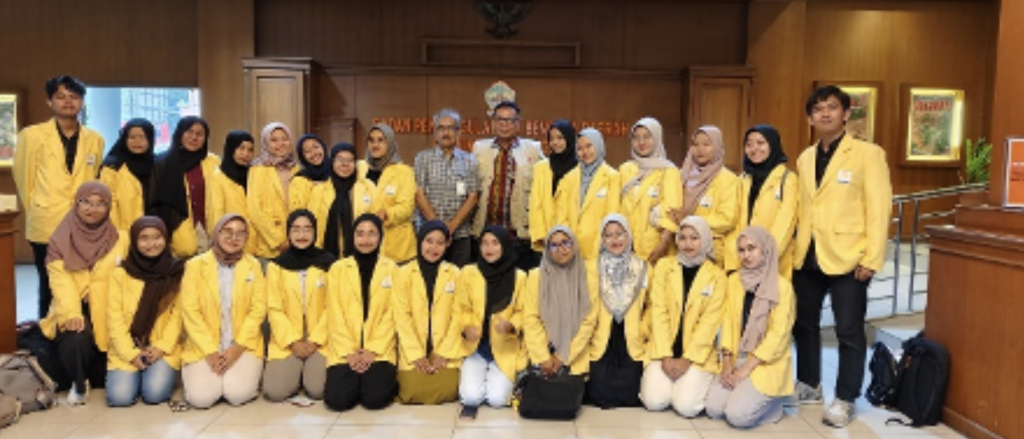
To further strengthen institutional collaboration, on 10 December 2024, UNNES students from the Disaster and Mitigation Course conducted an academic visit to the Central Java Provincial Disaster Management Agency (BPBD Jateng). The delegation was received by Executive Chair Bergas, who delivered a guest lecture on the framework of Indonesia’s disaster management under Law No. 24 of 2007, explaining the processes of landslides and floods in various Central Java regions and their mitigation strategies. BPBD staff, including Mr. Jati and Mr. Rizal, shared insights on flood control systems in Demak, community-based risk reduction, and both structural and non-structural mitigation approaches. The session concluded with an exchange of plaques between BPBD and the UNNES Physics Education Department, marking the start of continuous academic-government collaboration in disaster education and monitoring.
UNNES’s involvement also extends to long-term environmental and ecosystem-based disaster risk reduction. Together with UNS, UNDIP, and UNSOED, UNNES collaborates with the Central Java Environmental and Forestry Agency (DLHK) and the Watershed and Protected Forest Management Agency (BPDAS) to develop Educational Forests. This partnership focuses on data-driven reforestation and watershed rehabilitation, requiring detailed mapping of coordinates and land area for every tree-planting site. The initiative supports natural early warning systems by restoring vegetation, increasing water infiltration capacity, and reducing the risk of floods and landslides—key contributors to displacement and livelihood loss.
Through these diverse initiatives, UNNES serves as a vital partner to local and regional authorities, providing scientific input, monitoring data, and community engagement to enhance disaster preparedness. The integration of environmental education, social innovation, and applied research ensures that the university’s efforts are not only academic but also policy-relevant and socially transformative.
By combining government cooperation, grassroots empowerment, and academic research, UNNES reinforces its identity as a Conservation University that actively informs and supports government efforts in climate change disaster risk reduction, early warning, and monitoring—contributing directly to the achievement of Sustainable Development Goal (SDG) 13: Climate Action and SDG 11: Sustainable Cities and Communities.