Universitas Negeri Semarang (UNNES) continues to demonstrate strong leadership in addressing climate change through education, policy, and community engagement. As a Conservation University, UNNES integrates climate change mitigation, adaptation, and awareness efforts across academic, operational, and social dimensions, contributing significantly to Sustainable Development Goal (SDG) 13: Climate Action.
National Workshop on Energy, Climate Change, and Water (UGSR 2024)
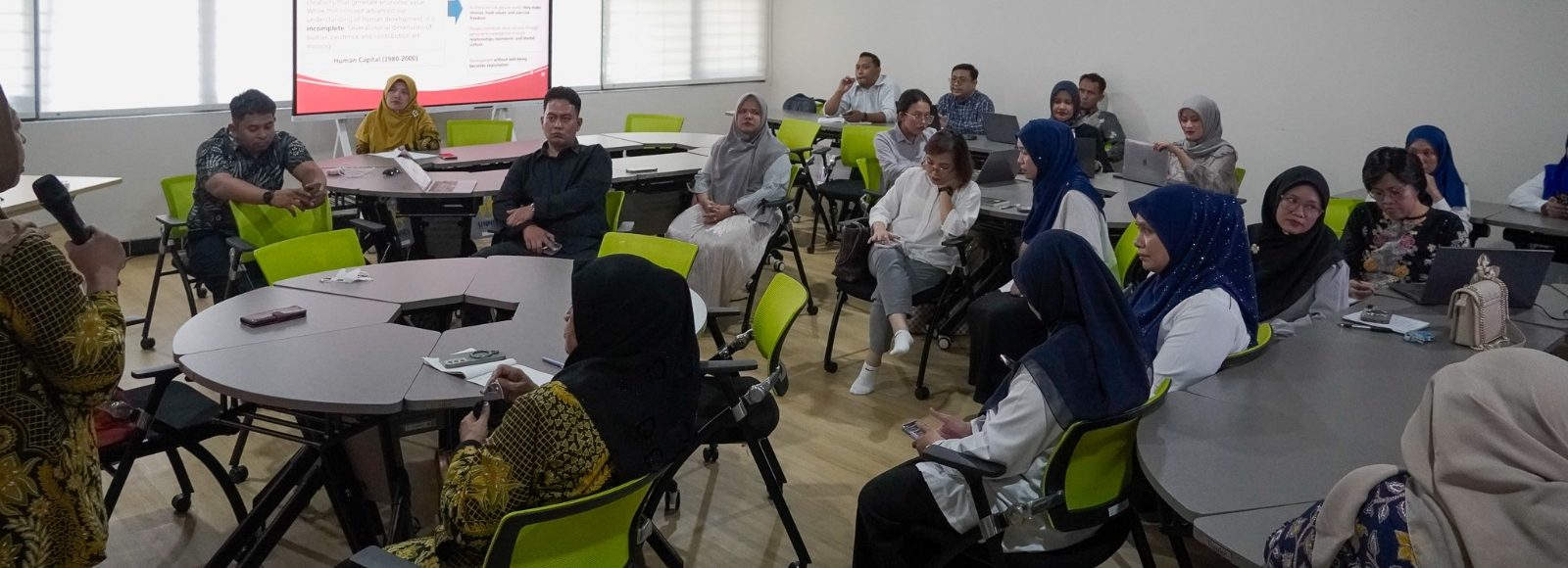
As part of the Universitas Green School Ranking (UGSR) 2024 program, UNNES organized the UGSR Workshop II on Energy & Climate Change and Water on June 10, 2024. This workshop followed the earlier session on Tapak & Infrastruktur held on June 10, 2024, and was attended by 80 junior and senior high school green school developers from across Indonesia, including Central Java, East Java, West Java, and East Kalimantan.
The workshop aimed to enhance participants’ understanding of environmental indicators related to energy efficiency, climate change, and water management within educational institutions. The speakers, Dr. Ir. Ananto Aji, M.S. (Head of Arts, Culture, and Character Values at the Subdirectorate of Conservation UNNES) and Fisa Savanti, S.T., M.Ars. (Lecturer in Architecture UNNES), discussed strategies for completing sustainability indicators in UGSR 2024.

Eight key indicators under the theme Energy & Climate Change were reviewed, including electricity efficiency, renewable energy collaboration, personnel assignments for energy management, and school energy-saving campaigns. Meanwhile, ten indicators under the Water theme covered efficient water use, rainwater harvesting, drainage, biopores, water quality monitoring, and awareness campaigns on water conservation. This program not only strengthens the network of green schools but also amplifies UNNES’s role in climate change education at the national level.
Commitment to Carbon Neutrality by 2045
UNNES has officially reaffirmed its dedication to environmental sustainability through the issuance of Rector’s Decree Number B/3669/UN37/HK.02/2024 concerning the university’s Commitment to Achieving Carbon Neutrality by 2045. The decree outlines a strategic, phased approach to significantly reduce campus carbon emissions while enhancing air and environmental quality.
This policy emphasizes key pillars such as:
- Eco-friendly transportation, promoting walking, cycling, electric vehicles, and intra-campus shuttle buses, complemented by pedestrian and bicycle pathways.
- Renewable energy development and energy efficiency, with continuous monitoring to reduce emissions.
- Green and smart building design, allocating at least 40% of campus land for green open spaces.
- Tree planting programs, requiring each new student to plant one tree and enforcing a replacement policy where every felled tree must be replaced with five saplings of at least two meters in height.
- Water conservation, including recycling, filtration systems, and sustainable management to ensure quality and availability.
- Collaborative partnerships with industry, government, and community stakeholders to strengthen the carbon neutrality agenda.
- Regular awareness campaigns targeting faculty, staff, students, and nearby communities.
UNNES Rector, Prof. Dr. S. Martono, M.Si., emphasized that this effort represents not only an institutional target but also a moral and academic responsibility. “Achieving carbon neutrality is not only a future-oriented goal but also an ethical commitment to the planet and future generations,” he stated.
Mangrove Replant Program: Climate Action through Community Empowerment
In parallel with institutional policies, UNNES actively involves students in practical environmental initiatives. The Chemical Engineering Student Association of the Faculty of Engineering organized the 11th Mangrove Replant Program at Mangunharjo Beach, Semarang, on May 18, 2024.
This annual activity brought together 150 students from multiple faculties and even other universities. Participants not only planted mangroves but also learned about proper planting and maintenance techniques to prevent coastal abrasion and protect marine ecosystems. The event was supported by Djarum Foundation, Sari Roti, and the Central Java Provincial Government, reflecting strong collaboration between academia, industry, and government.

Dean of the Faculty of Engineering, Wirawan Sumbodo, highlighted that this initiative aligns with UNNES’s green and clean program and reinforces the faculty’s position as the most environmentally sustainable in 2023. Meanwhile, Committee Chair Rona Najma emphasized that the activity embodies UNNES’s conservation vision by fostering environmental awareness among students. One of the participants, Dwi Prasojo, expressed his enthusiasm: “It’s exciting to be directly involved in protecting the environment and helping prevent coastal abrasion in our region.”
FMIPA’s Green Campaign for World Environment Day
To commemorate World Environment Day 2024, the Faculty of Mathematics and Natural Sciences (FMIPA) UNNES organized a green campaign and socialization program on the importance of reforestation and environmental care. The activity involved 60 lecturers and education staff who participated enthusiastically in discussions and hands-on tree care sessions.

The event began with opening remarks from Dr. Isnarto, M.Si., Vice Dean II of FMIPA UNNES, who reminded participants of the crucial role of educators in leading environmental preservation efforts. “As part of an educational institution, we have a major responsibility to set an example in environmental protection,” he said. The session included discussions on global environmental crises, climate change impacts, and practical methods for greening both campus and home environments.
Integrating Climate Awareness into Education and Campus Life
Through a combination of national workshops, institutional commitments, and hands-on community programs, UNNES has developed a comprehensive approach to climate change education and action. These initiatives integrate scientific knowledge, policy formulation, and public participation, ensuring that climate awareness becomes an essential component of education and civic responsibility.
By empowering schools, communities, and academic stakeholders, UNNES continues to position itself as a national leader in climate change education and sustainability advocacy. The university’s long-term vision—to achieve carbon neutrality by 2045—reflects not only a technical strategy but also a deeply rooted ethical commitment to protecting the planet for future generations.