Semarang — Universitas Negeri Semarang (UNNES) continues to lead in promoting inclusivity and accessibility through comprehensive support systems and infrastructure for individuals with disabilities. This strong institutional commitment has earned UNNES recognition as one of the Top 10 Most Disability-Friendly Universities in the World, ranking 9th globally, according to a recent international evaluation.
Inclusive Facilities and Accessibility Infrastructure
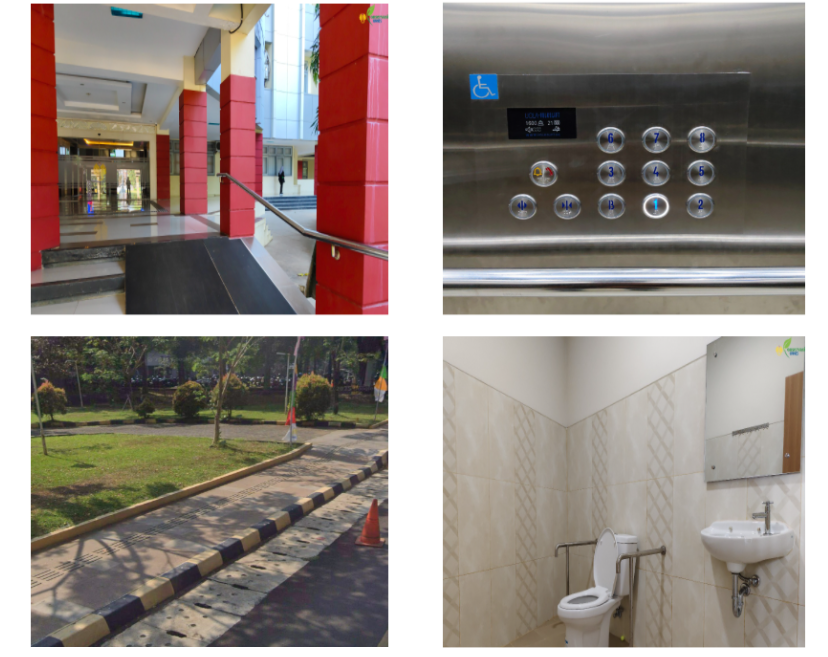
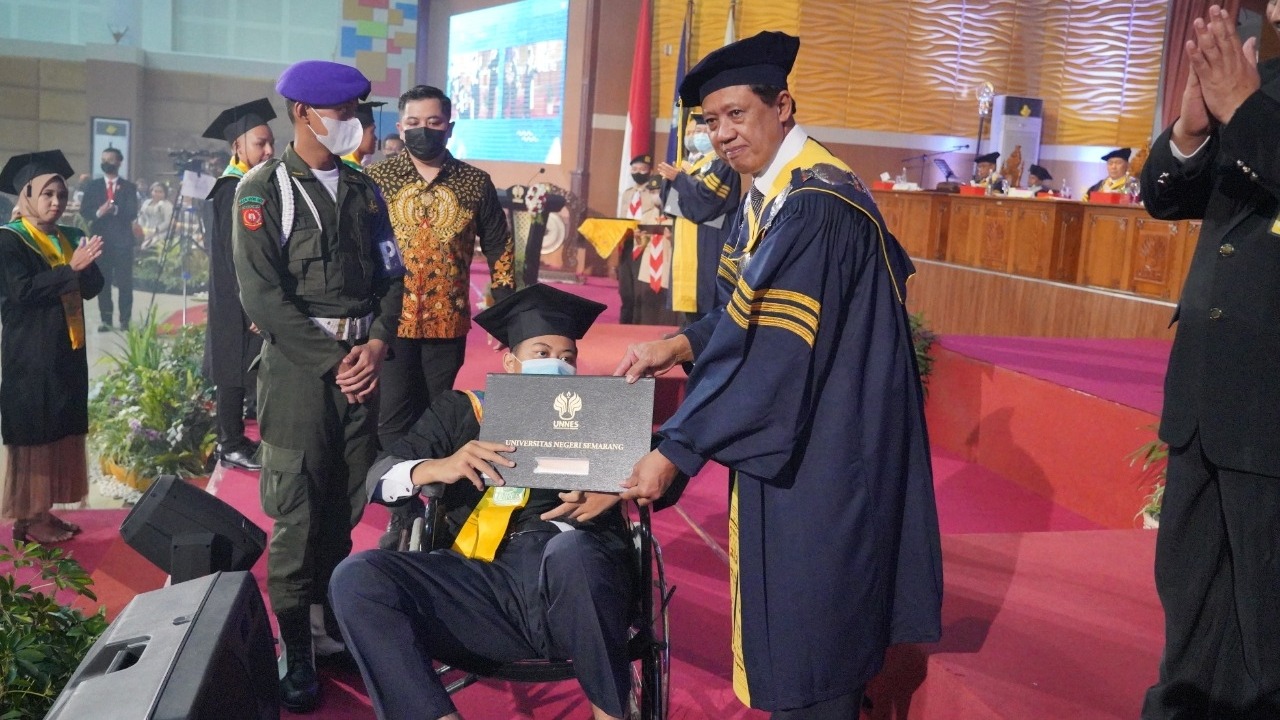
Facilities and Infrastructure for Students with Disabilities
Source: UNNES’ Documentation
UNNES provides extensive physical access facilities to ensure that all students, staff, and visitors can participate fully in academic and social activities. These include:
- Ramps and wheelchair-accessible routes across buildings,
- Lifts equipped with braille and audio indicators,
- Accessible toilets and pedestrian pathways,
- Specialized internal transportation routes and vehicles for people with disabilities.
These inclusive features demonstrate the university’s ongoing efforts to eliminate physical barriers and promote equality of opportunity across campus life.
Legal and Institutional Commitment: Rector’s Regulation No. 116 of 2024
UNNES’s inclusive infrastructure and services are governed by Rector’s Regulation Number 116 of 2024 on Educational Services for Students with Disabilities. This regulation ensures the provision of equal rights, reasonable accommodations, and institutional support systems for students with disabilities throughout their academic journey.
The policy outlines the establishment of a Disability Service Unit, which coordinates academic adjustments, accessible learning materials, and individualized support mechanisms for students with disabilities. It also emphasizes collaboration among faculties, administrative offices, and counseling services to ensure that every student receives equitable access to education.
Data-Driven Inclusion and Empowerment Programs
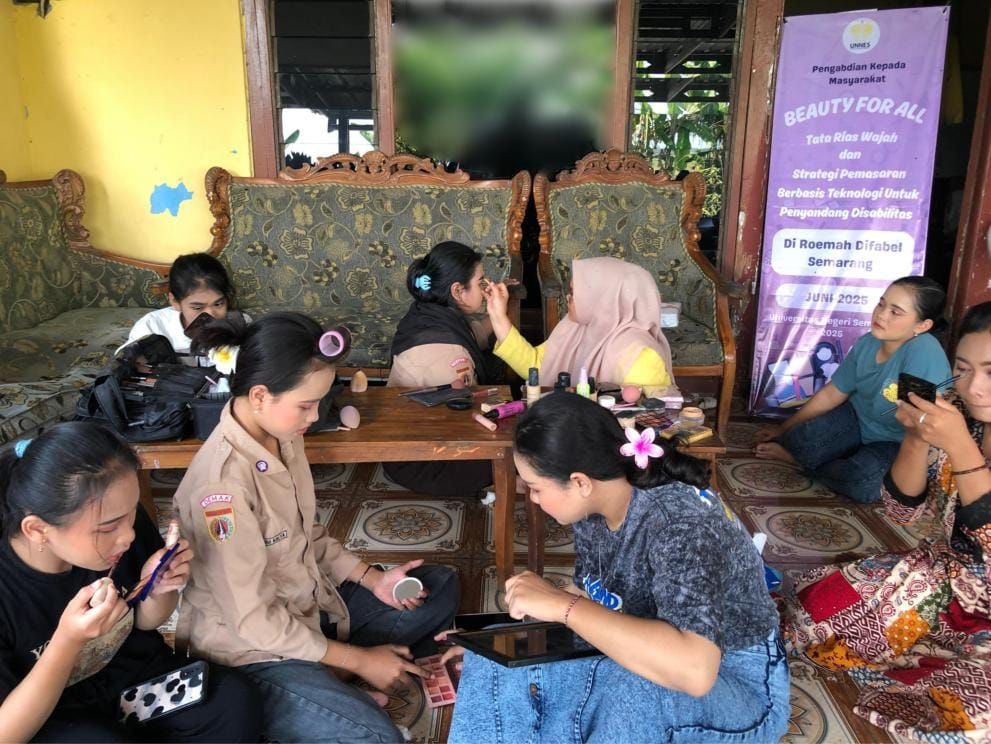
Training in Makeup for People with Disabilities
Source: UNNES’ Documentation
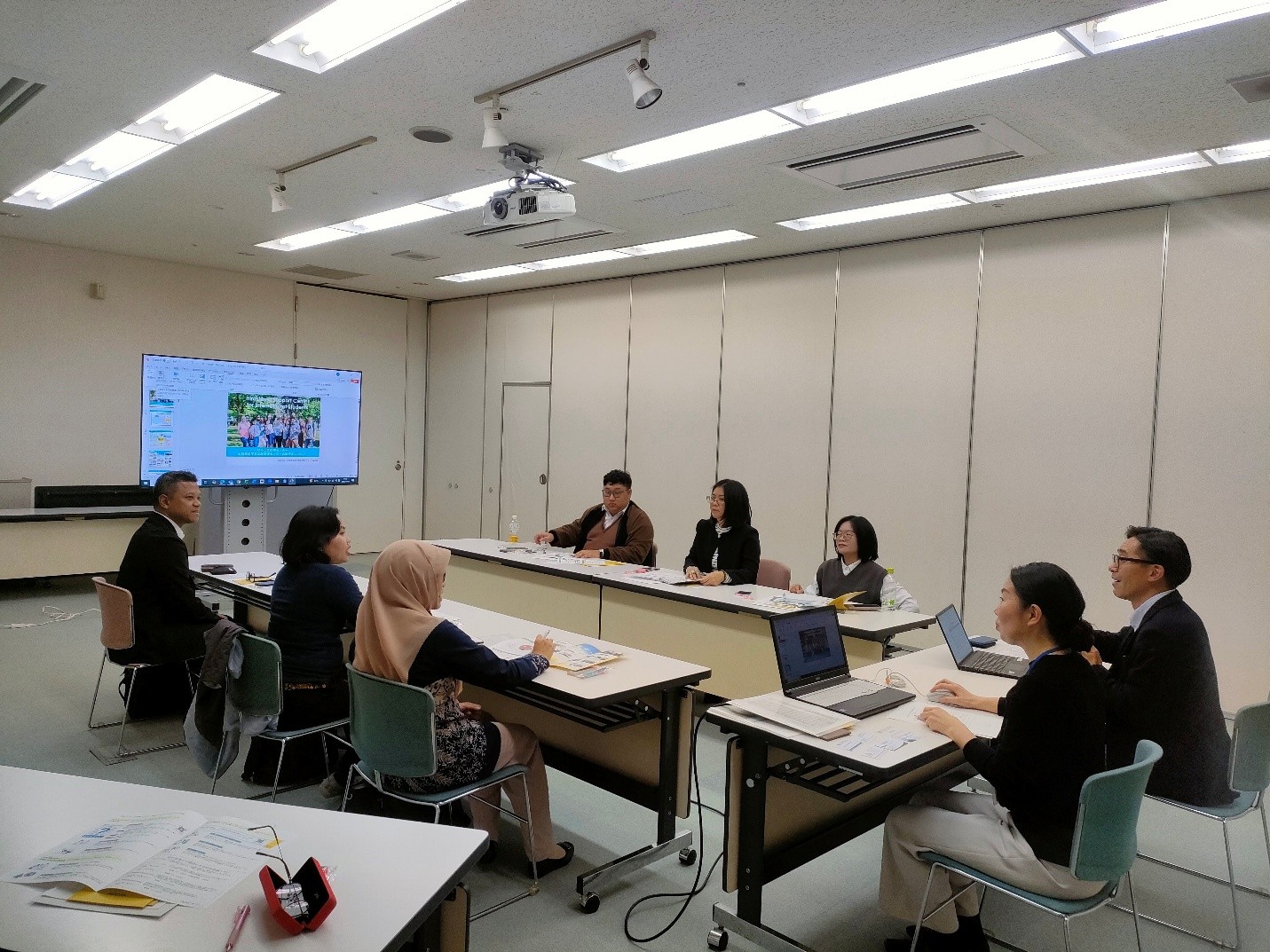
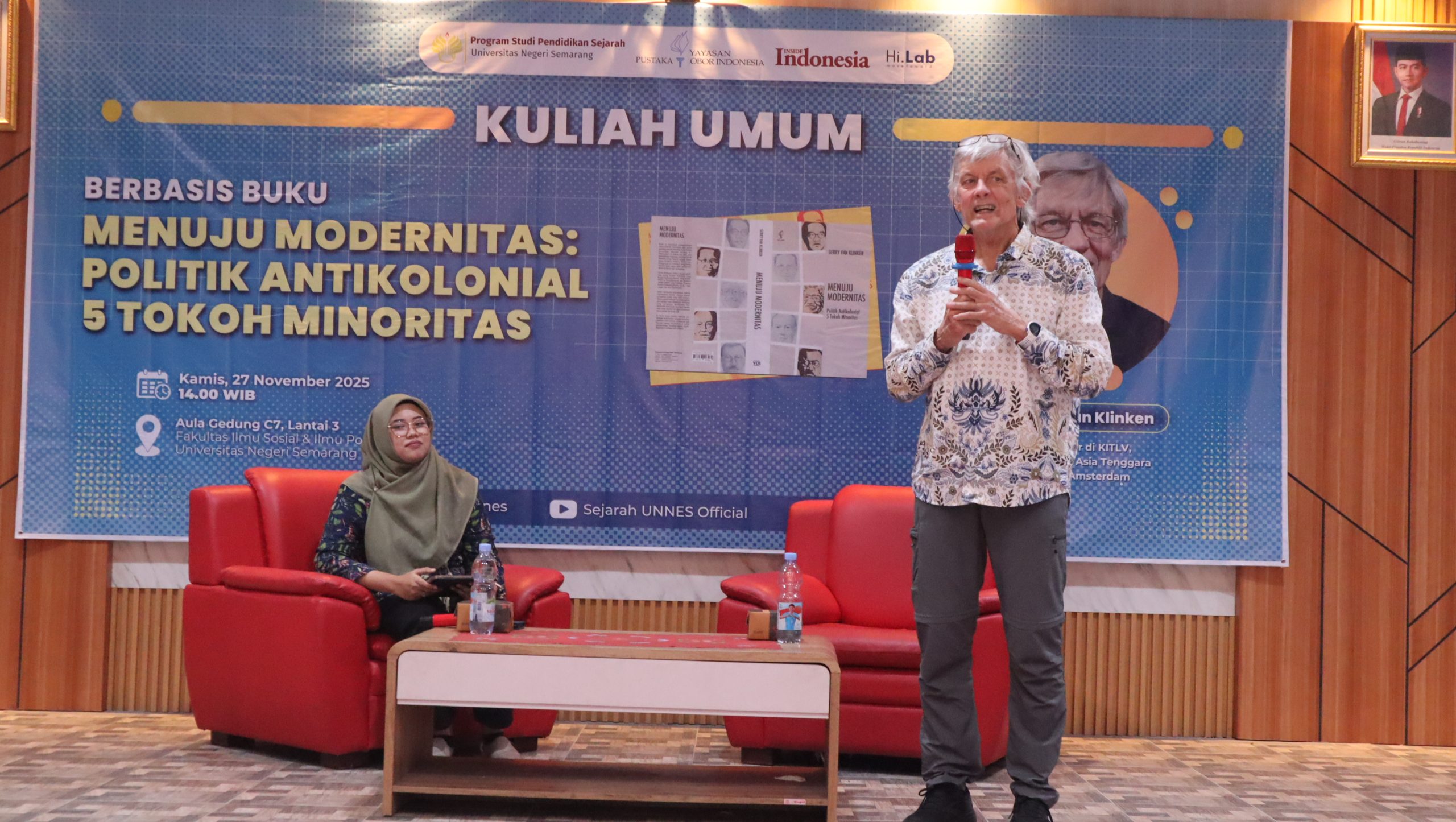
Beyond infrastructure, UNNES promotes inclusion through data-driven planning and capacity-building initiatives. The university regularly conducts seminars, sign language training, and volunteer programs to build awareness and equip the campus community with the skills to support peers with disabilities.
The Disability Service Unit and the Language, Education, Training, Career, Counseling, and Disability Service Center (PLBPP) collaborate to organize inclusive education workshops, mental health counseling, and academic mentoring programs. Through these activities, students with disabilities receive not only academic support but also social and emotional empowerment to thrive in the university environment.
Global Recognition for Inclusion and Equity
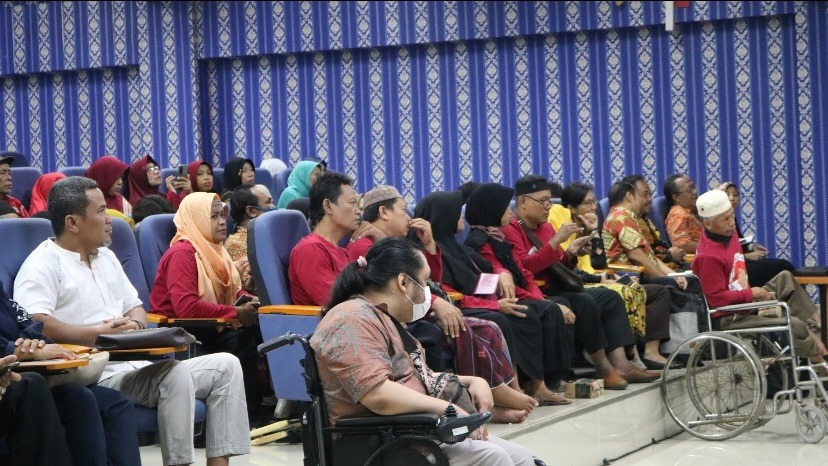
Digital Literacy Workshop for People with Disabilities
Source: UNNES’ Documentation
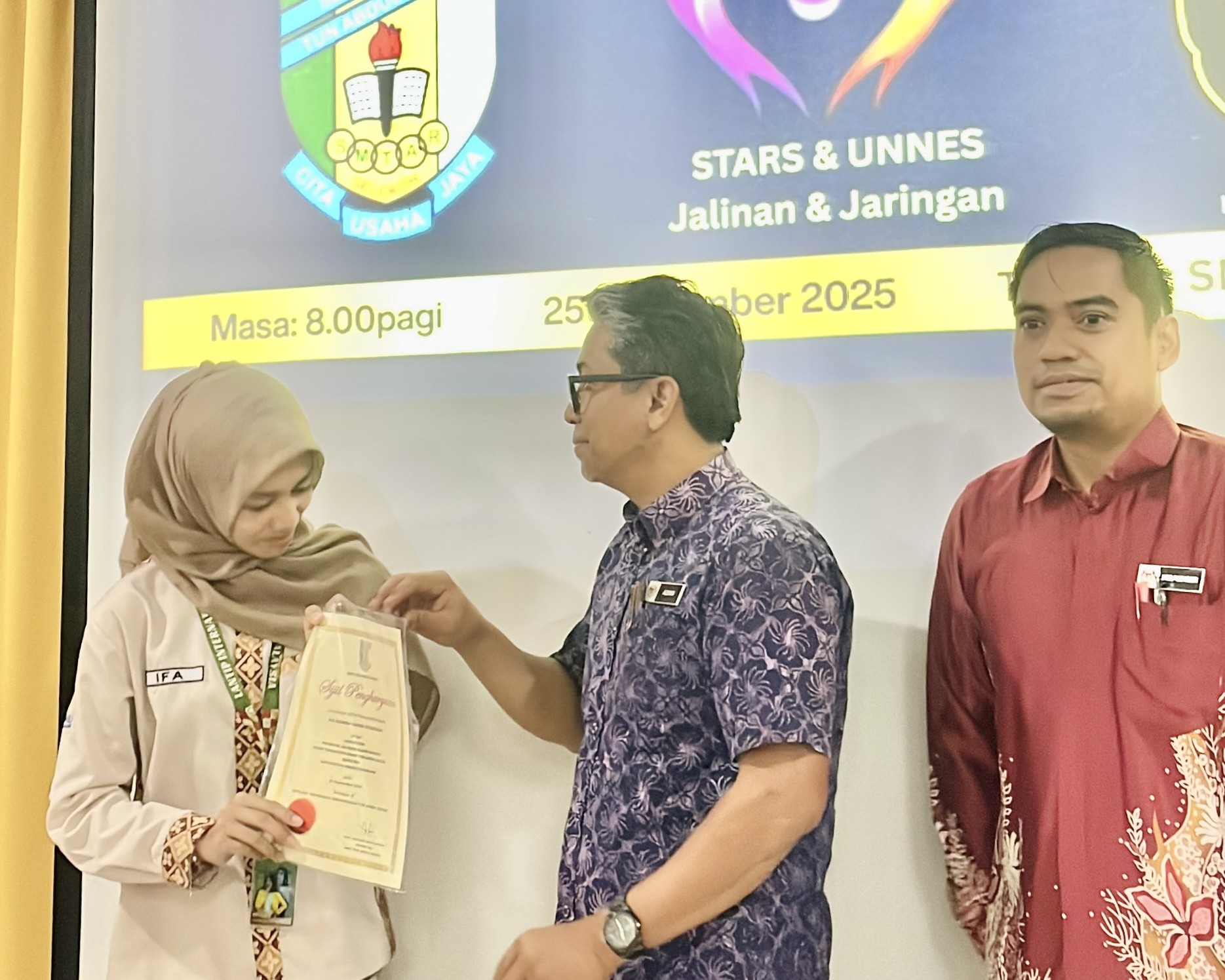
The global ranking underscores UNNES’s role as a pioneer in inclusive higher education in Indonesia. By combining policy, infrastructure, and community engagement, the university exemplifies how accessibility can be integrated into the core of institutional culture.
“Being recognized among the world’s most disability-friendly universities reaffirms UNNES’s dedication to ensuring that no one is left behind in the pursuit of education,” stated the Rector of UNNES. “Inclusion is not an initiative; it is our identity as a Conservation University.”
Advancing the Sustainable Development Goals (SDGs)
UNNES’s initiatives directly contribute to the United Nations’ Sustainable Development Goals (SDGs), particularly Goals 4 (Quality Education), 10 (Reduced Inequalities), and 11 (Sustainable Cities and Communities). Through its inclusive policies, accessible campus design, and community education, UNNES demonstrates that sustainable development must be built upon the foundation of equity and accessibility for all.