Universitas Negeri Semarang (UNNES) continues to strengthen its commitment as a conservation-minded university by implementing various sustainable transportation policies within the campus. Through Circular Letter Number: B/28523/UN37/RT.02/2024 on the Operation of Transportation Services within Universitas Negeri Semarang, UNNES emphasizes its concrete steps in regulating and optimizing an environmentally friendly transportation system.
The Vice Rector for General Affairs and Finance of UNNES stated that the university aims to increase the use of sustainable commuting by 30 percent by 2025. This target reflects UNNES’s strong commitment to reducing carbon emissions while promoting green mobility habits among its academic community.
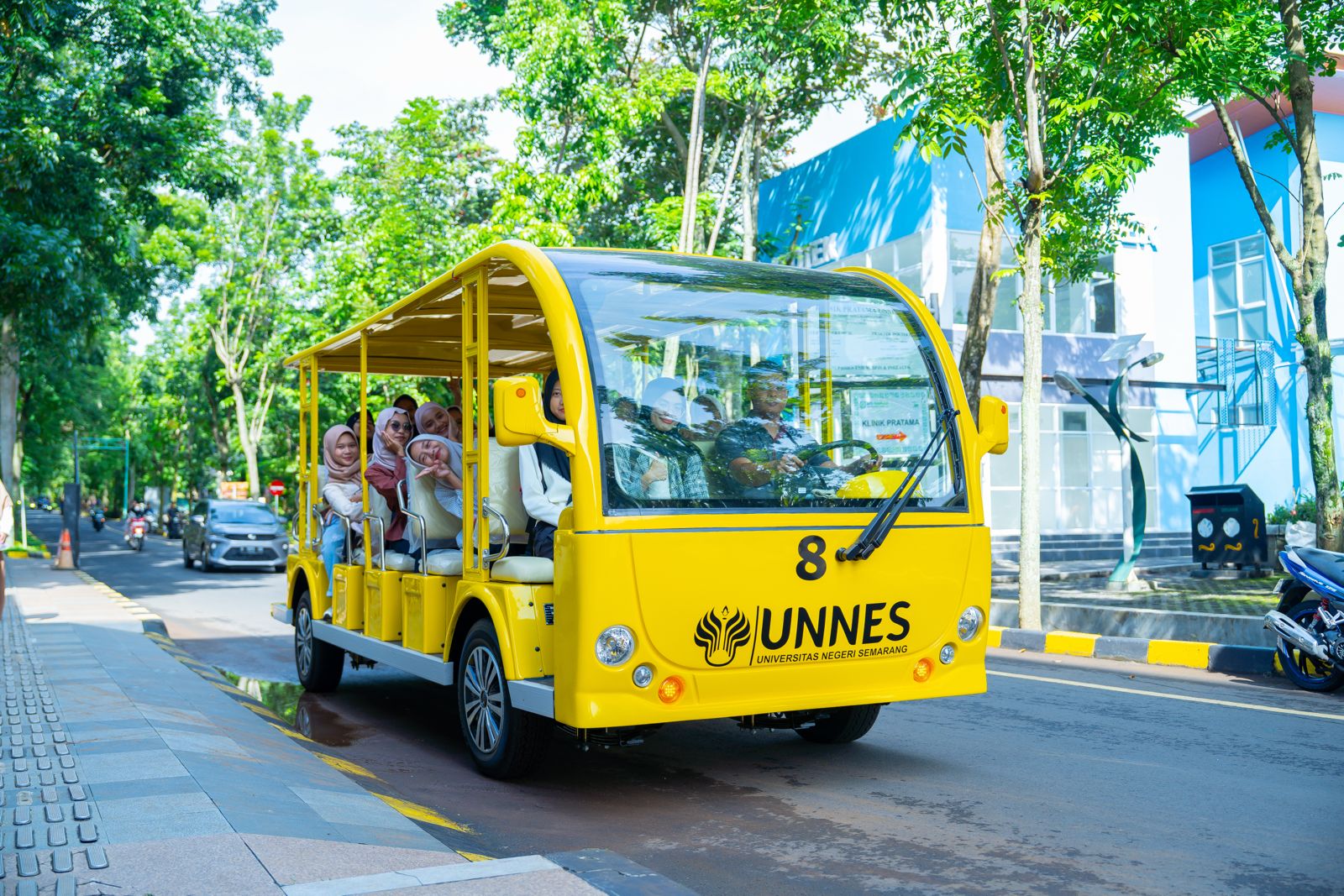
As part of these efforts, UNNES operates 20 campus shuttle units that run alternately every day from 07:00 a.m. to 05:00 p.m. These shuttle buses can be tracked through a digital application, providing convenient access for lecturers, staff, and students while reducing dependence on private vehicles.
Additionally, Semarang City’s public transportation routes pass through and serve the UNNES campus area, expanding public transport options for the academic community. Supporting facilities such as pedestrian lanes and bicycle parking areas are also provided throughout the campus to encourage non-motorized mobility.
Moreover, UNNES has begun to gradually implement electric vehicles for campus operations as a concrete step toward a low-emission transportation system. This initiative aligns with the university’s vision of creating a sustainable, healthy, and conservation-oriented academic environment.
“Eco-friendly transportation is a crucial part of UNNES’s strategy to achieve an energy-efficient, low-emission green campus. We continuously strive to make campus commuting more sustainable and aligned with the university’s conservation goals,” said one of the UNNES officials.
With this commitment, UNNES is expected to set an example for other universities in Indonesia in developing a modern, inclusive, and sustainable campus transportation system.
FISIP Students at Universitas Negeri Semarang Promote Bicycles as an Eco-Friendly Mode of Transportation
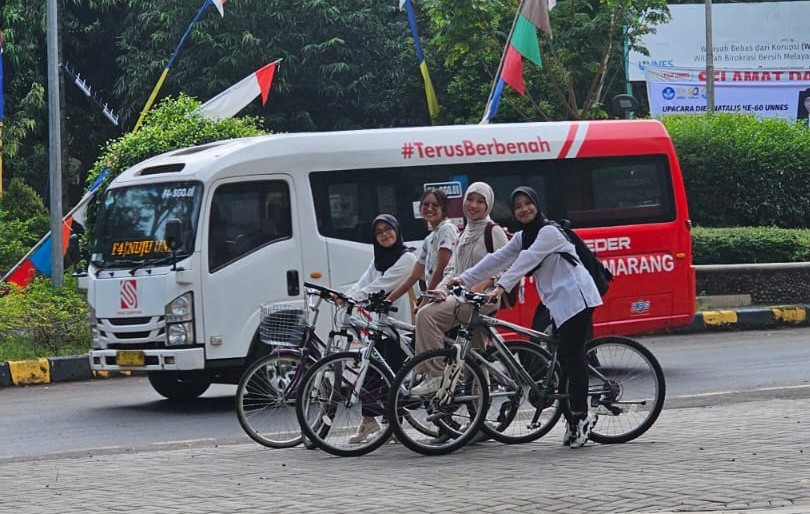
Universitas Negeri Semarang (UNNES) continues to raise awareness and promote sustainable living practices among students and the academic community by encouraging the use of bicycles as the main mode of transportation on campus. This initiative is part of UNNES’s commitment to supporting the green transportation movement and reducing environmental impact.
The use of bicycles not only benefits the environment but also improves students’ health and quality of life. “By cycling, we can reduce greenhouse gas emissions, decrease traffic congestion, and increase awareness of the importance of protecting the environment,” she said.
To support this program, the Faculty of Social Sciences and Political Science (FISIP) UNNES has provided adequate facilities, including bicycles available for borrowing at the faculty, strategically located bicycle parking areas, and environmental awareness campaigns through various activities. Students are also encouraged to use bicycles as their daily mode of transportation to campus, both for academic and extracurricular purposes.
In addition, this cycling initiative embodies the practice of sustainable living.
FISIP UNNES students have enthusiastically welcomed this initiative and hope it will continue to raise awareness and participation in environmental conservation. “Cycling to campus is not just about transportation—it’s also about embracing a healthy and environmentally conscious lifestyle,” said Sinta, a second-semester student of History Education.
Through this initiative, UNNES demonstrates its commitment to creating a green, healthy, and sustainable campus, while setting an example for the wider community in implementing eco-friendly living practices.
Transportation
Universitas Negeri Semarang (UNNES) has implemented several innovations to promote eco-friendly transportation. The university recognizes the importance of reducing carbon pollution and encouraging sustainable, environmentally friendly, and efficient transportation options.
Several breakthroughs introduced by UNNES to promote sustainable transportation include:
Electric Shuttle Buses:
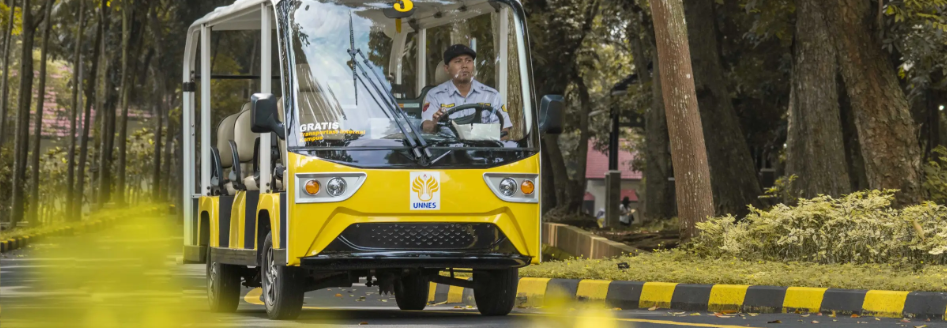
UNNES operates electric shuttle bus services that provide transportation for students and staff around the campus. The use of electric vehicles helps reduce greenhouse gas emissions and promotes sustainable mobility options.
Carpooling Program:
UNNES has implemented a carpooling program that encourages students and staff to share rides when traveling to and from campus. This program helps reduce the number of vehicles on the road and supports more sustainable modes of transportation.
Pedestrian-Friendly Campus:
UNNES has designed its campus to be pedestrian-friendly, featuring wide walkways and bicycle lanes that encourage walking and cycling as main modes of transport. This initiative reduces dependence on motor vehicles while promoting a healthy and active lifestyle.
Awareness Campaigns:
UNNES has launched several awareness campaigns to promote eco-friendly transportation among students and staff. These campaigns aim to increase understanding of the environmental benefits of sustainable transport choices and encourage individuals to adopt greener commuting habits.
Overall, UNNES has taken several steps to promote green transportation within its campus. These innovations encourage sustainable mobility choices and help reduce the university’s overall carbon footprint.