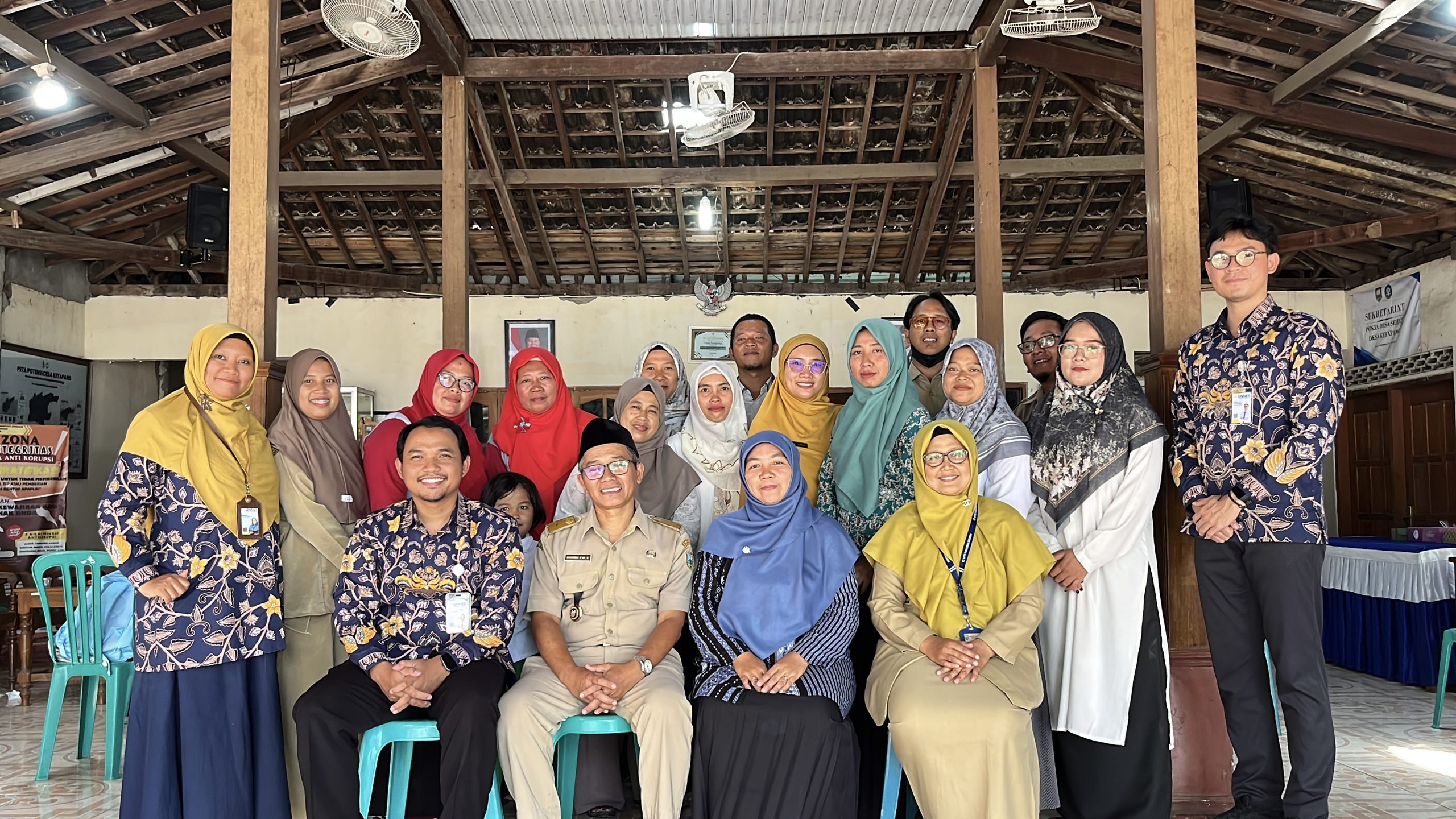
Ketapang, 14 October 2025 — The Faculty of Education and Psychology (FIPP) of Universitas Negeri Semarang (UNNES) carried out a community service programme entitled “Revitalising the Strategic Role of the DSSJ Team through Cross-Sector Collaboration in Empowering Social Support for Communities in Ketapang Village.”
The activity, held at the Ketapang Village Hall, was led by Zakki Nurul Amin, S.Pd., M.Pd., together with a team of lecturers consisting of Woro Apriliana Sari, S.Psi., M.Si., Indrajati Kunwijaya, M.Pd., Viona Ramadani, Noveliar Ramadhani, and Firda Rinda Widyaningrum, with additional material delivered by Muslikah, S.Pd., M.Pd., from UNNES. The programme was attended by various community stakeholders, including the Social Support Team Sahabat Jiwa (DSSJ) of Ketapang Village, representatives of the kelurahan, community health centre (puskesmas), neighbourhood and community unit leaders (RT/RW), as well as village mobiliser cadres.
The programme aimed to strengthen the strategic role of the DSSJ Team as the front line in providing social and psychological support to the community, particularly families with members experiencing mental disorders (ODGJ). Through cross-sector collaboration, the activity is expected to help build a stronger, more inclusive, and sustainable social support system at the village level.
During the activity, participants were actively involved in a cross-sector collaborative forum session, where they reflected on the achievements and challenges of the DSSJ programme and designed strategies to strengthen partnerships among community stakeholders. The results of the group discussions were then presented and synthesised together with the UNNES community service team to produce a draft of concrete collaborative programmes.
In addition to the reflection forum, the team also provided training on Standard Operating Procedures (SOP) and service flow for Sahabat ODGJ (friends of people with mental disorders), as well as basic training on Psychological First Aid (PFA) to improve the skills of village cadres in providing first-line support in situations of stress and psychological crisis in the community. The activity concluded with a collaborative visit to the Susukan Community Health Centre (Puskesmas Susukan), which formed part of the strategy to build networks between the DSSJ Team, health workers, and village government in addressing mental health issues at the grassroots level.
According to Zakki Nurul Amin, S.Pd., M.Pd., this activity is a concrete form of UNNES’s dedication to strengthening a healthy and empowered social ecosystem in the community. “Through cross-sector collaboration, the DSSJ Team is expected to become the spearhead in building social support for vulnerable groups in the community, while at the same time strengthening the network between village government, community health centres, and educational institutions,” said Zakki.
Meanwhile, the Head of Ketapang Village, Muhammad Ni’am, S.T., expressed his appreciation for the programme, which he considered highly relevant to the needs of the community. “We are very grateful to UNNES because this activity helps us strengthen synergy among institutions in the village. The DSSJ Team has become more solid, and the community has begun to understand the importance of social support for families with ODGJ,” he said.
The Head of the DSSJ Team of Ketapang Village, Taufiq Nurahman, also conveyed the direct benefits of the activity. “The PFA training and the preparation of service SOPs for Sahabat ODGJ have truly broadened our perspectives. Now we have clear guidelines and a stronger cooperation network with the community health centre and village authorities,” he explained.
This programme supports UNNES’s commitment as a Conservation University with International Reputation that actively promotes the achievement of the Sustainable Development Goals (SDGs), particularly SDG 3: Good Health and Well-Being, through the strengthening of community mental health and psychological well-being; SDG 10: Reduced Inequalities, through the empowerment of vulnerable groups and equal access to social support; and SDG 17: Partnerships for the Goals, through synergy between academia, health professionals, and village government.
With the implementation of this programme, Ketapang Village is expected to become a good practice example of community empowerment based on cross-sector collaboration that is able to strengthen community social resilience in a sustainable manner.