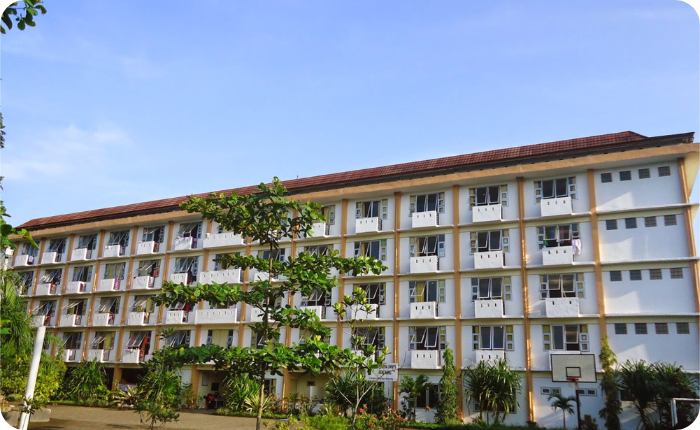
Universitas Negeri Semarang (UNNES) reaffirms its identity as a Conservation University by issuing Rector’s Regulation Number 126 of 2024 on the Management of a Green, Clean, and Healthy Campus. This policy serves as a concrete step by UNNES in implementing the principles of sustainability and environmental responsibility across all aspects of higher education management.
This regulation is designed as a guideline for all members of the academic community and work units at UNNES to maintain, manage, and utilize the campus environment sustainably. This initiative aligns with UNNES’s vision as a conservation-oriented university committed to environmental preservation, cultural value strengthening, and sustainable community development.
Focus of Green Campus Management
In Rector’s Regulation No. 126 of 2024, UNNES regulates several key aspects, including:
- Management of Green Open Spaces (RTH), which functions to maintain campus ecosystem balance, improve air quality, and serve as an environmental education medium.
- Improving campus cleanliness and health, including waste and garbage management based on the 3R principles (Reduce, Reuse, Recycle).
- Utilization of environmentally friendly buildings, through the application of energy-saving concepts, sustainable water management, and conservation-based construction.
- Regular environmental monitoring and evaluation by the university’s conservation unit to ensure that policy implementation runs effectively and measurably.
Realizing a Healthy and Inclusive Campus
Through this policy, UNNES seeks to create a comfortable, healthy, and inclusive learning environment for all members of the academic community and the surrounding society. The open spaces and campus parks remain accessible to the public, reflecting UNNES’s commitment to providing green spaces that serve not only ecological functions but also social and educational purposes.
Strategic Steps Toward a Sustainable Campus
The implementation of this Rector’s Regulation complements various conservation initiatives already carried out by UNNES, such as the Green Campus Movement, campus forest management, green pedestrian paths, and the provision of open spaces for academic, research, and recreational activities.
With a campus area covering more than two million square meters—95% of which consists of green open space—UNNES continues to be a living example of environmentally conscious campus management in Indonesia.
This policy is also expected to strengthen UNNES’s position in various national and international sustainability campus assessments, while expanding the university’s social impact on surrounding communities.
Long-Term Commitment
UNNES targets the full implementation of this policy to take place gradually, accompanied by progress reports and periodic evaluations. The synergy among lecturers, students, education staff, and the community is expected to be the key to the successful management of this green campus.
With the enactment of Rector’s Regulation Number 126 of 2024, UNNES demonstrates its seriousness in becoming a pioneering sustainable university that excels academically while making tangible contributions to protecting the Earth and future life
Evening Jogging at UNNES Becomes a New Trend of Healthy and Social Lifestyle Among Students

Evening jogging activities at Universitas Negeri Semarang (UNNES) have now become a new trend popular among students and local residents near the campus. This activity is not only a way to maintain physical fitness but also serves as a social interaction platform that strengthens relationships among members of the campus community.
Every afternoon, especially before sunset, the UNNES campus area is filled with students, alumni, and nearby residents jogging leisurely around the green lanes and open spaces. The cool and shady evening atmosphere makes this activity a favorite choice to unwind after a day of academic routines. Even during semester breaks, jogging activities remain popular among students who stay in Semarang.
In addition to maintaining physical health, evening jogging at UNNES has evolved into a social event that brings together various new communities. Many students form small running groups, join fitness challenges, or simply exercise with friends. This phenomenon illustrates how simple physical activities can create a more vibrant, dynamic, and healthy campus environment.
According to several students, evening jogging on campus provides tangible benefits for maintaining balance amid the demands of study. “Besides keeping up stamina, jogging in the evening refreshes the mind and gives a chance to meet friends from different faculties,” said one student from the Faculty of Sports Science.
The university also welcomes this habit positively. As a Conservation-Oriented Campus, UNNES supports a healthy lifestyle by utilizing its vast and comfortable green open spaces for sports activities. With the growing trend of evening jogging, UNNES hopes the campus community continues to cultivate a culture of healthy, active living that harmonizes with the environment.
Mini Forests on Campus
As a conservation university, UNNES plays a vital role in preserving the environment and ecosystems, particularly within its campus areas. One of the initiatives carried out to support this goal is the creation of mini forests across different campus zones. These mini forests are not concentrated in one location but are spread throughout the UNNES campus area. Their presence plays an essential role in maintaining environmental balance and the natural ecosystem within the university.
The mini forests of UNNES are located in several areas, including in front of the Faculty of Languages and Arts (FBS), south of the Student Activity Center (PKM) building, in front of the Rectorate Building, around the Faculty of Engineering (FT), near the Faculty of Mathematics and Natural Sciences (FMIPA), and close to the Football Field of the Faculty of Sports Science (FIK).
These mini forests were built for many beneficial reasons. Their main purposes include preventing global warming, preserving green environments, conserving forests, cultivating a spirit of planting, self-reliance, and love for forests and plants. Furthermore, the campus mini forests help regulate rainfall, preventing erosion and surface water sedimentation.
With the existence of these mini forests, rainwater can be absorbed more effectively and stored as groundwater reserves. The abundance of trees in these areas also helps prevent flooding during heavy rains. The mini forests serve as natural regulators of water sources to ensure year-round availability. They also contribute to making UNNES a lush campus with plenty of greenery and fresh air.
Additionally, mini forests provide habitats for various flora and fauna species. Among the plants found in these forests are mahogany, teak, areca palm, and ketapang trees, among others. The tall trees also become natural homes for animals such as squirrels, tree snakes, monkeys, and diverse bird species.
The mini forest near the Faculty of Engineering (FT) has its own unique features. This area is home to beautiful animals such as turkeys and pigeons. These animals are specially cared for by FT staff. The pigeons are placed in dedicated cages, while the turkeys roam freely within the area. These animals have become an attraction for students and visitors alike. Occasionally, residents from nearby neighborhoods visit the area to see these animals.
The existence of UNNES mini forests stands as proof of the university’s serious commitment to being an environmentally conscious campus. Through these mini forests, UNNES demonstrates its contribution to maintaining ecological balance and preserving the campus environment in alignment with its conservation mission.
Related Links:
🔗 Jogging Activities Around UNNES Campus to Accompany the Semester Break – Kompasiana
🔗 Evening Running Trend: A Healthy and Social Phenomenon at UNNES Campus – RMOL Jateng