UNNES Reaffirms Commitment to Sustainable Education through Lecture Series

Universitas Negeri Semarang > Sustainable Development Goals Universitas Negeri Semarang > SDGS Goals > SDG 17 - Partnerships for the goals > UNNES Reaffirms Commitment to Sustainable Education through Lecture Series

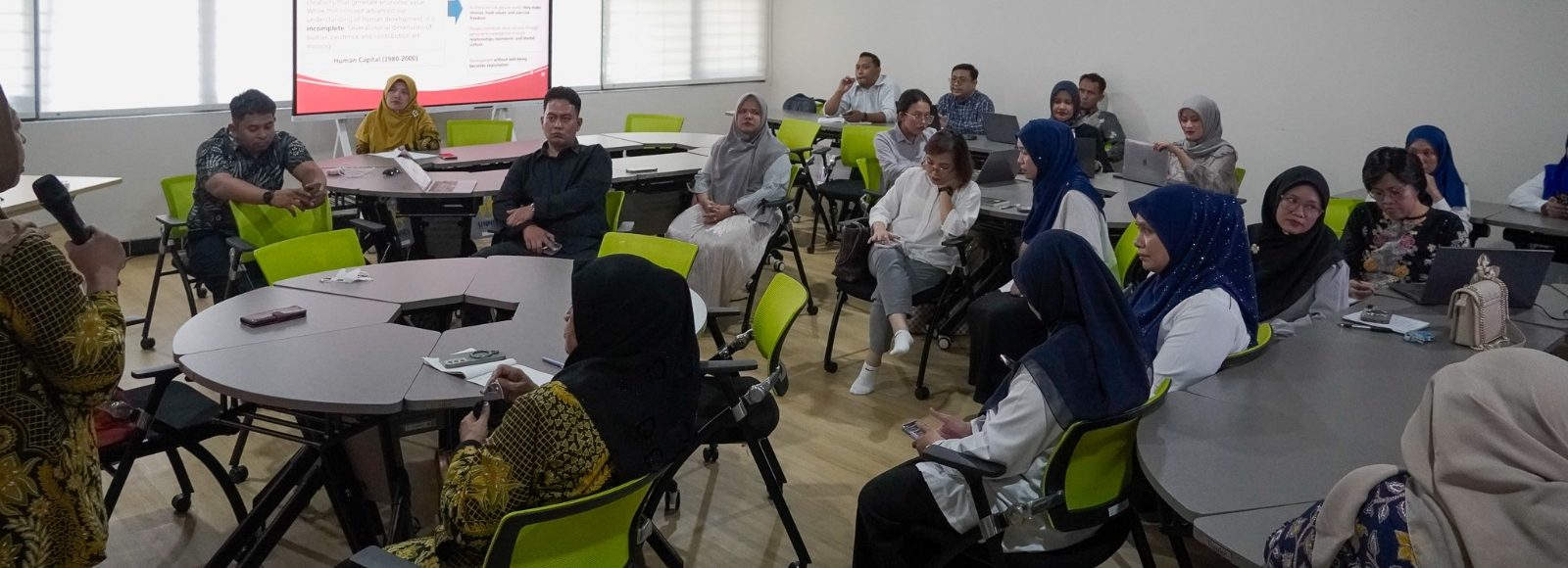
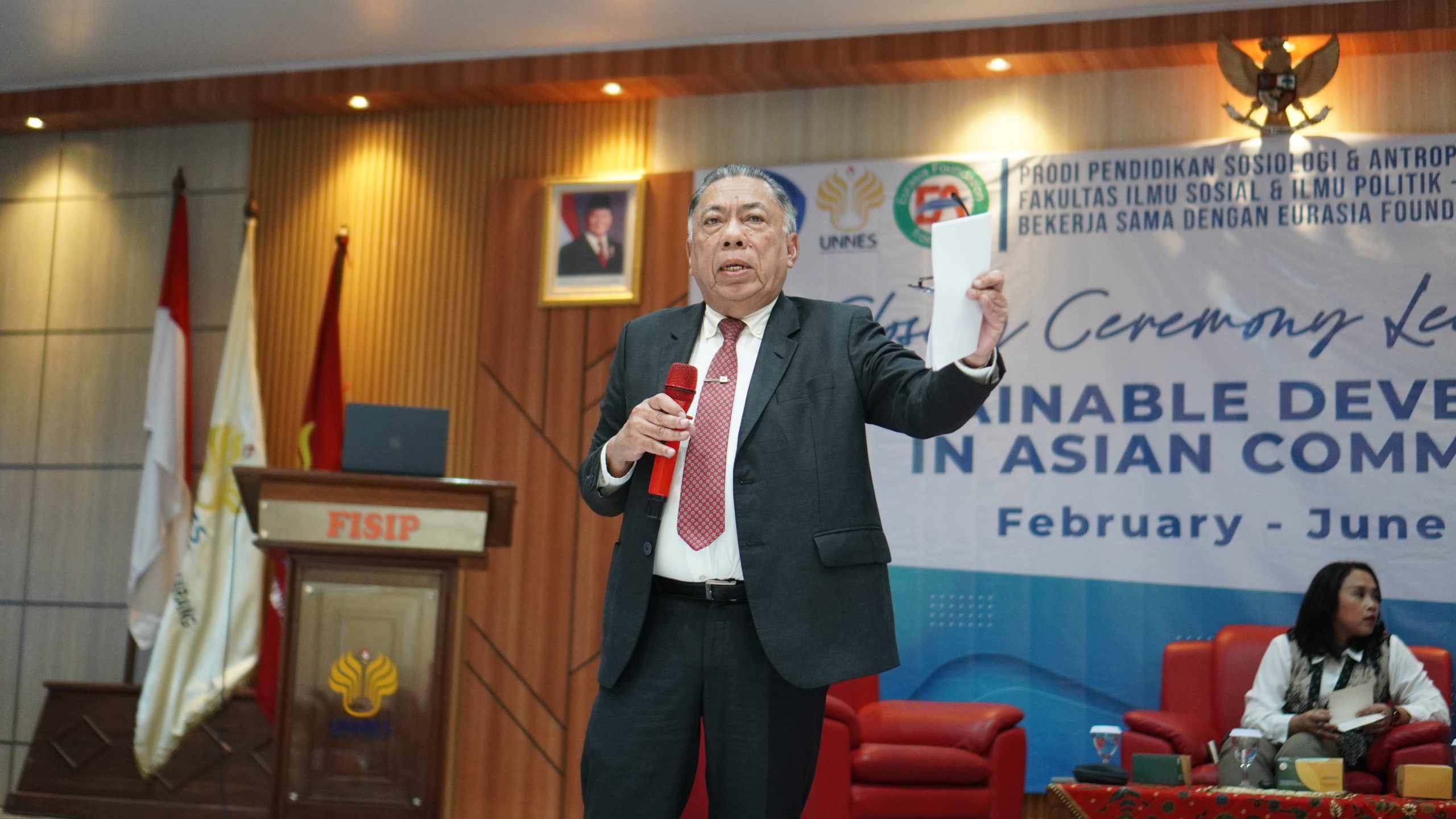
The Faculty of Social Sciences at Universitas Negeri Semarang (FISIP UNNES) held the closing ceremony of its Lecture Series titled “Sustainable Development in Asian Community” on Tuesday, 17 June 2025. This event marked the culmination of a nine-session international lecture series organized in collaboration between the Sociology and Anthropology Education Study Program of FISIP UNNES and the Eurasia Foundation (from Asia), Japan.

The lecture series aimed to broaden students’ perspectives on sustainable development issues within the context of Asian societies. The opening session of the closing event was moderated by Dr.scient.med. Fadly Husain, M.Si., Vice Dean for Academic and Student Affairs of FISIP UNNES, and featured two keynote speakers: Prof. Oekan S. Abdoellah, Ph.D., Professor of Human Ecology from Universitas Padjadjaran, and Dr. Hartati Sulistyo Rini, M.A., lecturer in Sociology and Anthropology Education at FISIP UNNES.

Prof. Oekan S. Abdoellah discussed the current state of sustainable development in Indonesia, which he described as being at a crossroads, between pursuing economic growth or striving for ecological and social justice. He argued that development practices centered on natural resource exploitation have led to deforestation, environmental degradation, climate crises, and social inequality, often victimizing local communities under the guise of progress.

To address these challenges, Prof. Oekan emphasized the need for a political-ecological transformation through a socio-ecological resilience approach that sees humans and nature as interconnected and inseparable systems. He highlighted the importance of strong political will, recognition of local knowledge, and active community involvement as key elements in realizing inclusive, equitable, and transformative sustainable development in Indonesia.

Dr. Hartati Sulistyo Rini, M.A., underscored the strategic role of youth, especially Generation Z, in advancing sustainable development that transcends economic objectives to also include social, cultural, political, and environmental dimensions. Young people are seen as change agents with strong digital capabilities, concern for global issues such as climate change and mental health, and a spirit of inclusivity and multiculturalism. However, they also face significant challenges such as pragmatism, digital distraction, and political apathy.

With a strong sense of agency, youth are believed to have the potential to drive social transformation through active participation, creativity, and innovation, becoming key actors in shaping a more just and sustainable future.

The event was attended by all fourth-semester students of the Sociology and Anthropology Education Program, who actively engaged in discussions throughout the series on various sustainable development topics from both local and global perspectives.

The closing ceremony was officially led by the Dean of FISIP UNNES, Prof. Dr. Arif Purnomo, S.Pd., S.S., M.Pd., who expressed his appreciation to all speakers and participants. In his remarks, he emphasized that sustainable education is a fundamental pillar in cultivating a generation that is aware of global challenges and prepared to become agents of social change.

This program serves as concrete evidence of FISIP UNNES’s contribution to enhancing students’ academic capacity, fostering international networks, and embedding sustainability values into higher education. It also reflects UNNES’s active commitment to advancing the Sustainable Development Goals (SDGs), particularly Goal 4 (Quality Education) and Goal 17 (Partnerships for the Goals), through strengthened academic capacity and international collaborative partnerships.
Related Posts

Leave a Reply

* Kode Akses Komentar:

* Tuliskan kode akses komentar diatas:

GDPR

  • Privacy Policy

Privacy Policy

At unnes.ac.id, the privacy of our visitors is of extreme importance to us. This privacy policy document outlines the types of personal information that is received and collected by unnes.ac.id and how it is used.

Log Files

Like many other Web sites, unnes.ac.id makes use of log files. The information inside the log files includes internet protocol (IP) addresses, type of browser, Internet Service Provider (ISP), date/time stamp, referring/exit pages, and number of clicks to analyze trends, administer the site, track user’s movement around the site, and gather demographic information. IP addresses and other such information are not linked to any information that is personally identifiable.

Cookies

unnes.ac.id uses cookies to store information about visitors’ preferences, to record user-specific information on which pages the site visitor accesses or visits, and to personalize or customize our web page content based upon visitors’ browser type or other information that the visitor sends via their browser.

Third-party ad servers or ad networks use technology in their respective advertisements and links that appear on unnes.ac.id and which are sent directly to your browser. They automatically receive your IP address when this occurs. Other technologies (such as cookies, JavaScript, or Web Beacons) may also be used by our site’s third-party ad networks to measure the effectiveness of their advertising campaigns and/or to personalize the advertising content that you see on the site.

unnes.ac.id has no access to or control over these cookies that are used by third-party advertisers.

You should consult the respective privacy policies of these third-party ad servers for more detailed information on their practices as well as for instructions about how to opt-out of certain practices. unnes.ac.id’s privacy policy does not apply to, and we cannot control the activities of, such other advertisers or web sites.

If you wish to disable cookies, you may do so through your individual browser options. More detailed information about cookie management with specific web browsers can be found at the browsers’ respective websites.

Consent

By using our website, you hereby consent to our privacy policy and agree to its terms.

Update

This Privacy Policy was last updated on: 2023-02-14. Should we update, amend or make any changes to our privacy policy, those changes will be posted here.

Contact Us

If you have any questions, comments, or concerns about our Privacy Policy or our practices with regards to your personal information, please feel free to contact us through the contact form on our website or by emailing us at humas[at]mail.unnes.ac.id.

This Privacy Policy is intended as a general guide to our practices in collecting and using information. If there is any inconsistency between this Privacy Policy and the terms of the Service Agreement or any other terms that may apply to specific services you use, then those specific service terms shall apply.

Terms of Use

By using our website, you agree to abide by this Privacy Policy. If you do not agree with this Privacy Policy, please do not use our website. We reserve the right to update this Privacy Policy from time to time without prior notice. Please review our Privacy Policy periodically to check for changes. Your continued use of our website following the posting of changes to this Privacy Policy means that you accept the changes.

Thank you for reading our Privacy Policy. We are committed to protecting the privacy of our website visitors and will continue to update our Privacy Policy to ensure optimal protection.