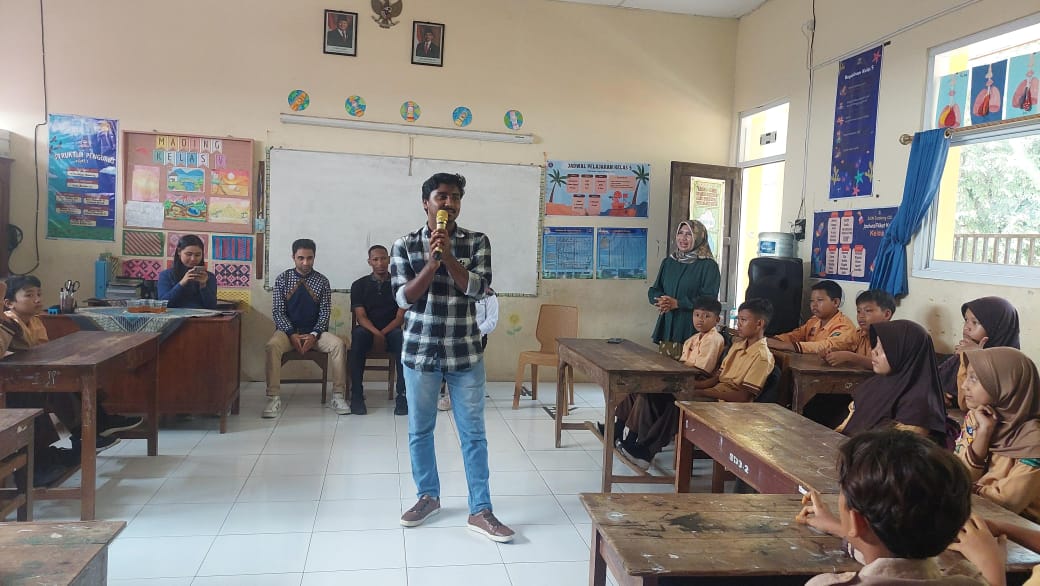
Four international students participating in the 2025 Summer Course organized by the Faculty of Education and Psychology (FIPP), Universitas Negeri Semarang (UNNES), actively contributed to cross-cultural collaboration by teaching at SD Negeri Sadeng 03 and engaging in a field visit to FIPP’s foster village in Sambirejo, Bringin, Semarang Regency on Friday (5/9).
This activity was part of the FIPP Summer Course 2025 agenda, aimed at introducing the faculty’s profile and promoting Indonesian cultural values to an international audience. The program directly supports the implementation of the Sustainable Development Goals (SDGs), particularly in the areas of Quality Education and Good Health and Well-being, through classroom teaching and outdoor learning experiences, including rafting activities in the foster village.
At SD Negeri Sadeng 03, the four students—from Tanzania, Myanmar, Pakistan, and India—delivered lessons on Cross-Cultural Education through interactive methods that highlighted their respective cultures. The elementary students responded enthusiastically, gaining new knowledge about global diversity while fostering tolerance and intercultural understanding.
“I am very pleased to share the culture of my country and to learn from the children here. They are so friendly and open-minded,” said Iyas, a participant from India.
Beyond the teaching session, the participants visited Sambirejo Village, a model foster village managed by FIPP UNNES. The village serves as a hub for education development and community empowerment aligned with the SDGs. During the visit, the students held discussions with local residents and observed community-based tourism initiatives.
Dr. Siti Nuzulia, Vice Dean of Business, Research, and Partnership at FIPP UNNES, emphasized the significance of this program in enriching the international students’ perspectives on Indonesia’s educational and social landscape.
“We hope that our international students not only study on campus but also immerse themselves in local communities to better understand the cultural and educational context. This engagement supports our commitment to inclusive and sustainable education,” she stated.
The initiative received a warm welcome from the school and village communities, who expressed optimism that such collaborative programs will continue and expand in the future.