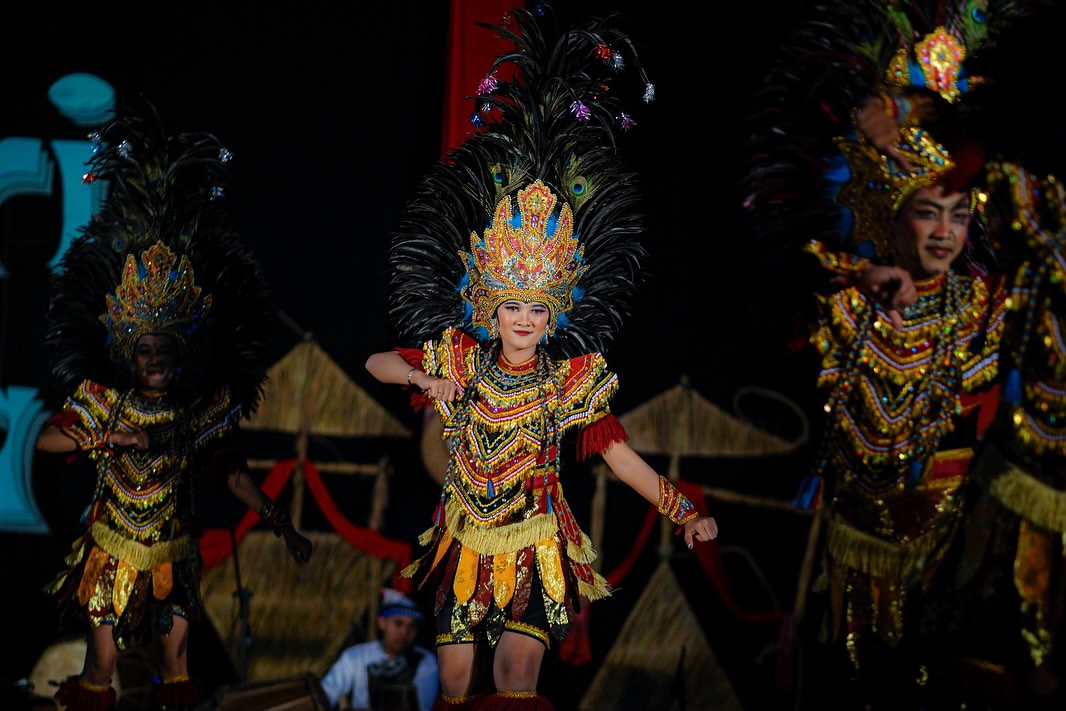
Universitas Negeri Semarang (UNNES) is actively strengthening its commitment to the preservation and development of local culture through various art and cultural activities held regularly throughout the year. From the initiatives of Student Activity Units (UKM) to the organization of national and international festivals, this conservation-minded university positions art as an integral part of learning and social interaction.
Each year, UNNES holds around 36 art and cultural events — ranging from UKM public performances and annual festivals to collaborations with cultural communities across Central Java. Through units such as the Art UKM, UNNES Choir, UNNES Theater, and UNNES Orchestra, students actively present performances both on and off campus. For instance, the UNNES Choir, established in 1999, has achieved numerous accomplishments at local and national levels.
UNNES also regularly hosts national and international cultural events, including:
- Semarang International Illustration Festival (SIIF) 2025, which features 116 works by illustrators from 25 countries as a platform for global artistic collaboration.
- Semarang International Digital Art Painting Festival (SIDAPFEST), showcasing digital artworks and the intersection of art and technology.
- Various traditional art community events, such as kethoprak performances involving the UNNES Javanese Art UKM.
The head of the Javanese Art UKM at UNNES stated that UKM members must be “at the forefront of preserving Javanese culture” because the nation’s noble values lie within its cultural heritage. Student involvement in cultural performances at UNNES is not merely about entertainment but also an essential part of cultural learning, tradition conservation, and character development.
With events that engage the public and are open to the wider community, UNNES bridges the world of academia and society — making the campus not only an academic space but also a national creative arena. Through more than thirty activities each year, UNNES strengthens its position as a center of art and culture that embraces young generations, students, academics, and the community.
Supporting Cultural Diversity and Sustainability, UNNES Commits to Holding the Indonesian Folklore Festival Annually
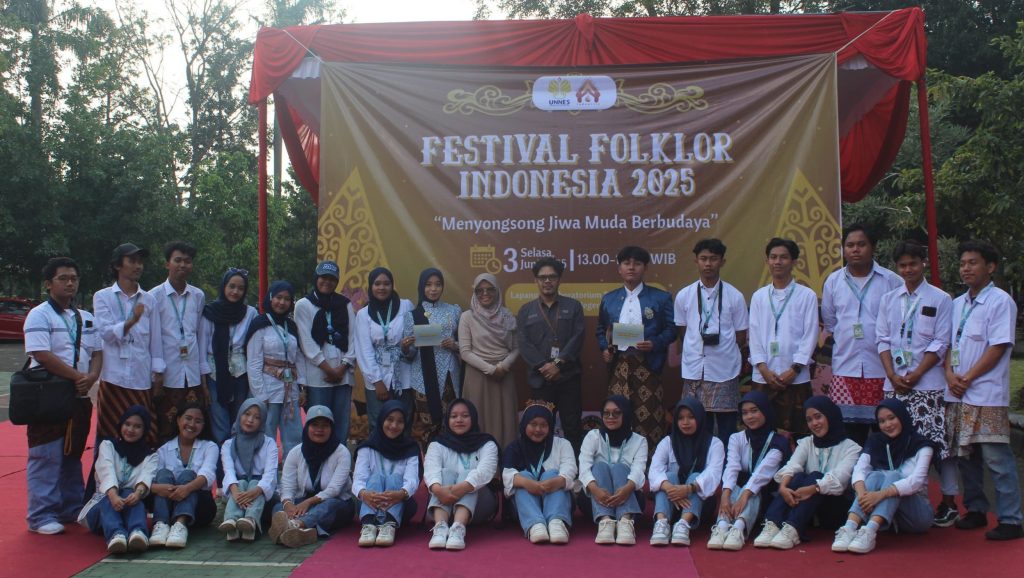
The Indonesian Literature Study Program, Faculty of Languages and Arts (FBS), Universitas Negeri Semarang (UNNES), reaffirms its commitment to holding the Indonesian Folklore Festival as an annual event. This festival is not merely a showcase of art and culture but also part of a continuous effort to preserve the nation’s cultural heritage while supporting the achievement of the Sustainable Development Goals (SDGs).
The event has been held for two consecutive years. In 2024, the Indonesian Folklore Festival took place on an open stage in collaboration with the FBS UNNES Laboratory Team as the organizing partner. Meanwhile, the 2025 festival is scheduled for Tuesday, June 3, 2025, from 1:00 to 3:00 p.m. at the Prof. Soegijono Laboratory Field, Faculty of Sports Science (FIK), Universitas Negeri Semarang.
The 2025 edition presents broader collaboration by involving the UNNES Conservation Team, the Student Activity Unit (UKM) of the Cultural Information Center (PIB), and the Alas Kandri Community— a local cultural group actively engaged in preserving traditional values. In addition, under the initiative of the UNNES Conservation Team, this year’s festival also partners with several elementary schools in Semarang to hold competitions for traditional children’s games such as plintengan, gobak sodor, and egrang. This activity serves as an educational platform for younger generations to learn about national culture through games that embody togetherness and shared values.
The festival highlights the richness of Indonesian folklore through drama performances based on folktales, introductions to traditional games, and regional art showcases. It serves as a collaborative space for students, lecturers, cultural communities, schoolchildren, and the general public. The Indonesian Folklore Festival is expected to strengthen cultural identity and foster collective awareness of the importance of sustaining local traditions.
Head of the Indonesian Literature Study Program, Suseno, stated that the festival is not only an academic and artistic appreciation agenda but also a concrete contribution from UNNES toward achieving SDG point 4 (Quality Education), point 11 (Sustainable Cities and Communities), and point 17 (Partnerships for the Goals).
“Through this festival, we encourage the younger generation to recognize, love, and preserve regional cultural wealth. This aligns with UNNES’s commitment as a conservation university and our active contribution to sustainable development. Moreover, documentation through the Instagram account @festivalflokloreindonesia allows the event to reach a wider audience,” said Suseno.
The Indonesian Folklore Festival is also part of the implementation of the Merdeka Belajar–Kampus Merdeka (MBKM) program, which has now evolved into the Kampus Berdampak policy. It provides space for students to engage in culture-based projects that address both local and global challenges in a contextual and meaningful way.
Kethoprak Gaul Festival 2024: A Cultural Showcase from Students to Teachers
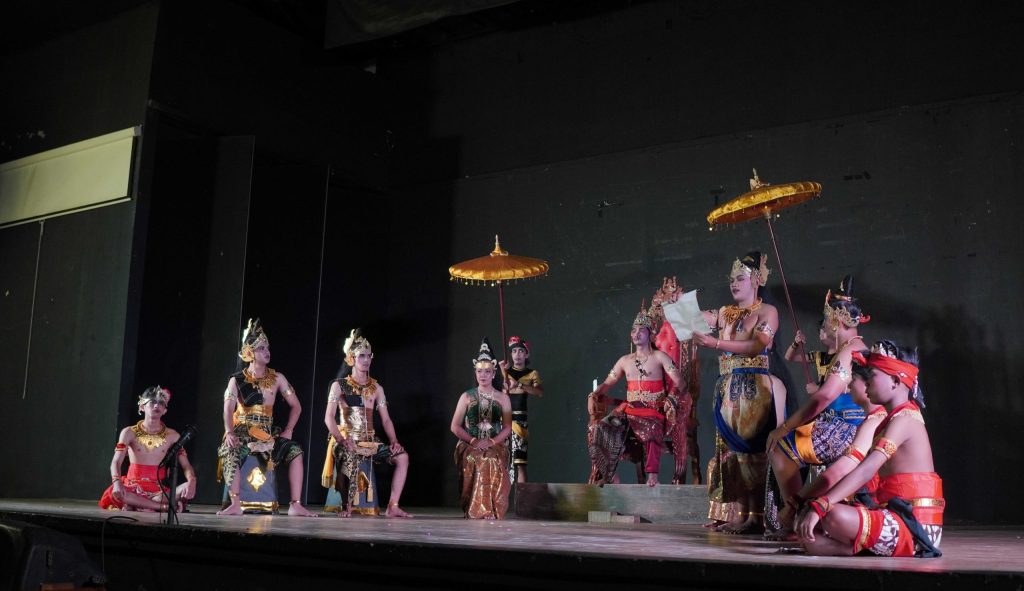
The B6 Hall of the Faculty of Languages and Arts, Universitas Negeri Semarang (UNNES), came alive with the vibrant performances of the Kethoprak Gaul Festival, held on Thursday–Friday, November 21–22, 2024. This event served not only as the final examination for the Traditional Javanese Drama course in the Javanese Language and Literature Education and Javanese Literature Study Programs at FBS UNNES, but also as an effort to preserve the art of kethoprak—a traditional Javanese theatrical performance—by blending cultural heritage with modern creativity.
The festival featured five kethoprak groups, each presenting a different play. On Thursday, November 21, audiences enjoyed performances by Kethoprak Bairawi with Layung Girah and Kethoprak Wijaya Kusuma with Ulupati.
The following day, Friday, November 22, Kethoprak Linthing Asmara took the stage with Luhing Katresnan, followed by Kethoprak MGMP Bahasa Jawa SMA/SMK/SMP/SD Jawa Tengah with Senapati Pinilih, and concluded by Kethoprak Surarindama performing Sabda Malaya.
Rehearsals and preparations for the festival had been ongoing for more than four months. Students not only practiced acting skills but also deepened their understanding of Javanese cultural values embedded in each play.
Adding to the excitement, the festival also featured a special performance by teachers who are members of the MGMP Bahasa Jawa (Javanese Language Teachers’ Association). Their participation was fully supported by the Central Java Provincial Office of Education and Culture.
Dr. Widodo, M.Hum., one of the course lecturers, stated that the involvement of teachers in this festival reflects the synergy between higher education and schools in preserving cultural heritage.
“Government support through funding plays a vital role in the success of this event,” he said.
Other lecturers for the course include Dr. Sucipto Hadi Purnomo, Dr. Dhoni Zustiyantoro, and Sungging Widagdo, M.Pd.
The Kethoprak Gaul Festival was not only an academic assessment but also a platform for students, lecturers, and teachers to collaborate in maintaining the existence of traditional Javanese art amid the tides of modernity. Dr. Dhoni Zustiyantoro remarked,
“This is proof that traditional art remains relevant and continues to serve as a medium for intergenerational learning.”
The audience—comprising students, lecturers, teachers, and the general public—gave enthusiastic appreciation for the performances. The lecturers emphasized that this festival will continue to be a regular agenda to strengthen the role of art and culture in education. With high enthusiasm from both participants and spectators, the Kethoprak Gaul Festival stands as evidence that traditional art is still alive, serving as a cultural space that educates and entertains at once.
UNNES Stages Wayang Kulit Performance to Celebrate Its 58th Anniversary
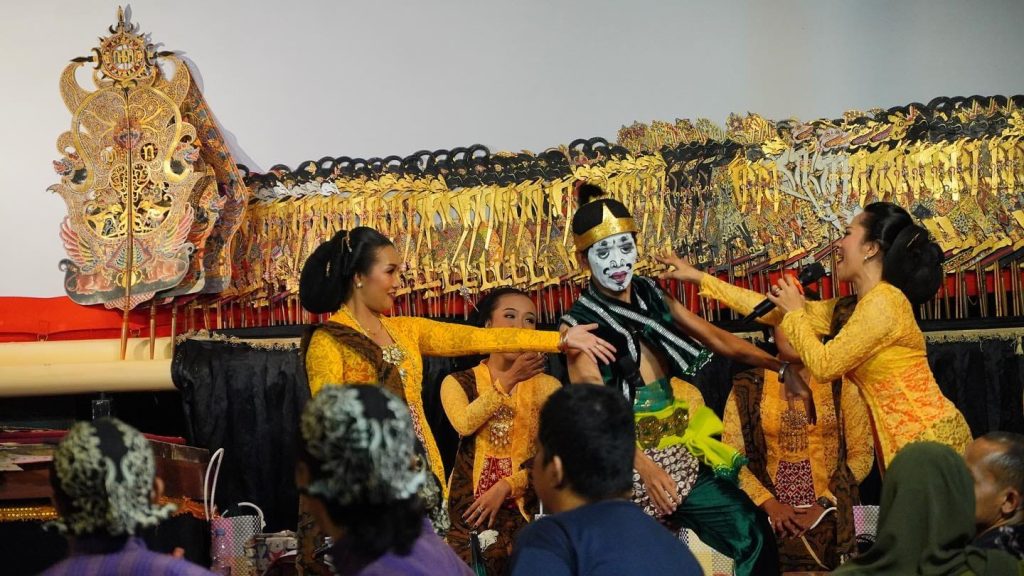
On Friday, June 9, 2023, Universitas Negeri Semarang (UNNES) held an all-night wayang kulit (shadow puppet) performance to commemorate its 58th Dies Natalis (anniversary).
The performance took place at the Rectorate Field, Sekaran Campus, Gunungpati, featuring the play Wahyu Dayaningrat performed by dalang (puppet master) Ki Sigit Aryanto from Rembang.
According to UNNES Rector, Prof. Dr. S. Martono, M.Si., this year’s wayang kulit performance was special because it was the first to be held after the Covid-19 pandemic.
The wayang kulit show is indeed one of the annual traditions during UNNES’s anniversary celebration, reflecting the university’s vision as a conservation-minded institution.
“We aim to continuously preserve local culture, including Javanese traditions. We ask for everyone’s prayers so that UNNES continues to thrive and excel in all fields,” the Rector said.
In addition to the wayang kulit performance, UNNES had previously held a kethoprak (traditional Javanese drama) play titled Kembang Cempaka Mulya on May 29, 2023. The performers in this kethoprak production were UNNES leaders, including the Rector, vice-rectors, deans, and other structural officials.
UNNES Menari 2024 Presents the Theme “Preserving Tradition, Safeguarding the Archipelago’s Culture”
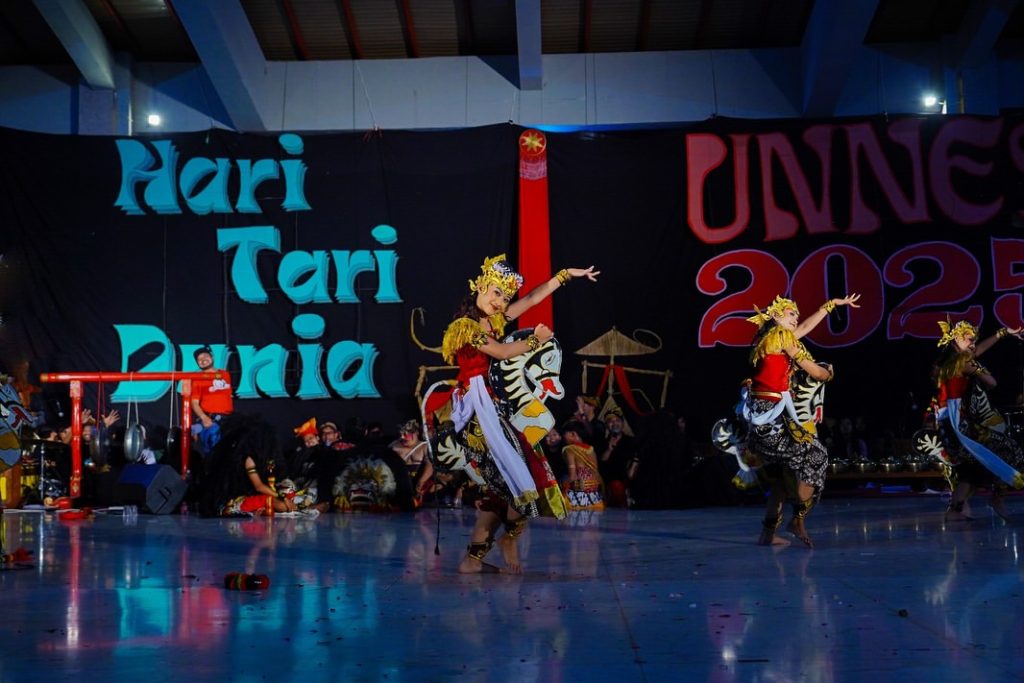
The Dance Education Study Program, Faculty of Language and Arts, Universitas Negeri Semarang (UNNES), held the UNNES Menari 2024 event on Monday, April 29, 2024, at Kampung Budaya to commemorate World Dance Day.
This year’s celebration carried the theme “Preserving Tradition, Safeguarding the Archipelago’s Culture.” The event featured two main parts woven into one continuous celebration.
The first was the National Dance Festival, broadcast live starting at 8:00 a.m. via the B7TVHD Sendratasik YouTube channel. The second was a live dance performance at 6:30 p.m. at Kampung Budaya UNNES. The National Dance Festival showcased five finalists selected from twelve participants across various regions, along with performances by students from different cohorts.
The committee chair, Drs. Bintang Hanggoro Putra, M.Hum, stated that the festival was held virtually to reach a wider audience.
“The live dance performance featured eighteen traditional dances from Wonosobo, presented by student and alumni communities from the region,” he said.
The Head of the Dance Education Study Program, Dr. Eny Kusumastuti, emphasized that UNNES Menari serves as a platform for students to appreciate, create, and express themselves through dance.
“It is very important to nurture young people’s interest amid the surge of modern cultural influences,” she added.
UNNES Menari provides a space for dancers and dance enthusiasts to share their love for the art form, spreading messages of peace, harmony, and cross-cultural collaboration through expressive and meaningful movements.
She also highlighted that universities play a vital role in advancing knowledge while preserving cultural values. As a conservation-oriented institution, Universitas Negeri Semarang remains committed to safeguarding and promoting the cultural arts of the Indonesian archipelago