Universitas Negeri Semarang (UNNES) continues to demonstrate its dedication to equity, diversity, and inclusion by systematically measuring and tracking applications and admissions among underrepresented groups, including women, people with disabilities, low-income students, and students from diverse national and cultural backgrounds.
Through a data-driven and legally compliant system, UNNES ensures that its admissions process remains accessible and fair. Data related to gender, disability, and socioeconomic background are collected with informed consent and stored securely in compliance with privacy and data protection standards. This ensures that sensitive information is managed responsibly, avoiding informal or discriminatory handling.
Transparency in Admissions and Diversity Statistics
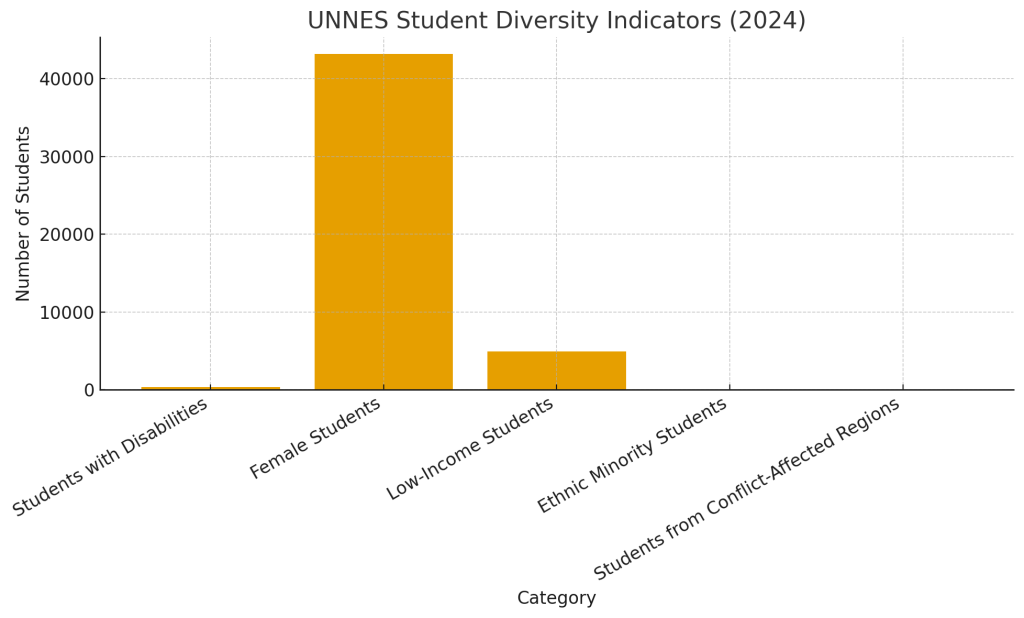
UNNES Student Diversity Indicators (2024)
Source: UNNES’ Documentation
UNNES has published public dashboards and metrics reflecting application, offer, and acceptance trends from 2020 to 2024, thereby promoting transparency and accountability in the pursuit of inclusion.
As of 2024, UNNES recorded the following diversity indicators among its student population:
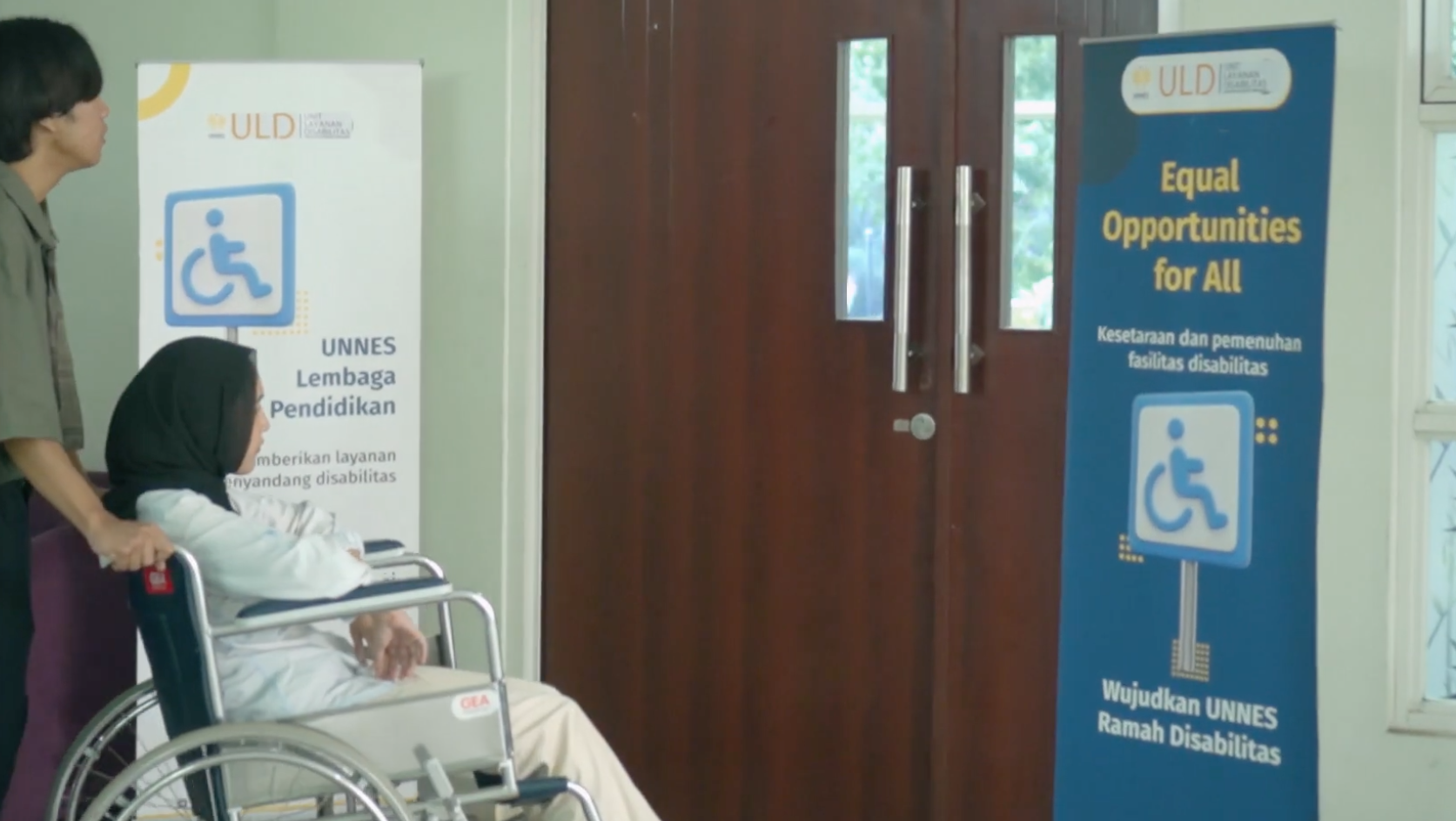
- 364 students with disabilities
- 43,201 female students
- 4,929 low-income students
- 36 students from ethnic minority groups
- 7 students from conflict-affected regions, including Mozambique, South Sudan, Myanmar, and Nigeria
These statistics highlight the university’s proactive approach to welcoming diverse learners and ensuring equitable access to higher education.
Legal Frameworks and Institutional Support
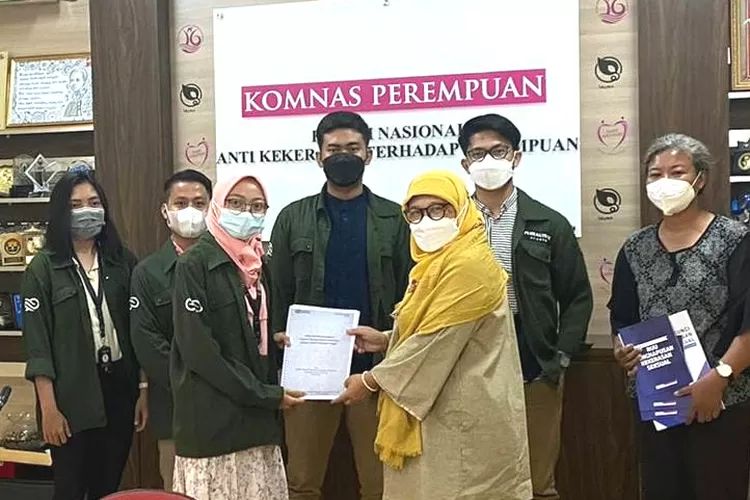
BEM KM UNNES Pushes for the Issuance of Regulations on Sexual Violence in Higher Education Institutions
Source: UNNES’ Documentation
UNNES’s inclusive admission practices align with the university’s legal and policy frameworks, which are designed to foster equality and prevent discrimination. The institution’s anti-harassment and anti-discrimination policies, along with the implementation of the Rector’s Regulation No. 115 of 2024 and the Task Force for the Prevention and Handling of Sexual Violence (PPKS), ensure that all individuals, regardless of gender, background, or ability, are treated with dignity and respect.
To further promote safety and inclusion, UNNES has published the Comprehensive Guidance on Handling and Prevention of Sexual Violence, an educational resource that guides the university community in understanding reporting procedures, rights, and responsibilities related to preventing violence and harassment.
Commitment to Sustainable and Inclusive Education
UNNES integrates these efforts within the wide framework of the United Nations Sustainable Development Goals (SDGs), particularly Goals 4 (Quality Education) and 10 (Reduced Inequalities). These initiatives affirm UNNES’s position as a Conservation University with Global Reputation, upholding justice, accessibility, and inclusivity in higher education.
“By integrating transparent data practices with inclusive policies, UNNES ensures that diversity is not just represented in numbers, but embodied in values and opportunities,” stated the Rector of UNNES.