Universitas Negeri Semarang (UNNES) has established a clear institutional commitment to promoting sustainability and local economic empowerment through the Circular Letter No. B/4603/UN37/TU.01.01/2023 on the Utilization of Local Food in Meeting Consumption. This university-wide policy formalizes UNNES’s priority to purchase products from local and sustainable sources for all internal meetings, seminars, and official events, reflecting the university’s role as a driver of environmentally and socially responsible procurement practices. The policy, signed by Prof. Dr. Nur Qudus, M.T., IPM., Vice Rector for Cooperation, Business, and International Relations, mandates that every faculty and work unit at UNNES integrate the principles of local wisdom, sustainable food systems, and community welfare into their daily operations.
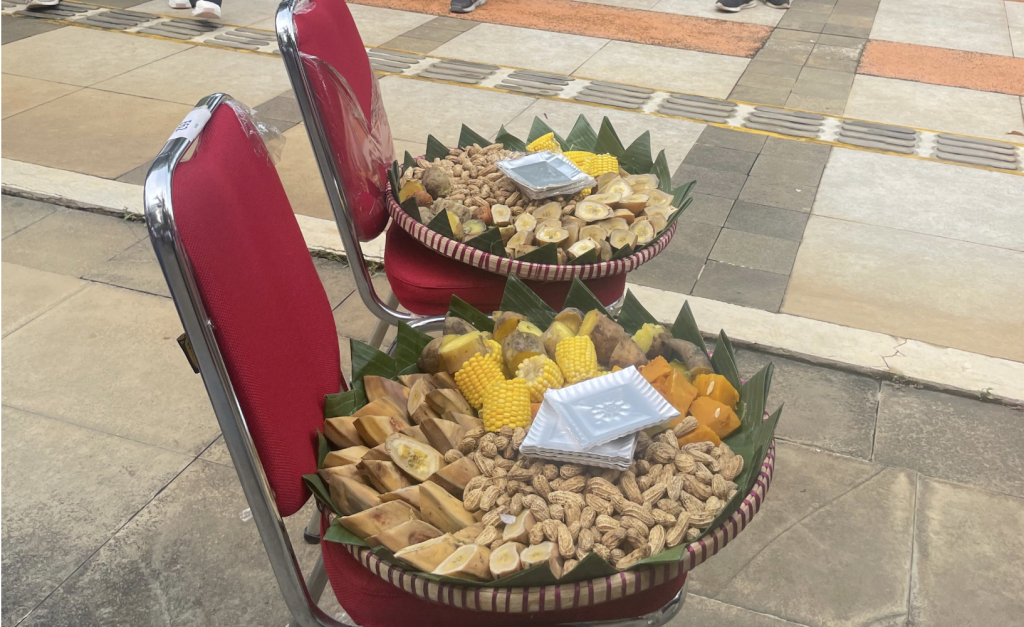
The circular outlines four key directives:
- Utilization of Local Ingredients – Each unit is required to use locally sourced food products such as cassava, corn, taro, sweet potatoes, and other local crops. This approach promotes Indonesia’s rich agricultural diversity and reduces dependence on imported or industrially processed products, encouraging sustainable local agriculture.
- Support for Local MSMEs – The policy explicitly prioritizes collaboration with local micro, small, and medium enterprises (MSMEs) as suppliers of food and beverages for university events. This mechanism ensures that economic opportunities are distributed fairly to nearby communities, particularly to small-scale food producers and home-based businesses, thereby fostering inclusive local growth.
- Nutritionally Balanced and Diverse Menus – Faculties are advised to select menu variations that reflect local culinary heritage, are nutritionally balanced, and cater to various dietary preferences while maintaining food safety and quality standards.
- Sustainable and Monitored Implementation – All UNNES units must apply the policy on an ongoing basis and report their progress periodically to the university leadership. This monitoring ensures that the sustainable procurement strategy remains effective, transparent, and measurable.
Beyond the procurement policy, UNNES reinforces its commitment to local sustainability through complementary initiatives. The Circular Letter No. B/28473/UN37/PT.02/2024 on the Utilization of Campus Facilities for Local Farmers further extends this collaboration by allowing farmers to use university land, laboratories, and research infrastructure to develop sustainable agriculture and food systems. This initiative strengthens the connection between the university and local producers, allowing academic knowledge to directly support farmers in improving production capacity and environmental resilience.
UNNES also integrates sustainable food production through its ECOFARM program, launched in 2023 as a living laboratory for eco-friendly agriculture. ECOFARM produces organic vegetables for campus consumption and educational purposes while serving as a hub for community training in organic farming, urban agriculture, composting, and local food innovation. Local residents and students can visit ECOFARM freely to learn sustainable farming methods and purchase locally grown produce, creating a model of circular economy and sustainable supply chains.
Together, these initiatives illustrate UNNES’s comprehensive strategy in supporting local, sustainable, and ethical food systems. By prioritizing the procurement of local products, empowering MSMEs, facilitating access for farmers, and promoting eco-friendly food production, UNNES not only strengthens regional economies but also contributes to environmental conservation and carbon footprint reduction.
Through these policies and actions, UNNES affirms its identity as The Conservation University, embedding sustainability across education, operations, and community partnerships. The university’s purchasing practices serve as a model of how higher education institutions can align their daily operations with national and global sustainability goals, advancing food sovereignty, economic inclusivity, and environmental stewardship in Indonesia.